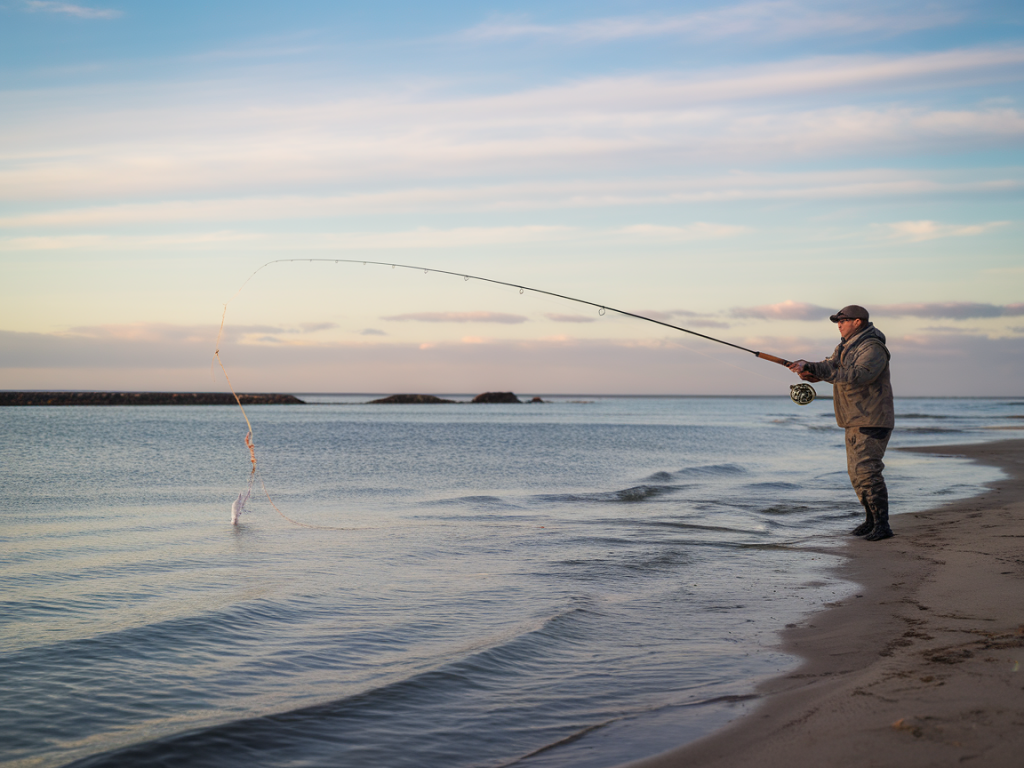
I spend a lot of spring mornings standing on low, wind-scoured sandbanks, watching the tide line for rolling bass and trying to place a lure where the fish will meet it. For several seasons I’ve relied on a Daiwa Saltiga 5500 to turn those long, precise casts into consistent hookups. This reel doesn’t feel glamourous — it’s built like a brick — but it gives me the range, drag control and reliability I need when the bass are holding beyond 80–100 metres and a single well-placed cast can change a day.
Why the Saltiga 5500 for long-range sandbank work
There are a few reasons I chose the Saltiga 5500 for long-distance spring sandbank casting, and why I keep coming back to it:
- Line capacity and spool design: the spool takes plenty of braid and the lip/profile helps reduce wind knots and backlash when you’re throwing heavy wind-assisted casts.
- Smooth, powerful drag: spring bass love to run hard. The Saltiga’s drag lets me apply steady pressure across long runs without sudden drops or stutters.
- Durability: shore salt spray, wet sand and abrasion are constants for me. The Saltiga’s corrosion resistance and sealed internals stand up better than many reels I’ve tried.
- Cruise control on retrieves: the gearing and handle balance make long retrieves less fatiguing when you’re winding back from 100m+ casts repeatedly.
My typical setup
I pair the Saltiga 5500 with a long, fairly stiff shore rod — normally in the 12–14ft range with a moderate-fast action. The length helps with long casts and gives me enough reserve to play fish without getting spooled.
| Component | Typical spec |
|---|---|
| Reel | Daiwa Saltiga 5500 |
| Rod | 12–14ft shore rod, 5–6oz casting load |
| Mainline | PE braid 15–20lb (PowerPro/Yo-Zuri) depending on wind |
| Leader | Fluorocarbon 25–40lb (Seaguar/Maxima) |
| Lures | 80–140g pencil plugs, soft shads on weighted heads, surface walkers |
Line and leader choices — the subtle balance
Long-range casting is always a compromise between thin, low-stretch braid for distance and a stronger, abrasion-resistant leader for sandbanks and boulder sections. I usually spool the Saltiga with a 15–20lb PE braid — 15lb for light-wind, maximum distance, and 20lb when there’s heavy onshore or the fish are really putting the pressure on. For the leader I favour 25–40lb fluorocarbon; in spring, when fish can be soft-mouthed on pellets and sandeels, I opt for a slightly lighter leader (25–30lb) to keep hookup rates high yet still resist abrasion.
Tip: I tie a short double uni knot or FG knot to join braid to leader, leaving 60–90cm of fluorocarbon. That gives me a bit of stretch and shock absorption near the lure without sacrificing the casting benefits of braid.
Casting technique to convert range into hookups
Casting far is only half the battle. You need to put the lure in the precise seam where the bass are holding and then fish it convincingly. Here’s what I do:
- Time the cast: I watch the tide and the breaks. Cast to the leading edge of a ripple or to the edge of a deeper channel where bait congregates. In spring, bass will often stage on the windward edge or at the drop-off behind a sandbar.
- Use wind to your advantage: a firm onshore breeze helps with distance but can make accurate placement tricky. I adjust my aim slightly upwind and let the wind pull the lure into the seam.
- Slow the retrieve: when fishing long range in spring, I find a slower, stop-and-go retrieve mimics wounded sandeels. When the fish are feeding aggressively I’ll speed up and add twitches.
- Vary depth: by adjusting sink rates or switching between pencil poppers and slow-sinking shads I cover water column effectively without re-casting constantly.
Drag settings and fighting bass on braid
One habit that changed my hookup-to-landing ratio was dialing in the drag before the first cast. I set a fairly heavy initial drag because at long range you need to control long runs without giving up line too quickly — but not so heavy that you pull hooks from soft-mouthed bass. In practice I set the drag to about 20–30% of line break strength and fine-tune on the first solid strike.
When a bass runs hard, I let it go until it tires a little, then apply steady pressure and walk the fish towards the bank if possible. The Saltiga’s smoothness here is key: it doesn’t pulse or stutter under load, which reduces the risk of ripped baits or popped knots.
Lures and presentations that work for me in spring
Spring bass around sandbanks are often hunting sandeels or small sprats. I rotate between:
- 80–120g pencil poppers and walking baits for surface sight-feeding mornings
- 90–140g weighted soft shads for subsurface targeting of slack-water gullies
- Jerkbaits on braided mainline with a fluorocarbon leader when the fish are scattered
Matching the lure profile to local forage matters more than pure weight. A 100g sandeel imitation will often outfish a heavier but wrong-profile plug, even if the heavier one casts further.
Maintenance and small mods I swear by
I’m not precious about cosmetically perfect gear, but I am religious about maintenance. After every spring session in sand and spray I:
- Rinse the reel lightly with fresh water (short bursts only) and dry immediately to avoid washing grease from seals.
- Apply a light reel oil to the handle bearings and the spool shaft, and a small amount of grease to the main gear annually.
- Check the spool lip for burrs and file them smooth — even small nicks will shred braid and create casting drama.
- Replace line tops and leaders after a few sessions; sand and abrasion will silently weaken your setup.
When the saltiga makes the difference
There have been days when I felt like a magician — one long, precise cast followed by a 20m surface run and a solid hookset, the Saltiga taking the brunt while I kept my stance and stance and rod tip controlled. On tougher days where the wind is gusting and casts land unevenly, that same reel gives me the confidence to keep going: consistent spool behaviour, predictable drag and the robustness to keep slinging casts until the tide lines up.
If you’re considering the Saltiga 5500 for sandbank spring bass, remember it’s not a silver bullet — technique, timing and matching the lure to local forage do most of the work. But paired with a long, responsive rod, the right braid/leader combo and a little patience, the Saltiga will absolutely convert many of those long-range opportunities into solid hookups.