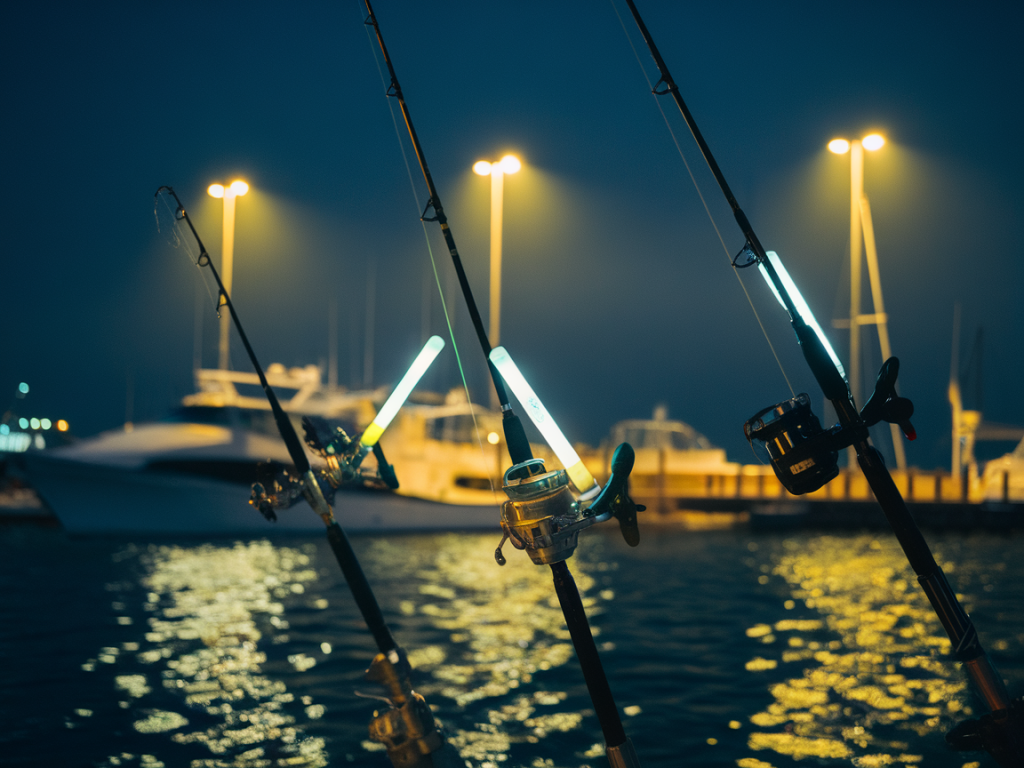
I fish harbours at night more than I admit to my smartphone’s location history. There’s something addictive about the way pollack light up under quay lamps, how a single glow stick makes the water read like a topographic map of current and structure. Over the years I’ve learned where to place that glow, when to let it drift, and which rigs consistently put pollack in the net while others just tangle or tucker out on the bottom.
Where to put a glow stick — the short version
Place the glow stick where the fish are most likely to cross your line of sight and where your bait will be moving naturally: close to the water surface when fishing light lures under lights, or on the trace a little above the hook when targeting cleaner bites closer to structure. If you’re fishing vertically beneath quay lights, clip one to the top 30–60cm of the trace. When casting and retrieving along a wall, put the glow stick at the head of your trace, roughly 1–2m ahead of the hook to create a visible attractor that moves above the lure.
Why the glow stick matters under harbourside lights
Harbour lights do half the job for you — they attract bait and outline structure — but a glow stick gives your rig a focal point. Pollack are opportunistic feeders and respond to contrast and motion. At night the glow acts like a moving patch of bioluminescence, helping fish pick out your lure or bait against the artificially lit background. I prefer the thin 6–8mm glow sticks for shore use because they’re subtle, don’t add excessive bulk, and the slim profile keeps the action of soft plastics and feathers natural.
Placement specifics I use
When I’m fishing directly off a wall or jetty under a single, strong lamp I:
Rig 1 — The Glow-Forward Stinger (best for soft plastics and short-range casting)
This is my go-to when pollack are active close to the wall and I want the glow to lead the lure. It’s simple, tangle-resistant, and keeps action natural.
How I fish it: I cast towards the light’s edge and retrieve with a stop-start action — quick twitches then a longer pause. The glow skims on the surface or just below it and pollack often take during the pause. It’s particularly effective with 3–4” shads (Keitech or Savage Gear) or a small paddle-tail.
Rig 2 — The Vertical Glow Trace (best for deep water and beneath pontoons)
When I’m fishing directly beneath boats or along deep quay walls, I switch to a vertical setup that keeps the glow close to the action and the bait presenting cleanly to fish holding at depth.
How I fish it: Drop the rig straight down and make small lifts of 10–20cm, letting the bait flutter back. When pollack sit near structure, a subtle lift and fall triggers aggressive strikes. The glow’s proximity keeps the profile compact and mimics small, injured baitfish under lights.
Rig 3 — The Suspended Trace with Beat (best for lures and feather jigs)
If I’m using feather jigs, micro-jigs or small hardbaits, I want the glow to sit just above the hook so it enhances the lure’s profile without dampening action. This rig is about movement and flash.
How I fish it: Cast or drop and use an erratic retrieve — lift-drop, wind then jerk — to mimic fleeing bait. The glow adds a pulsating point of attraction which, combined with the jig’s flash, often produces the quick, savage strikes pollack are known for.
Quick table — when to use each rig
| Situation | Rig | Why it works |
|---|---|---|
| Close to harbour wall, short casts | Glow-Forward Stinger | Glow leads the lure; natural action for soft plastics |
| Beneath pontoons, deep water | Vertical Glow Trace | Compact presentation; good for holding fish near structure |
| Feathers, micro-jigs, lures | Suspended Trace with Beat | Glow increases contrast, complements flash and erratic action |
Practical tips I use every trip
Those are the setups that consistently put pollack in my crate under harbour lights. The most important thing is to experiment: drop the glow a little higher or lower, try a different colour, alter your retrieve. Night fishing under quay lamps is as much observation as it is gear — watch how the fish react and let that guide your tweaks. Tight lines and enjoy the night show.