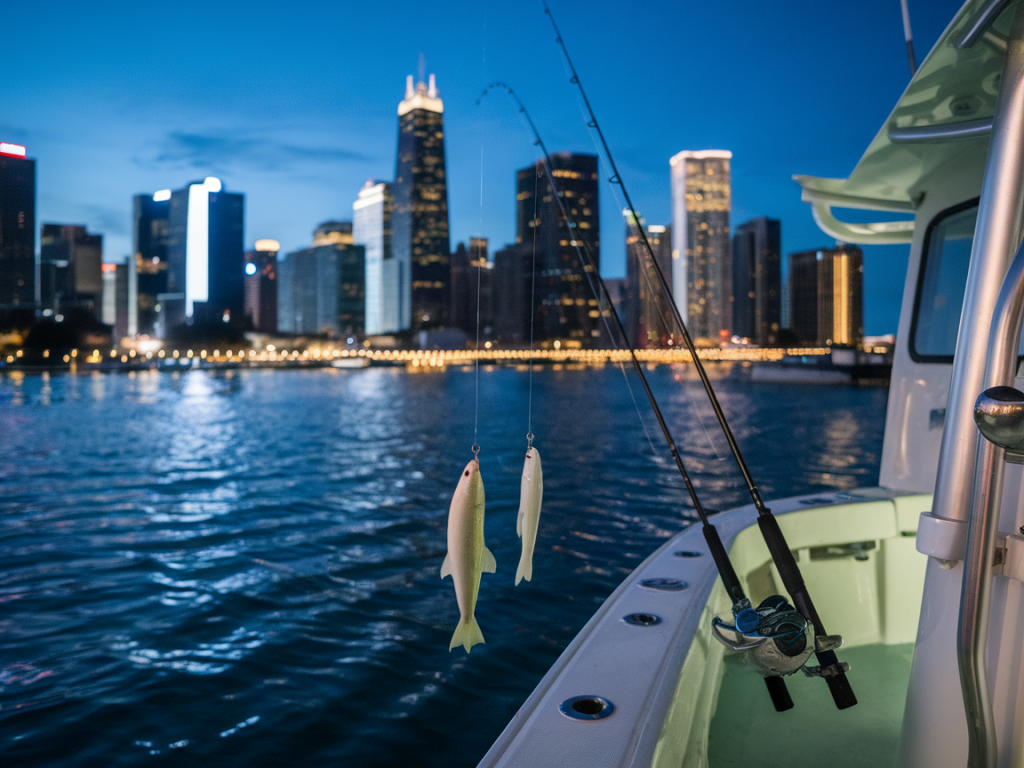
I’ll cut straight to it: if you want to trigger estuary bass under marina lights with soft plastics you need two things to line up — the right tide and the right light window — and then you must present your lure like a wounded baitfish. Over the years I’ve spent more than a few cool evenings crawling around marina pontoons, testing rods and lures, and the pattern I describe below is the one that consistently turns evening slow-water blank nights into action.
Exact evening tide + light recipe
My go-to recipe for marina light sessions is:
- Tide: incoming tide starting roughly 1.5 to 3 hours before high water and continuing through high. The current should be moving INTO the marina entrances/slips, pushing baitfish and burley into the well-lit edges.
- Light window: begin fishing ~20–40 minutes before sunset, fish through civil twilight and into the first 60–90 minutes after sunset. This is when the lights silhouette tiny fry and shrimp and draw predators in close.
Why this combo? The incoming tide moves bait into sheltered slip margins where marina lights concentrate them. The brief period before and after sunset is when predators feel secure enough to feed in the shallows but visibility is still high enough for sight-hunting — the silhouette effect is at its strongest.
How I pick the exact start time
I always check three things before I head out: the tide table for the spot, the sunset time and the local tide stream predictions (if available). If high water at the marina is 20:30, I’d plan to be on the bank by 18:30–19:00 so I’m fishing as the tide starts to push in and as the sky goes peachy. If the tide is small (less than a metre) I’ll push for the earlier side of the window; if it’s a big spring tide I’ll accept stronger flows and fish slightly later into the high.
Tackle recipe — my tested setup
I favour a light but capable setup that lets me feel soft plastic action but still control fish around piles and pontoons.
- Rod: 10–12ft fast-action beach/estuary rod (I often use a 10–11ft 10–30g rod for reach and hook control)
- Reel: 3000–4000 size spinning reel with a smooth drag
- Line: 10–15lb braid as mainline (thin diameter to cast and hold less wind), with a 2–3m fluorocarbon leader 15–30lb depending on snags and fish size
- Leader knot: uni-to-uni or a loop knot for better soft plastic action
These specs give enough abrasion resistance to pull bass from under pontoons while keeping casts elegant and lure action natural.
Soft plastics, sizes and headweights
Match the hatch and match the current. My favourites around marina lights:
- 3–4” paddle-tail shads (natural silver, white, or luminous for low light)
- 3–4” jerk shads or grub tails when the water is calm
- 2–3” soft-jerk or minnow profiles for cooler months or picky fish
Headweights depend on the current and depth:
| Situation | Jighead weight |
| Light current, shallow slips (<2m) | 1/16–1/8 oz (1.8–3.5g) |
| Medium current, 2–4m depth | 3/16–1/4 oz (5–7g) |
| Strong tide, deep pontoons or outside marina | 1/4–3/8 oz (7–11g) |
Rigging options I use
- Simple jighead: Nail the hook size to the plastic. A wide-gape 2/0–3/0 jig head is a workhorse. Use a slightly weedless 60° bend if you’ll be fishing close to barnacled piling.
- Weighted offset: If fish are tight under structure I go for a slightly offset head to reduce snags while maintaining profile.
- Drop-shot (smallest plastics): If fish are suspended off pontoons and refusing full-bodied shads, a light drop-shot with a 2–2.5” minnow can be lethal.
Retrieve recipe — the subtle art
Under lights I rarely fish a straight, fast retrieve. The recipe that triggers more follows and bumps is:
- Cast across the face of a pontoon and let the bait settle for 1–2 seconds.
- Use a slow swim—steady retrieve with occasional 1–2 second pauses. Bass often lock on during the pause.
- Introduce a twitch-and-pause cadence: 2 medium twitches, 1 long pause. The twitches create a silhouette of a frying, fluttering bait.
- If fish are chasing, speed it up for short bursts to trigger the chase reflex.
- Work the edges, then make quick, small hops along piling intersections—bass hold tight to structure and will ambush from the darker recesses.
Reading the marina at night
Look for contrast. The brightest light areas often hold the highest density of baitfish, but the best ambush points are where shaded water meets light — inside slip mouths, behind pontoons, and at the heads of fingers where current accelerates. I’ll walk the pontoons and watch the surface: tiny boils, sudden dimples, or the flash of silver under the light tells you where to pitch.
Seasonal tweaks
Summer: warm water, lots of fry and shrimps. Use 3–4” shads on lighter heads and fish the top of the tide into high water. The post-sunset 60 minutes is often electric.
Spring (pre-spawn): bass are hungry and moved inshore — fish a little earlier (start before sunset) and be ready for fast, strong hits.
Autumn: baitfish schools are denser; try brighter/luminous plastics and slightly heavier heads to keep contact through chop and stronger currents.
Winter: slower fish; smaller profile plastics and more subtle twitches. Fish the warmest slack periods near high water when bait compresses near marina lights.
Common questions I get
Q: Do marina lights always work?
A: Not always. Lights concentrate bait, but if there’s heavy disturbance (boats running, constant human activity) bass will avoid the area. Ideal nights are calm, with a steady incoming tide and boats sleeping for the evening.
Q: Is scent/burley useful?
A: Light burley can help in very clear water; I prefer natural-looking plastics first. If I use burley, I keep it minimal and local so it doesn’t spread and ruin the sight element that the lights create.
Q: How close should I cast to pilings?
A: Very close. Bass park right in the shadow line. If you can drop your plastic to sweep the edge where shadow meets light, you’re in prime territory — but be ready to strike quickly and lift into the fish to keep them from wrapping on barnacles and mooring lines.
Safety and etiquette
Marinas are privately owned or managed; always check access and respect signs. Wear a headlamp and a life vest if you’re fishing right on the edge of pontoons. I never fish with heavy clothing that can snag or restrict movement. Keep noise low — you’ll spook fish and annoy locals. Finally, handle fish with wet hands, unhook quickly, and leave the area cleaner than you found it.
If you want, I can walk you through a map-based checklist for a specific marina — tide timing, wind considerations, ideal casting lanes — based on your local high-water time. Tight lines and see you on the pontoons.