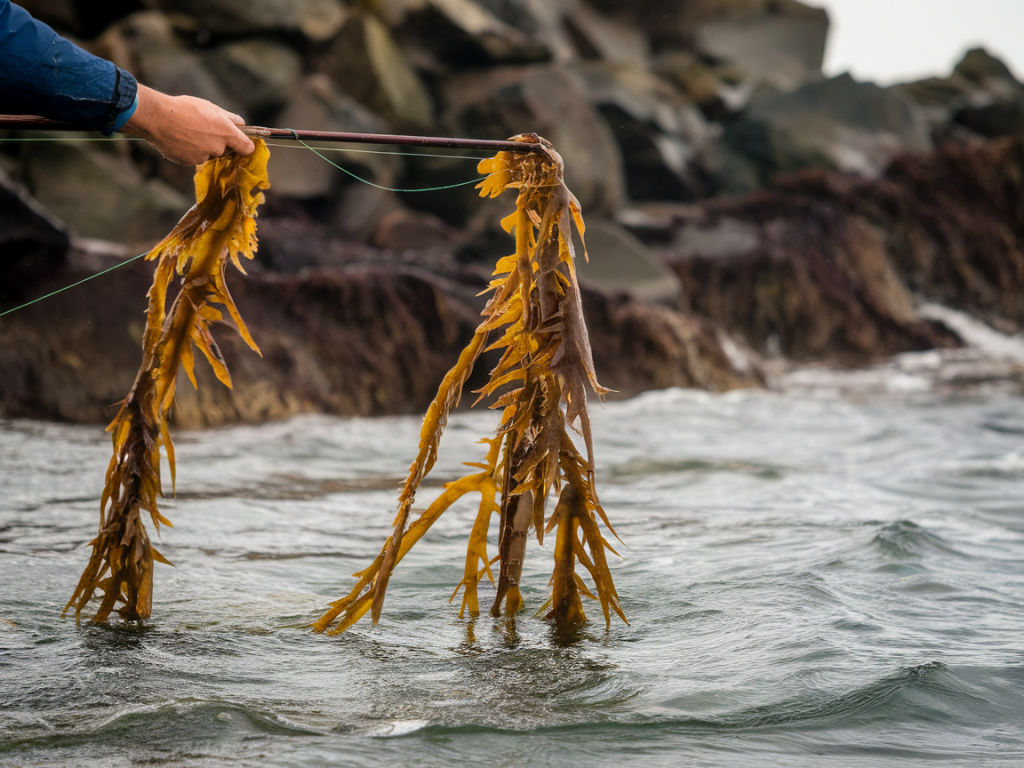
Winter cod sessions around Wales mean cold fingers, early high tides and kelp that seems determined to eat every rig you send out. Over the years I’ve lost more than my share of rigs to sharp kelp blades — especially when casting heavy leads into surf and retrieving through weed beds. What finally stopped the cut-offs was a simple, repeatable leader sequence and a few knot choices that balance strength, abrasion resistance and some stretch where it counts.
Why kelp cuts lines (quick recap)
Kelp blades can be surprisingly sharp, especially when frozen or sand-laden. The things that matter most when you’re trying to stop cut-offs are:
Line material — braid has almost no stretch and a thin diameter, which makes it easy to slice.Abrasion points — the junctions where different materials meet and any swivels or knots that can rub on kelp.Shock absorption — when fish run into kelp, stretch helps avoid abrupt failures.So the goal is: keep braid for distance and sensitivity, add a shock/abrasion-absorbing section, and finish with a short, tough butt/trace that resists kelp blades.
My go-to leader sequence (exact lengths and strengths)
I use this sequence for winter shore cod when casting into kelp-prone water:
Mainline: 30–50 lb braid (0.16–0.20 mm typical for 20–40 lb class braid depending on spool)Connection knot: FG knot tying braid to the shock leaderShock leader: 1.5–2.5 m of 30–40 lb monofilament (Nylon)Butt section: 30–60 cm of 60–80 lb fluorocarbon or heavy copolymer (abrasion-resistant)Final knot to hook or swivel: Double-Uni or Surgeon’s knot to join mono to fluorocarbon if needed, then finish with either a strong loop or a Palomar to the hookTypical example I use on a medium/fast beach setup:
| Mainline | 10–15 m spooled braid 30 lb |
| Shock leader | 2.0 m mono 40 lb |
| Butt/trace | 40 cm fluoro 70 lb |
| Terminal | Size 2/0–4/0 Aberdeen/strong hook with a Palomar or loop knot |
Why I choose this layout
Each section has a job:
Braid gives distance, sensitivity and minimal stretch.Mono shock provides shock absorption during that initial surge when a cod dives into kelp; it also has better “give” so it’s less likely to slice across a sharp kelp edge.The short heavy fluoro butt sits closest to the hook and is what comes into direct contact with blades and barnacled rocks. Fluorocarbon tends to be more abrasion resistant than thin braid and sinks better, keeping bait lower through the weed. The short length avoids sacrificing too much bite detection and action.Knot choices and exactly how I tie them
My knot workflow on the bank:
Braid to shock mono — FG knot. The FG is slimmer than most knots and passes through the guides cleanly for long casts. It also grips braid firmly without heavily weakening the mono. There are alternative knots (e.g. a well-tied Albright or a precise Double Uni) but for heavy casting the FG is my preferred choice. Take time to wrap tightly and finish with Super Glue on the mono tail for winter reliability.Mono to fluoro butt — Double Uni (or Surgeon’s knot). Diameter differences between mono and heavy fluoro mean a blood knot is unreliable. A Double Uni, tied cleanly with at least five turns in each half and cinched slowly, will maintain strength. Trim tails short but not flush (leave 2–3 mm) and dab a tiny drop of varnish or headshrink to tidy the join if you like.Butt to hook — Non-slip loop or Palomar (depending on presentation). For Cod I like a short loop (non-slip loop knot) giving the hook a little freedom; if you want maximum strength and minimal fuss the Palomar on the fluoro butt is fine for single-strand leaders and heavy hooks. Remember: Palomar is best when the material can pass double through the knot; if your fluoro is very stiff, a loop can help keep hook movement natural.Anti-kelp tactics to pair with the rig
Even the best leader can be shredded if you constantly drag through kelp. Use these practical behaviours:
Fish the tide edge and bait higher on the retrieve so rigs don’t spend long embedded in kelp.Use a light roller or flat pear lead when retrieving across weed — leads that catch and pop free are much better than those that snag and pull you under.When a fish runs into kelp, give a controlled but firm stroke: you want to out-muscle the fish slightly, then free the leader from the weed by changing angle rather than pulling directly back.Carry a spare short butt (30–40 cm) pre-tied so you can swap the terminal piece quickly if you feel abrasion starting.Recommended gear and small tweaks I swear by
Leader materials: For the shock I use Seaguar or Berkley mono in the 30–40 lb range. For the short butt I use Seaguar InvizX or Sunline FC in 60–80 lb — both have good abrasion resistance.Swivels and clips: Use a quality size 3–4 ball-bearing swivel (e.g. Mustad or Penn heavy-duty) if you’re adding a clip. Make sure to position the swivel inside the butt/mono junction; exposed clips can cut or tangle in kelp.Glue and heat-shrink: A dab of CA glue on the FG ends and a short heat-shrink sleeve over joins prevents fouling on long casts.Troubleshooting common failures
If you still get cut-offs, check these things:
If braid is getting sliced right at the FG knot, extend the mono shock by another 0.5–1 m — the braid-to-kelp contact area is being too exposed.If the fluoro butt fails at the knot, either the knot wasn’t cinched correctly or the fluoro diameter is insufficient — step up to 80 lb.Repeated chafe on the swivel? Slide the swivel back onto the mono section and cover the join with heat-shrink to prevent local wear.Hook pulls out during kelp dives — consider a slightly larger hook or change to a non-offset heavy-gauge hook for better holding.These tweaks have saved me many rigs and far more time. The key is a layered approach: braid for distance, mono for give and a short tough butt for abrasion resistance — tied with knots that preserve as much breaking strain as possible. On the cold, kelpy beaches of Wales this setup lets me concentrate on reading the tide and watching the float, rather than fixing another cut-off.