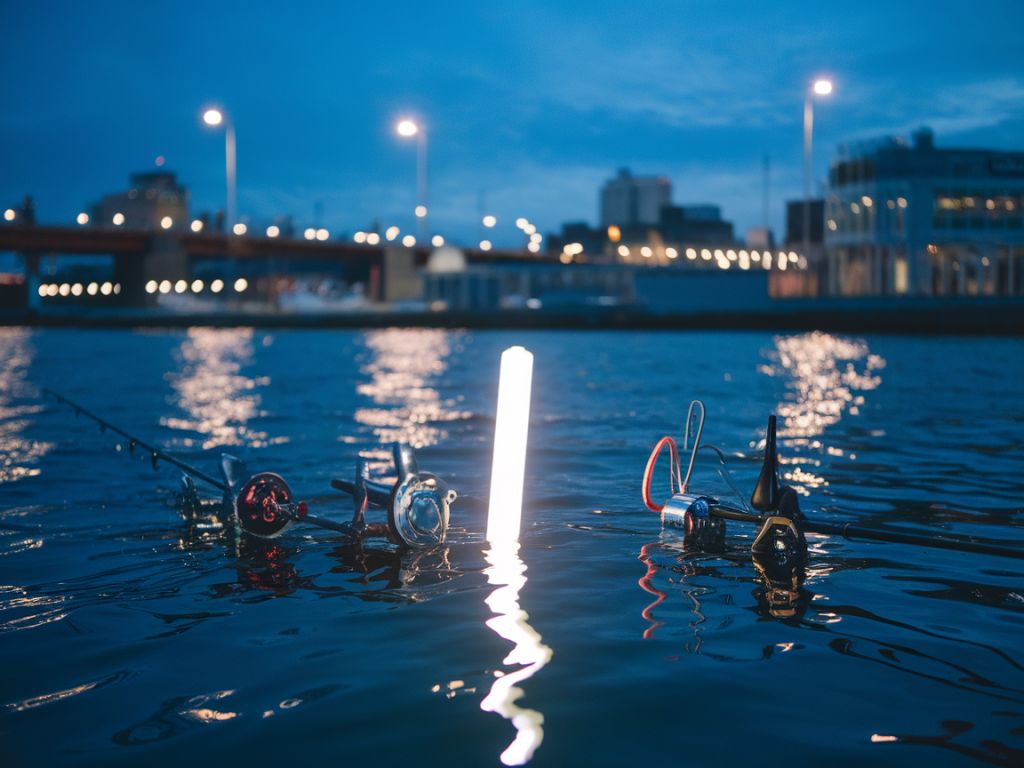
I always get a buzz when the harbour lights start to bleed into the water — there’s something about that contrast between artificial glow and moving tide that turns a quiet spot into a pollack magnet. Over the years I’ve learned one simple truth for night sessions under lights: it’s not the number of glow sticks you use, it’s where you put the one you have and how you present your rigs around it. In this piece I’ll show you how I position a single glow stick and set three rigs to outfish others on harbour walls, pontoons and quaysides.
Why a single glow stick works — and why people overdo it
When anglers show up with half a packet of glow sticks they often think more equals better. In my experience, multiple glowing points just create visual clutter and chase fish away. A single well-placed glow stick acts as a focal point in the water column: it draws plankton and small baitfish, which in turn attract pollack. The trick is to use that focal point to stage a subtle, staggered presentation with three rigs at different depths and distances.
Using one glow stick also keeps your session tidy and discreet — important around harbours where boats and other anglers share the space. I usually use a 15–20mm glow stick designed for fishing (bands like Anaconda or Pro Night are popular) clipped into a small float tube or a purpose-made clip so it sits just off the surface.
Gear I use for harbour light pollack
| Item | Why I choose it |
|---|---|
| Rod: 12–13ft shore rod, 3–4oz | Long enough for distance, light enough for feel |
| Reel: 4000–5000 spin | Good line capacity and drag for harbour structure |
| Mainline: 15–20lb braid | Low stretch for better bite detection and quick hooksets |
| Shock leader: 40–60lb mono (60–100cm) | Protects against chafing on groynes and quays |
| Glow stick: 15–20mm fishing glow | Bright, compact, easy to clip |
| Three rigs: running ledger, fixed paternoster, and a light flapper | Different actions and depths to find where pollack are feeding |
How I place the glow stick
Placement starts before you cast. First I watch the light reflecting on the water; look for the brightest patch or the spot where the current meets a slack — pollack like to hold where bait is concentrated. I then position the glow stick slightly up-current of that point so the current drifts baits through the lighting zone.
My preferred method is to clip the glow stick to a small, buoyant indicator or float (a piece of closed-cell foam or a mini pop-up float works). I attach the float to a short length of light mono and cast it out about 20–30m, depending on the harbour. After it lands, I let the current position it, then tighten up and fix it with a soft bank stick or wedge between stones so it sits just ahead of my rigs rather than drifting far from them.
Key placement tips:
- Place the glow stick up-current from where you expect to fish; baits should drift into the light.
- Keep it shallow: glow sticks are most visible near the surface; if you anchor it too deep the effect on bait movement is reduced.
- Avoid tight mooring lines: pick a clear patch so the stick doesn’t snag or get shaded by boats.
Why three rigs — and which ones I use
Pollack activity varies within a small area — some are cruising 2–3m down, others are hugging structure, and a few will chase suspended sandeels near the surface. By running three rigs with different actions and depths I cover the water column and increase my chances of a hookup when they move through the lighted zone.
The three rigs I habitually use are:
- Running ledger with a small pop-up — a light 1–2oz lead with a running trace, bait presented slightly off the seabed to target fish holding just above rocks.
- Fixed paternoster — a short dropper loop with a 10–15cm dropper tied to sit mid-column; great for natural baits like lugworm or sandeel strips.
- Light flapper/feeder rig — a small mesh or plastic feeder with a trailing hook and soft plastic or strip bait to target active, chasing fish.
Setting up each rig relative to the glow stick
Once the glow stick is secured and the tide is moving it into place I position my rigs in a roughly triangular spread. How I cast and place each rig depends on the harbour layout, but the principle is to cover near-surface, mid-water and near-bottom zones with a little overlap so fish can move between them without missing a bait.
- Rig A — the running ledger (near-bottom): I cast this slightly past the glow stick so the lead slides down the tide and the pop-up bait suspends just above any structure. It’s usually 1–2m deeper than Rig B. If the bottom is very snaggy I increase the leader length to keep the hook bait off the rocks.
- Rig B — the fixed paternoster (mid-water): I cast this directly into the light or just slightly up-current of it so the dropper sits mid-column right where small baitfish will be milling. On nights when pollack are feeding actively this rig gets most action.
- Rig C — the flapper (near-surface): cast this short, often on lighter line. I want it to ride into the immediate glow zone to mimic an injured sandeel or surface-spirited bait. This rig is the most dynamic — small twitches or gentle reels bring it alive.
Bait choices and presentation
Under lights, visibility is high for fish, so natural, juicy baits usually win. My go-tos are:
- Sandeel strips — let them dangle, they flash and move naturally in the current.
- Peeler crab or small crab pieces — great on a running ledger.
- Whiting fillet or mackerel strip for the flapper — heavier scent and movement.
For hook size I stick with 1–2/0 strong, long-shanked hooks for pollack. If I’m using soft plastics on the flapper I rig them weedless on a 2/0 wide-gap hook for solid hookups.
Reading the bite and adjusting on the night
Small changes in tide or boat wash can flip which rig gets the bites. Here’s how I react:
- If I get sharp knocks and short pulls, the fish are taking mid-water — shorten the paternoster dropper or reduce weight to keep the bait higher.
- If bites are heavy thumps on the bottom, the ledger is doing the work — try a larger piece of crab or bigger sandeel strip.
- If the flapper is getting investigatory follows but no takes, slow down the retrieve and add a tiny, scented strip or a micro-glow bead to increase visibility.
Boat traffic, safety and etiquette
Harbours can be busy at night. I always make sure my glow stick and rigs don’t interfere with boat lanes. Use a headlamp with red setting when unhooking to keep night vision and avoid dazzling other anglers. Also, be ready to move your glow stick if a boat swings close — I use a quick-release knot that allows me to reel in the float and re-deploy it a couple of metres away.
Respect for other anglers matters — if someone’s already set up around a light, ask before placing your float close. Often a polite chat leads to shared tips about what’s working that night.
Quick troubleshooting table
| Problem | Quick fix |
|---|---|
| No bites all night | Move glow stick 2–5m up-current, change bait to sandeel strips or crab, reduce weight |
| Frequent snags | Shorten leader, use lighter lead, move away from hard structure |
| Lots of short pecks | Switch to smaller hooks, try fresher bait, present baits higher in the column |
There’s no magic formula that works every night, but this approach — a single, carefully placed glow stick and a three-rig spread covering the water column — consistently helps me catch more pollack under harbour lights than I see from anglers who cast blind or clutter the water with multiple glowing points. I encourage you to experiment with the distances and baits I’ve outlined, keep notes in a little log, and be ready to adapt when the tide or moon phases change the behaviour of the fish.