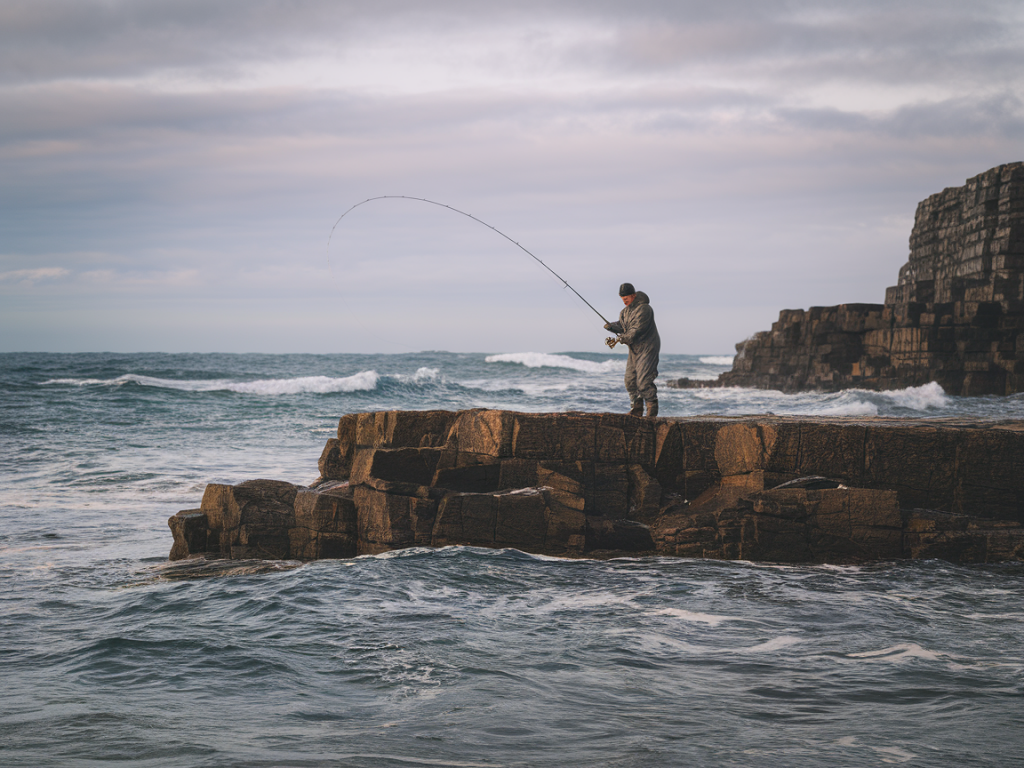
When I started fishing tidal ledges along the Welsh coast I lost more than a few rigs to sudden blowouts: the kind that yank your sinker into the surf, tangle your trace around submerged rocks, or send your bait ripping across the sand. Over the years I found two things that changed the game for me: a cheap handheld anemometer and a handful of sinker tweaks that keep baits put — even when the wind and tide are playing tricks. This is how I use both to reduce blowouts and keep more fish coming to the bank.
Why a cheap anemometer is worth a tenner (or twenty)
People assume you need high-end kit to get meaningful readings. I picked up a small handheld anemometer (think £10–£30, brands like Kestrel knockoffs or generic wind meters on Amazon) and it instantly became one of my most used items. It’s not about precision to the decimal — it’s about consistency and context.
- Wind speed trends: The device tells me whether the wind is steady or gusty. A steady 12–15 mph from offshore behaves very differently to a 12–15 mph gusting wind that swings direction.
- Wind direction confirmation: I pair the anemometer with visual checks (flag, ripples) to read onshore/offshore components. Small changes in angle matter a lot on ledges.
- Tide and swell correlation: I log wind readings against tide states to learn when the ledge holds or spits my rigs out.
I hold the anemometer at arm’s length for a few seconds at casting height, then at head height to sense surface wind differences. I note the sustained speed and the peak gusts. Over time I can anticipate when a drift will push my line into rocks or when a cross-wind will pull the trace along the ledge.
Reading the numbers — practical thresholds I use
The exact thresholds will vary by spot, but here are my rough guides for tidal ledges in Wales:
| Wind situation | Anemometer reading (mph) | What I do |
|---|---|---|
| Light, stable offshore | 0–8 | Standard sinker, direct trace, longer cast |
| Moderate (best ledge fishing) | 8–15 | Use heavier sinker, adjust rig profile, watch tide window |
| Gusty or strong cross/onshore | 15+ | Shorten cast, heavier/smash sinkers, consider cancelling session |
When gusts exceed 18–20 mph I seriously consider moving to a more sheltered mark. An anemometer doesn’t replace judgement, but it stops me from second-guessing whether “it felt windy” or “it really was pushing 20.”
The three sinker tweaks that stop blowouts
Over the years I’ve settled on three consistently effective tweaks. I use them individually or together depending on wind, tide and the fish I’m after.
- Tweak 1 — Shape and profile: long torpedo or bullet sinkers
On tidal ledges I prefer streamlined shapes that ride with the current instead of creating a broad sail. Long torpedo or bullet sinkers (often used in coarse and surf fishing) hug the bottom and slide over rock contours rather than snagging. They reduce sudden upward jerks that cause your trace to loop on ledge edges. - Tweak 2 — Breakaway / roadrunner-style sinkers
For very snaggy ledges I’ll use a lightweight breakaway/rock sinker as a sacrificial weight: a smaller sinker that holds the bait in place but will shear off if it wedges in a crack. Combine this with a robust but replaceable trace knot or a single-shot swivel link so you don’t lose the whole rig. I always carry a handful of cheap breakaways sized to the conditions. - Tweak 3 — Add a low-profile weight plus chain/trace dampener
This is my go-to when wind is moderate but gusty. I use a heavier low-profile bank sinker (flat or pancake-style) with a short length of braided trace chain or a short fluorocarbon shock-leader (10–20cm) between the sinker swivel and the main trace. The chain or short leader acts like a damper — it absorbs sudden tugs and reduces the chance the sinker will flip into a crevice. It’s not pretty, but it works.
How I rig these tweaks for real fishing
Here are three practical rigs I rotate through, depending on conditions:
- Rig A — Streamlined running sinker
1. 2–3ft mainline to 3ft leadcore or braid. 2. Running torpedo sinker on a swivel. 3. 18–24in fluorocarbon trace with a small long-shank hook. Use this on steady offshore conditions. - Rig B — Sacrificial breakaway
1. Mainline to a breakaway sinker (snag-resistant shape). 2. Simple swivel link and 30–40cm of heavy fluoro shock leader to a lighter trace. 3. Use knot protector or small bead between swivel and sinker.
This lets me lose the sinker and still keep the trace and bait. - Rig C — Dampened low-profile rig
1. Big flat bank sinker or pancake on the bottom. 2. Short 10–20cm chain or thick mono spacer to reduce jerks. 3. 30–40cm mid-strength trace to hook. 4. Optional bead to prevent metal-on-metal noise.
I use this on cross-windy days when the current is strong but I need the weight to hold position.
Casting, line management and the anemometer in session
Having the right sinker isn’t everything — how you cast and manage line matters. I use the anemometer readings right before I cast:
- If sustained wind is within my “moderate” window, I opt for a slightly heavier sinker than usual and a lower trajectory cast so the wind has less time to act on the line.
- When gusts are frequent, I let line out slowly and keep my rod tip lower to stop the wind ‘kiting’ the line.
- I watch for line angle changes — even small deviations mean the current has snag potential. If the line accelerates sideways, I re-evaluate anchor points and sinker choice.
Small habits that save rigs
Two quick habits save me more rigs than any single piece of kit:
- Check the spool: Replace worn lines and keep a shock leader that matches sinker weight. Old lines and micro-abrasions create instant break points.
- Carry spares: I have a small box with torpedoes, pancakes, breakaways, swivels and a couple of pre-tied short traces. If a sinker goes, I swap and get back fishing fast.
Using a cheap anemometer trains you to read conditions more objectively and to pick the right sinker tweak for the moment. For me, this combination turned tidal ledge fishing from a frustrating game of lost rigs into a manageable, tactical session where I can focus on hooking fish instead of replacing tackle. Tight lines — and if you want, I can post diagrams of the three rigs I mentioned or a short kit list for your tackle box.