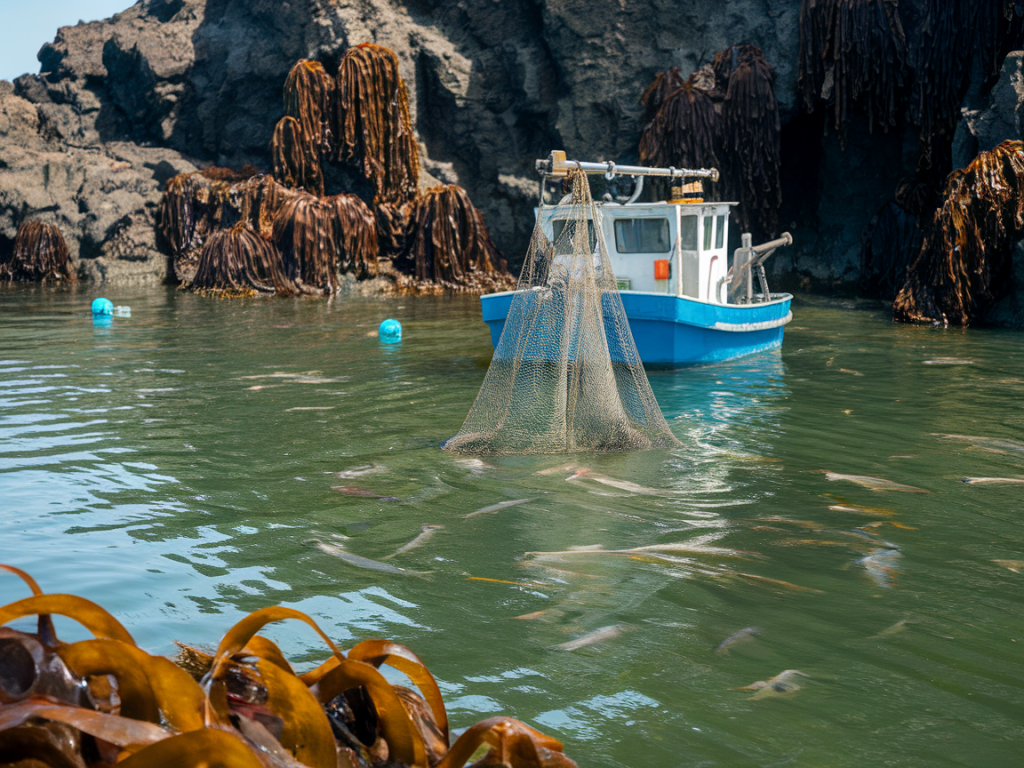
Winter cod in shallow kelp bays can be maddeningly localised. I’ve lost count of mornings where I sit on the rocks watching kelp fronds barely move, thinking there’s nothing happening — then, after a well-timed chum slick, the bay comes alive and I’m into cod after cod. Over the years I’ve simplified a method that uses small, controlled chum slicks made with scent balls to concentrate fish without spooking the bay. Below I walk through how I time and place those slicks, the rigs and gear I trust, and the little observational tricks that raise my catch rate on cold, low-light days.
Why small chum slicks and scent balls?
Big, messy chum jobs have their place — when you want to draw turrid clouds out over deep water from a distance. In shallow kelp bays during winter, though, the goal is different: I want to create a subtle, consistent plume that nudges fish into the zone where my bait works best but doesn’t scatter them into the kelp or down the shore. Scent balls (compressed groundbait or purpose-made fish attractor balls) are ideal because they disperse slowly, are easy to place accurately, and don’t create an overpowering visual slick that spooks wary cod.
Timing: tides, light and temperature
Timing is everything. Winter cod in shallow bays often feed best around tide change — the incoming tends to concentrate tide-driven food in pockets among the kelp. I look for two things:
- Rising tide into slack or early flood: As the tide pushes food into the bay, cod hold in the edges of kelp beds and gullies to intercept prey. Dropping tide can also be productive but often disperses feed downshore.
- Low light windows: Early morning, dusk and overcast middays are prime. Cod are less skittish then, and scent travels more effectively when water temperatures are steady.
I usually aim to be on the bank an hour before the tide turn and set my first slick just before peak flow. If the bay has a noticeable peak flow, that’s when the scent plume will stretch into the strike zone and stay there for longest.
Choosing a spot in the bay
Not all bays are equal. The right place for a slick is where water movement will keep scent in an ambush zone without dragging it into dense kelp or off the feeding line. I look for:
- Edges of kelp beds: Fish often sit on the margins to pick off items washed out of the fronds.
- Gullies and shallow channels: These focus flow and keep scent moving in a predictable direction.
- Rocky contours and weed-free lanes: Avoid slicks that will pull your bait into snaggy kelp unless you’re prepared to fish light and fast.
When in doubt, I’ll wade and watch. A small drift of natural debris or a rising column of bubbles tells me where the current is working — that’s where I want my scent.
Preparing scent balls and small chum
I make my scent balls compact and consistent. I use a blend of ground mackerel, fishmeal and a small amount of breadcrumbs to bind. Commercial attractors like Sensas or Nitrofish powder can be added to boost scent without changing the texture. Important points:
- Make balls roughly golf-ball sized — big enough to hold together for several minutes, small enough to break down predictably.
- Wrap each ball in a small mesh bag or use biodegradable netting if you’re concerned about litter.
- Keep a dry supply in a resealable tub and mix fresh with a little water on the rocks to keep consistency right for the temperature. Too wet and they fall apart immediately; too dry and they may not release scent.
I also carry a small bag of chopped fish strips (mackerel/pollack offcuts) to drop here and there for visual attractors. The scent balls provide the steady plume; the chopped fish gives a little extra kick if the tide is sluggish.
Placing the slick: technique and accuracy
Placement is where practice pays off. I use a dedicated chum delivery rig: a light catapult or long-hand scoop and a casting motion similar to baitcasting. Key steps:
- Work from the edge of the kelp bed rather than standing in it — you want to place the ball just inside the feeding lane, not on top of the fronds.
- Drop your first ball upstream of your fishing spot so the plume drifts over your anglers’ line. Think of the slick as a conveyor — put it where the conveyor will pass your bait.
- Space subsequent balls at 5–10m intervals depending on flow. In strong flow I tighten spacing to keep the plume continuous; in slow water I space them more widely to avoid over-saturation.
If the bay has an obvious eddy or backwater, I’ll place a ball slightly into that area so the scent stalls and concentrates. For accuracy I prefer a lightweight aluminum scoop or a small bait catapult that lets me arc the ball into the exact zone.
Rigs, bait and tackle
My go-to winter shore rig for shallow kelp bays is simple and abrasion-resistant. I favour:
- Rod: 12–13ft shore rod, 3–6oz test curve — enough backbone to lift through kelp but forgiving enough for long, smooth casts.
- Line: 15–20lb braid with a 30–40lb fluorocarbon shock leader. Fluoro helps resist abrasion if I’m fishing near fronds.
- Rig: Running ledger or a short-pulley mono rig with a 3–4oz inline weight depending on flow. I’ll use a 3–4ft fluorocarbon shock leader to a size 1/0–3/0 single hook (Aberdeen or light circle if I want easier de-hooking).
- Bait: Ragworm, tipped with a strip of mackerel or sandeel. For colder months ragworm with a small flake works well; the oily mackerel strip gives that additional scent burst near the bait.
I sometimes switch to a light paternoster when the fish are holding very near the kelp canopy — it keeps the bait off the fronds a little better.
Reading the slick and adapting
After my first slick I watch and make small adjustments. If the water is carrying the scent over too wide an area, I tighten ball spacing or move placement upstream. If the slick hugs a specific seam, I’ll reposition my rods to intersect that seam. Two other observations help:
- If gullible wrasse or small fish appear in the slick but cod don’t, I add a chunk of oily bait near my hook to create a closer point-source of scent.
- If the slick disappears quickly, tide or wind may be dispersing it — I’ll either refresh more frequently or change spot to a more sheltered pocket.
Patience is key. I often fish three rods in slightly different positions relative to the slick and strike zone. That variance tells me immediately where the cod are choosing to patrol.
Practical etiquette and environmental points
Small, controlled chum slicks have less environmental impact than heavy feeding, but I still practise care. I use biodegradable netting for balls, avoid over-chumming that will smother kelp, and never leave plastic or bait remnants on the shoreline. Respect local byelaws — some areas have specific restrictions on bait and chumming.
When it works, the sense of a winter bay coming to life is hard to beat. Scent balls give me control and predictability that larger chum can’t in shallow kelp bays, and—crucially—they let me fish in a way that’s both effective and respectful to the coast.