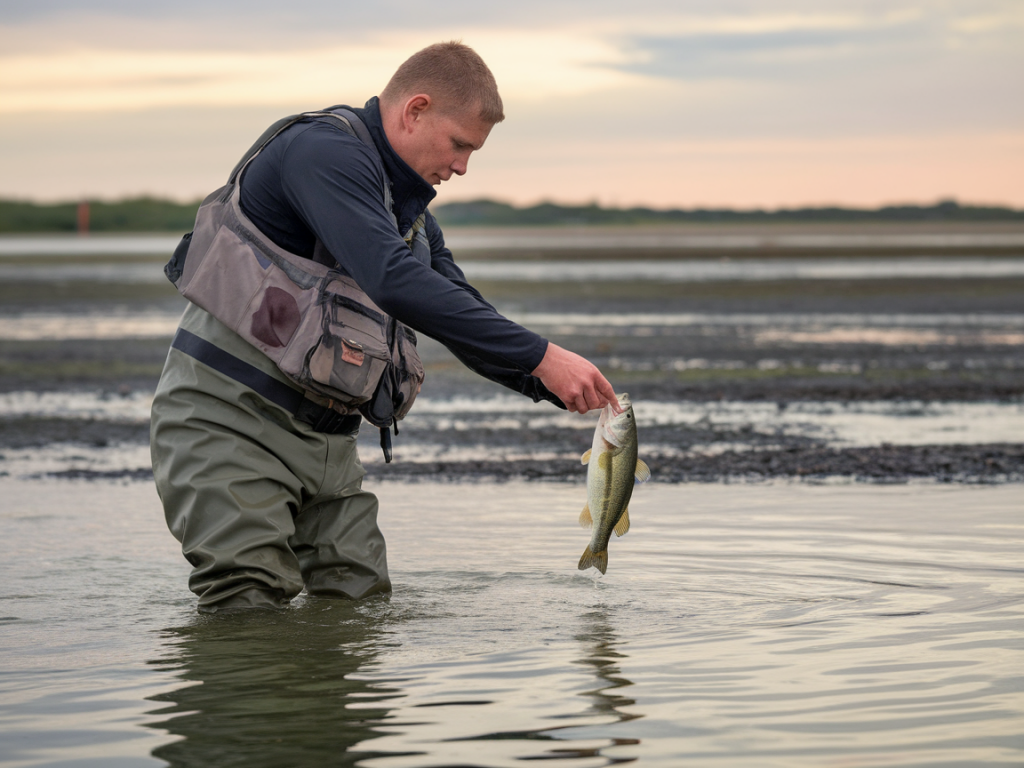
I fish estuaries a lot for bass, and low tide is one of those quiet windows where the cunning ones show their true colours. Over the years I’ve learned that changing the profile of a soft plastic at low water—sometimes subtly, sometimes drastically—can be the difference between a blank session and a clutch of wary bass. Below I share when I switch profiles, what I change, and why. These are practical, tested tweaks I use on the Wales coast and that I write about on Fishing In Wales Co. (https://www.fishing-in-wales.co.uk).
Why low tide changes my plastic choices
At low tide estuaries compress: fish concentrate in channels, pools and around structure, and food becomes more patchy. The water column shrinks, visibility often improves, and bass can afford to be more selective. They face fewer currents, so they can afford to chase more deliberately. That means overly aggressive, noisy plastics or big, fast-moving profiles will spook the shy individuals. I tend to downsize or finesse my approach, or sometimes shift to a larger, slower profile if the situation calls for it.
Signs I need to change profile
- Clear, shallow water with visible fish or finning tails.
- Short, tentative follows where bass track but refuse the bait.
- Soft grabs or single pecks instead of committed takes.
- Fishing pressure—if other anglers are working big shads all day, I’ll switch to a subtler profile.
- When the tide is near its lowest slack and bass are tucked into tight pockets or under overhangs.
What I mean by “profile”
When I say profile, I mean the overall silhouette, size and action of the soft plastic: the shape (minnow, paddle tail, grub, worm), the length, the thickness and how it moves at slow speed. Changing profile can be as simple as swapping a 4” shad for a 3” finesse paddle, or switching a bulky paddle tail for a thin, sinking worm. Small changes to width and action have outsized effects on shy fish.
How I decide between smaller vs. larger profiles
I follow two basic rules at low tide:
- When clarity and pressure are high: go smaller and subtler. I drop from a 4–5” shad to a 2.5–3.5” finesse shad, paddle or twister tail. The goal is a less obvious silhouette and a more delicate twitch.
- When bass are loafing in deep pockets or in current breaks: go larger and slower. If bass are in a deep slow pool and won’t chase, I’ll try a 5–6” big shad on a slow, wobbling retrieve—sometimes the bigger profile looks like a more rewarding meal.
Practical swaps I make at low tide
Here are the direct swaps I reach for when conditions demand a profile change:
- 4” paddle tail (e.g., Keitech Easy Shiner) → 3” micro shad or 3” McCloud-style paddle (Keitech Swing Impact 3”/ Smoke Tail). Less water displaced, subtler action.
- 5” big shad → 4” hollow belly on a light jighead for a slower, sinking presentation.
- Paddle tail → thin twister/tail grub (Gulp! Grub style) when fish are following—creates a different vibration and a smaller silhouette.
- Soft jerk shad → straight worm (Yamamoto Senko or similar) for a stop-and-fall or slow crawling retrieve near weed edges.
Weights, jigheads and how they change the profile
Changing the head weight alters fall rate and action. At low tide I use lighter heads to slow the action and keep the bait in the strike zone longer. My go-to set-up changes:
| Situation | Head | Typical plastic |
| Clear, shallow water | 0.5–1.5g mushroom / light weedless | 2.5–3.5” micro shad or finesse worm |
| Deep pocket / slow pool | 3–10g ball or jighead (depending on depth) | 4–6” shad or big paddle tail |
| Weedy margins | Light weedless jighead / Texas-rigged | 4” worm or paddle tail |
I’ll often cut a tail for an even slimmer profile—removing half a paddle tail reduces both vibration and silhouette. Conversely, I’ll add a bit of split shot or use a heavier head to make a bait fall more vertically when fish want something slow and obvious.
Retrieve styles that fit profile changes
Changing profile goes hand-in-hand with changing retrieve. At low tide I favour:
- Drag and hold: A slow drag across sand or mud, letting the bait sit and pulse. Works well with worms or thin paddles.
- Short twitch, pause: Micro shads respond to small twitches with long pauses. Most strikes come on the pause.
- Lift-fall: For big shads, a slow lift then longer fall can entice lazy fish in deep pockets.
- Slow roll: Very slow continuous retrieve for a larger profile—keeps it in the strike zone without flashing too much.
Colours and translucency
At low tide, I tend to go more natural and translucent. Clearer water calls for paler, silver, green mackerel tones or transparent baits with subtle flake. In stained water a darker green or brown silhouette works better. A single subtle contrast—like a darker back with a lighter belly—often outperforms garish fluorescent patterns when targeting pressured estuary bass.
Tactical spots to focus on at low tide
When the tide is low, look for:
- Deep holes in the channel where bass sit out of the current.
- Undercuts, overhanging banks and bridge abutments—bass use these for cover in shallow water.
- Edges of weedbeds where leftover pools concentrate bait.
- Sand bars with skinny troughs alongside them—the shallow water heats and concentrates baitfish.
Some brands and bait choices I rely on
I regularly rotate through Keitech, Berkley (Gulp!), Savage Gear and Yamamoto for soft plastics. Keitech micro shads are a staple for finesse low-tide work; Berkley Gulp! grubs are excellent when I want scent alongside a small profile; Yamamoto worms are unbeatable for slow, sticky presentations near structure.
Remember to adapt leader material too: I drop to lighter fluorocarbon (6–8lb) at low tide for stealth, unless I’m fishing heavy structure where abrasion resistance matters. Hook choice follows: fine-wire offset hooks for finesse rigs, stronger jig hooks for bigger profiles.
Finally, patience and observation win. If a profile fails, change only one variable at a time—the size, the weight, the colour or the retrieve. That way you learn what the fish are telling you and can build a reliable pattern to return to on similar tides.