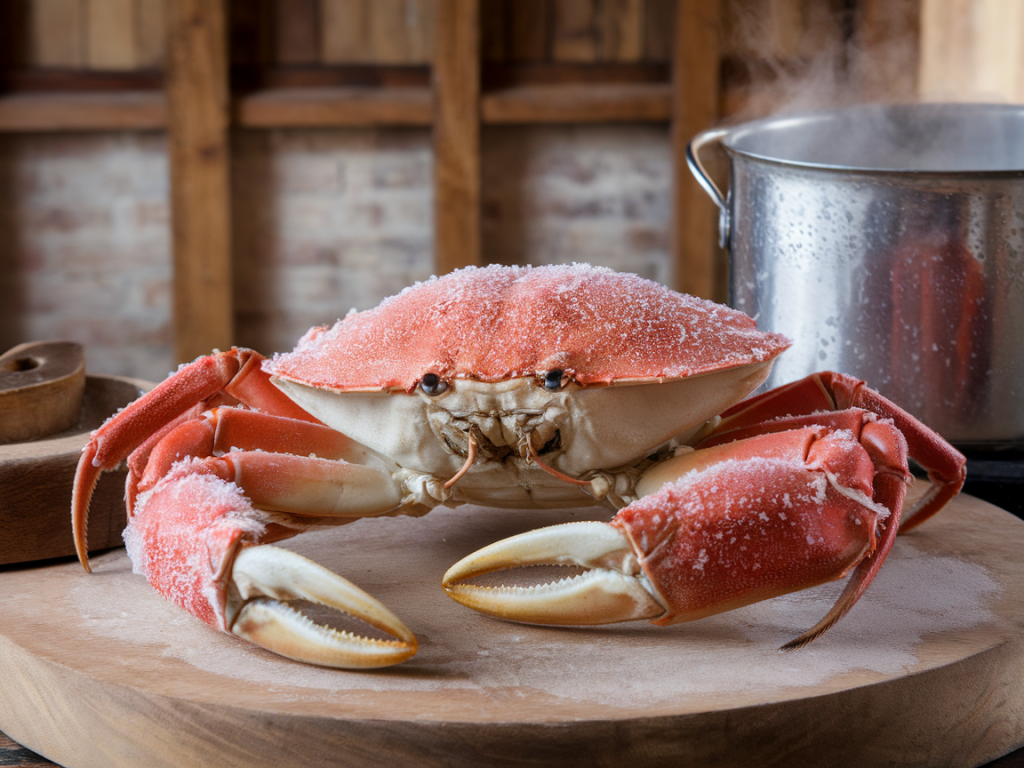
Peeler crab is my go-to winter bait for rays. When the water cools and the rays move in close, nothing matches that sweet, oily scent and the soft, yielding texture of a well-prepared peeler. The trick is not just buying good crab, but handling it properly from freezer to hook so it stays supple and attractive without becoming mushy or dry. Below I share the exact thawing and brining schedule I use — timings, salt ratios, water temperatures and storage tips — straight from my freezer to the bank.
Why a strict schedule matters
Crab that’s thawed too fast or brined incorrectly turns into either a soggy mess or a rock-hard chunk that rays won’t bother with. A predictable routine gives consistent results: the meat stays firm enough to hold on the hook but soft enough for rays to mouth and engulf. I also follow food-safety practices to avoid unpleasant smells or spoilage on long sessions.
What I buy and basic prep
I use peeler crabs frozen in whole sections or halves from trusted suppliers — locally from some Cardiff shops or online tackle suppliers like West Wales Baits when I can’t get fresh. If you can, choose vacuum-packed peeler: less freezer burn and easier to manage. Typical sizes for winter rays are 200–400g peeler halves.
On arrival home I store the crab in the freezer at -18°C in a sealed box or freezer bag. If the packaging is torn, re-seal in a zip-lock and squeeze out extra air. Label with date bought; I rarely keep frozen crab longer than 6 months.
Exact thawing schedule — step-by-step
My thawing routine is designed to avoid cold shock and limit water loss. There are two methods depending on how much time I have: slow fridge thaw (preferred) and controlled cold-water thaw (for shorter notice).
- Slow fridge thaw (best results)
- Transfer crab from freezer to the fridge (0–4°C) the evening before your trip. For example, if I’m fishing Saturday morning, I move crab Friday evening around 7pm.
- Keep crab in sealed bag or tray to catch any meltwater; place on a plate on the lowest shelf.
- Total thaw time: 10–14 hours for halves, up to 18 hours for larger pieces. The meat should be pliable, not freezing cold inside.
- Cold-water thaw (if you need crab same day)
- Keep crab sealed in its bag. Submerge in a bowl of cold tap water (~8–12°C), changing the water every 20 minutes.
- Small halves thaw in 40–60 minutes; larger sections may need 90 minutes. Total time depends on mass — check flexibility every 20 minutes.
- Never use hot water or microwave — that ruins texture.
Brining schedule and salt ratios
Brining firms the meat slightly and adds osmotic conditioning so crab stays on the hook and releases scent slowly. My brine is simple and consistent.
| Stage | Salt concentration | Temperature | Duration |
|---|---|---|---|
| Initial soak (desalinize & shape) | 0.5% (5g salt per litre) | 4°C (fridge) | 30–45 minutes |
| Conditioning brine | 3.5% (35g salt per litre) | 4°C (fridge) | 2–4 hours depending on thickness |
| Holding brine | 2.0% (20g salt per litre) | 4°C or iced cooler on the bank | Up to 48 hours (refresh daily) |
How I make the brine: I use non-iodized sea salt or coarse kosher salt (brands like Maldon or local sea salt work). For a litre of water, stir in the measured salt until dissolved. I chill the brine before adding the crab — warm brine equals faster, uneven osmosis and a higher risk of breakdown.
Practical brining process
- After thawing, give the crab a light rinse in cold water and pat dry. Then place it in the initial 0.5% soak to remove any leftover freezer taste and to start opening the muscle fibres slightly.
- Move to the 3.5% conditioning brine in a shallow, airtight container. Ensure the crab is fully submerged — use a small plate or lid to keep it down if needed.
- After conditioning, I transfer to the 2% holding brine in smaller containers or vacuum bags for bank storage. This reduces salt uptake while maintaining suppleness.
On-the-bank storage and handling
I bring the crab in an insulated cooler with plenty of ice packs — but I keep crab out of direct contact with melting ice water. The holding brine acts as a buffer. If the session lasts more than 24 hours, I replace brine or at least top up with fresh cold water and a pinch of salt. I avoid direct sunlight and keep the box shaded.
When baiting up, I always handle crab gently. If you split a half open, use your fingers to tease a small flake out rather than compressing the whole piece. For ray rigs I commonly use a 6–8oz grapnel sinker and a size 1 or 1/0 circle hook. Hook through the back meat or the tail fan depending on how the ray is feeding — soft-back pieces into the hook point give better hookups; tail fan for holding large flake.
Signs you’ve done it right (and wrong)
- Right: crab is flexible, slightly springy, with intact muscle fibres. It holds on the hook but tears cleanly when a ray mouths it.
- Wrong: crab feels slimy or emits a strong ammonia smell — discard. Over-brined crab will be too firm and rubbery; under-brined crab droops and falls off the hook.
Tips and tricks I use
- Label containers with mix concentration and times. It’s easy to forget when you’re prepping early mornings.
- If I want an extra scent boost before casting, I lightly stud the crab with a few drops of cod liver oil or a commercial ray attractant (I’ve used Fishbites Ray Attractant with good results) about 30 minutes before fishing — don’t soak it, just brush it on.
- When freezing leftover opened crab, re-seal in vacuum bags with a small brine puddle to reduce freezer burn and keep texture consistent next thaw.
- For long sessions, keep a small spray bottle of chilled holding brine to re-moisten bait that’s drying on the bank.
This routine has saved me many missed bites over muddy winter tides. It’s not complicated, but its consistency is what makes peeler crab sing to rays. If you want, I can post printable labels for brine mixes or a checklist for trip prep so your bait is always bank-ready. Tight lines.