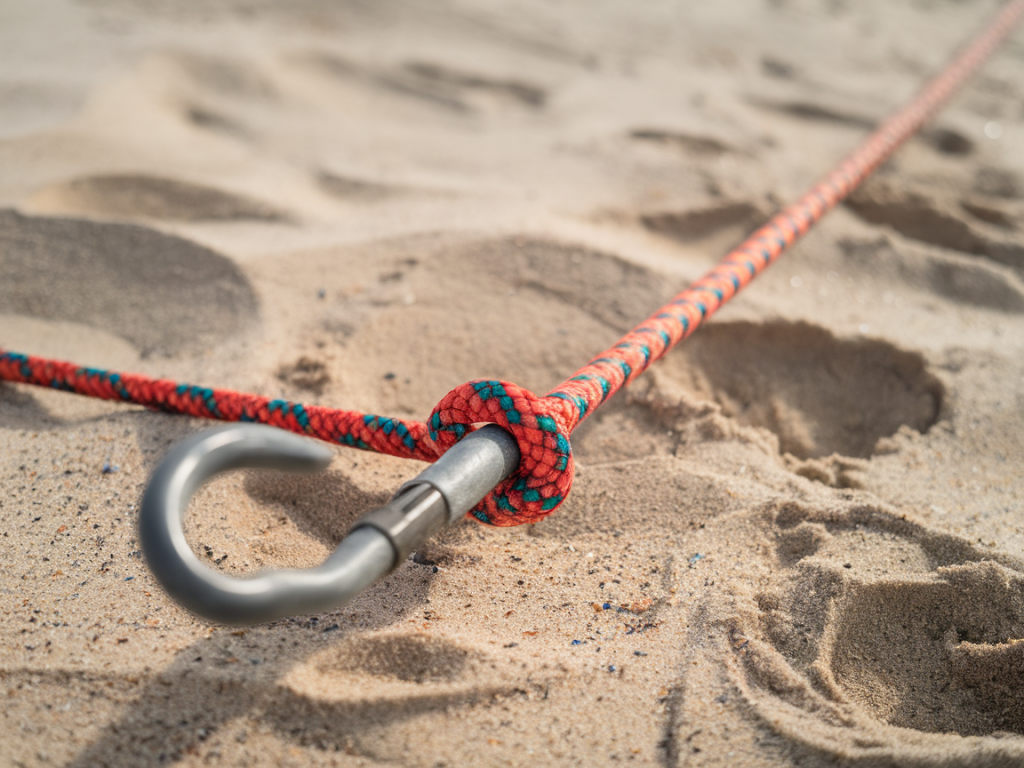
I fish long, exposed beaches across Wales, and nothing beats the confidence of a clean, strong braid-to-mono shock splice when you’re casting heavy baits into a stiff onshore wind. Over the years I’ve tried loads of methods — knots, sleeves, glue — but for six-strand braid I keep coming back to a properly executed splice. It’s tidy, casts well, and when done right it survives the abrasion and hammering of long beach runs. Below I share exactly how I tie the splice I trust most, the tools I use, the tests I run and the mistakes to avoid.
Why a splice over a knot or sleeve?
Knots like the Uni-to-Uni or Albright are fine, but they create a bulky transition that catches on rod rings and can blow apart when sand embeds into the knot during long runs. Metal sleeves require crimping tools and can be a bit overkill for shore fishing, plus they’re not always tidy. A properly buried braid-to-mono splice distributes load along the core, minimises bulk, and is more comfortable when casting long distances. For six-strand braid — the featherweight, round, and flexible braids we often use for distance — a splice gives the best blend of strength and smoothness.
What you’ll need
- Six-strand braid (e.g., 10–20 lb breaking strain for distance beach fishing depending on species and conditions)
- Monofilament shock leader (I usually use 30–50 lb mono for big beach runs)
- 24–30 gauge hollow needles for threading braid through itself (I use a specialised hollow needle designed for splicing)
- Small sharp scissors or braid snips
- Whipping twine or thin monofilament (for finishing the end)
- Superglue or thin CA glue (sparingly, as a final sealing)
- Heat shrink sleeve (optional, for a neat finish)
- A marker pen to mark entry/exit points
Preparation: lengths and layout
I start by deciding how long I want the splice to be. For long beach runs I prefer a relatively long burial to spread shock through more strands — typically 30–45 cm of braid entering the mono. Too short and you load the splice; too long and you lose some shock absorption characteristics you might want in the leader. Here’s a quick reference table I keep in my kit:
| Desired leader mono (lb) | Braid diameter (approx.) | Recommended splice length |
|---|---|---|
| 20–30 | 0.14–0.20 mm | 25–35 cm |
| 30–50 | 0.20–0.30 mm | 30–45 cm |
I lay the braid and mono alongside each other and add an extra 10 cm to the braid for working. The braid should be freshly cut with nice clean ends; frayed ends make threading harder.
Step-by-step splice
Below is the routine I use on the bank. It’s methodical but once you’ve done a few you’ll be able to complete one in under 10 minutes.
- Step 1 — Form the initial loop: Take the mono and form a loop about the desired splice length from the mono’s end. Secure the loop with a single, loose overhand so it won’t slip while you work.
- Step 2 — Thread braid through the loop: With your hollow needle or a sharp awl, make a small hole through the braid 10–15 cm from its end (this is the start of the bury). Insert the braid through the mono loop and pull until that point reaches the loop. The braid is now inside the mono loop.
- Step 3 — Begin burying the braid: Using the hollow needle, feed the braid back through its own core a couple of times. For six-strand braid this means pushing the needle into the hollow center, pulling a short length of braid through (about 2–3 cm), then repeating along the length of the planned bury. Each bite should overlap the previous by about 30–50% so there’s no weak point. I do about 6–10 bites along the splice length depending on footage.
- Step 4 — Gradually withdraw the braid and seat the mono: As you pull the braid back through itself, the mono loop will slide up and the braid will bury into the mono. Keep tension consistent so the braid seats evenly. You’ll see the braid taper smoothly into the mono if done properly.
- Step 5 — Tidy the exit: Once the splice is seated, trim any stray braid strands flush with a sharp blade. Don’t cut too close — leave a millimetre or two to avoid unravelling.
- Step 6 — Whip and glue: I whip the start of the splice (the mono side) with fine twine or thin mono, wrapping tightly for about 8–10 turns, then add a drop of thin CA glue to secure. This prevents slippage and gives me peace of mind on a long run. If you want a neater profile, slip a short heat-shrink piece over the whip and shrink carefully with a lighter (avoid burning the braid).
Testing on the shoreline
Once the splice is finished I always bench-test it: slowly pull the braid to load the splice, then give it a few firm tugs to simulate a hard run. Look for any movement between braid and mono. On the beach I’ll cast a few short heavy runs and then check the splice for abrasion or slippage before committing to long-distance casting.
Common mistakes and how I avoid them
- Too-short bury: If you cut corners with 10–15 cm buries you’ll see slippage. Always aim for the longer end when targeting big fish or long runs.
- Poorly overlapped bites: For six-strand braid those 30–50% overlaps are crucial. Bite spacing that’s too wide creates weak points.
- Rough trimming: Using blunt scissors can flare fibres. Sharp braid snips keep the final profile clean.
- Over-gluing: Excess glue stiffens the splice. A small dab at the whipping is enough to hold everything in place.
- Not accounting for abrasion: If you’re fishing rocky beaches or kelp, consider an abrasion sleeve or an extra layer of whip at the nose of the splice.
Why I keep coming back to this method
It’s a balance of strength, low bulk and casting performance. On long beach runs I want the least amount of friction through the rings and a splice gives me a smooth profile. For brands, I’ve had reliable results using PowerPro or Sufix for the braid and Seaguar or Berkley Trilene for shock leaders. The hollow splicing needles from brands like Uni or Owner make the job much easier than makeshift tools.
When to re-splice
I inspect splices after every hard run or if the leader negotiates snags. If I see any fraying, movement or a stiff section, I re-splice. It’s cheap insurance — losing a rig or a fish because you skimped on the splice isn’t worth it.
If you want, I can make a short video breakdown of my steps next time I’m on the beach and post it alongside rig photos. I find visuals help with needle entry angles and bite spacing — things that are a bit fiddly to explain in words. Tight lines and happy splicing.