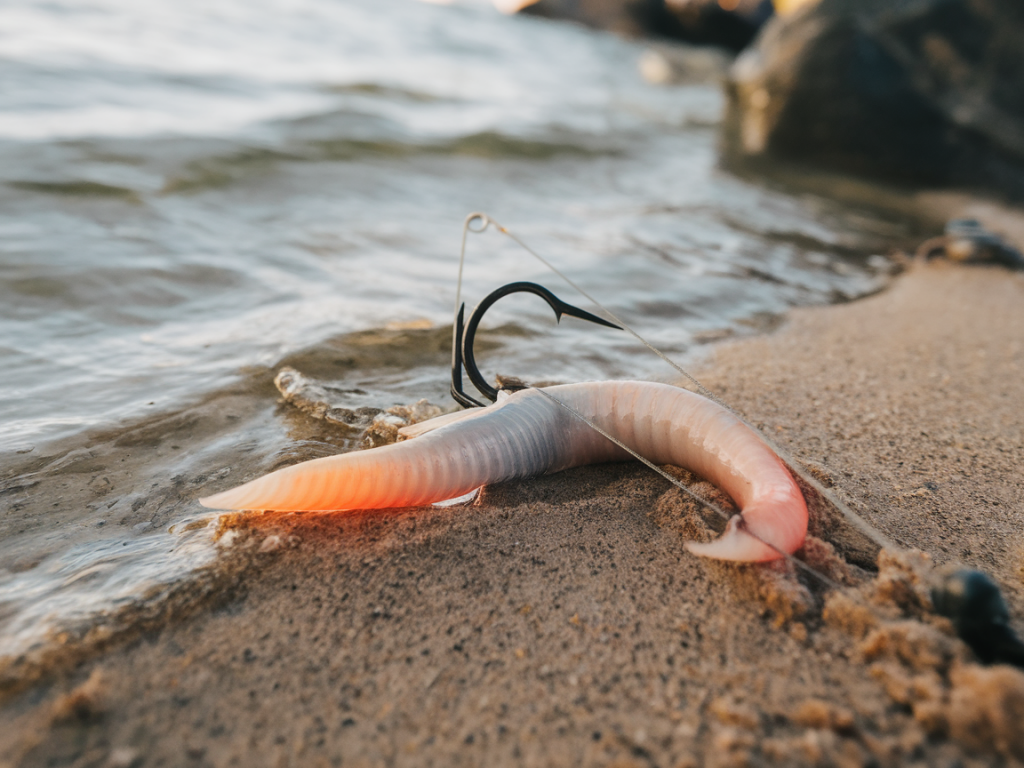
I fish a lot of soft sand for sole around the Welsh coast, and over the years I’ve refined a simple shore rig that presents a whole lugworm exactly how the flat fish like it — low, drifting naturally with the tide, and sitting just off the seabed so the sole can inhale it without spooking. Below I’ll show you my exact step-by-step rig setup, tackle choices and how I bait, cast and work the swim to consistently outfish local anglers. This is all based on what I actually use on dawn sessions and night tides.
Why a whole lugworm and why this rig
Whole lugworm is hard for a flatfish to resist — it’s the right size, scent profile and movement when presented properly. On soft sand you want the bait to move subtly over the bottom rather than pinned tight against it. That means a running ledger with a reasonably long dropper, a single well-placed hook, and a weight that holds in the tide without anchoring everything to the point of looking unnatural.
What I fish with (tackle and gear)
- Rod: 12–13ft beachcaster in the 3–4oz class — long enough for good line angle and soft enough to avoid pulling bait.
- Reel: 6000–8000 size longcast model spooled with braided line (0.20–0.25mm / 15–25lb equivalent).
- Mainline: 0.20–0.25mm braid — low stretch for casting and bite detection.
- Shock/leader: 40–60lb mono shock leader, 1–2m long (depending on how hard you want to hit the cast).
- Trace/short leader: 30–40lb fluorocarbon or mono, 80–120cm long for the dropper to give natural presentation.
- Hook: Size 1/0 to 2/0 light-wire flatfish/long-shank hook or an Aberdeen 1/0 — I use a 1/0 light forged hook for whole lugworms.
- Weight: 3–6oz (85–170g) sea weight (pyramid or block) — the exact size depends on tide strength and surf. I usually start with 4oz (115g) on standard tides.
- Terminal gear: 3–5mm bead, size 8–12 barrel swivel, and a short length of anti-tangle sleeve or tubing.
- Baiting tools: Baiting needle, bait elastic or small O-ring elastic, bait box and cool bag for lugworms.
Exact rig build — step by step
Follow these exact steps to assemble what I call the “long drop running ledger.” It gives the lugworm freedom to move and sits the hook just off the sand where sole like to take.
- Splice or tie your braid to the shock leader using a FG knot or a strong double uni. Make sure the shock leader is 1–2m long if you expect heavy casting forces.
- At the far end of the shock leader tie a good quality size 8–12 barrel swivel with a blood knot or figure-of-eight — this is your fixed point. Leave a 10–15cm tag as a safety tail.
- To the swivel attach your running ledger weight setup: slide your bead(s) (3–5mm) over the shock/leader first, then thread your chosen weight on a short section of line or directly onto the leader if using a sliding sleeve. I prefer a simple sliding rig: bead + weight + bead on the mainline so the weight slides freely.
- From the swivel tie a 80–120cm length of 30–40lb fluorocarbon as the dropper. I aim for 90cm as my go-to — long enough to keep the bait off the weight but short enough to keep contact with the seabed.
- On the far end of the dropper tie your hook using a firm snell or improved clinch knot leaving the hook point aligned with the shank so baiting is easy and natural. Make sure the knot is neat and the hook is straight in-line.
- Add a short anti-tangle sleeve (6–10cm) over the top of the trace near the swivel to reduce twists during the cast. Slip it on before you attach the trace or thread the trace through and fix it in place.
How to bait a whole lugworm for an invisible presentation
Baiting the lugworm correctly is what makes the rig deadly. I want the worm to look whole and natural — coiled or lightly threaded rather than squashed on the hook.
- Use a long-shank hook and start by passing the baiting needle through the head end of the worm so the hook point will exit near the mid-body — this lets the worm sit along the hook shank with the tail free to move.
- Skewer the worm along the hook shank, then bury the hook point back into the worm's body so only the curve of the hook is visible. For added security use a small loop of bait elastic or an O-ring around the tail to stop the worm sliding off on the cast.
- Don’t compact the worm onto the shank — leave a little slack so it pumps slightly in the water. That subtle movement gives off scent and looks like a struggling natural worm rather than an artificial lump.
- If worms are fragile, use a double-hook presentation: a smaller 2/0 hook as the main and a micro 1/0 as an anchor through the tail. I only do this if the worms are very brittle or when there’s a lot of bait theft from small fish.
Casting, setting the rod and fishing the swim
I cast beyond the zone where I expect the fish to roam then let my rig sink into the current. Here’s how I fish it:
- Cast to the mark and let the bait settle for 20–30 seconds before watching the rod tip. On a running ledger the bait will settle low on the sand but still have that subtle drift.
- Use a quiver tip or a soft action rod with an illuminated bobbin/indicator if you want subtle bite detection. Sole often take with a slow draw rather than an explosive run.
- Keep line tension light. If you feel pressure pull down and then steady, wait a heartbeat and then lift into the fish. A steady pull usually means a flatfish inhaling the worm — lifting too hard often pulls the hook out.
- Reposition and recast every 20–30 minutes if you’re not seeing signs — sole move with the tides and will sometimes switch on in one gutter and not the next.
Choosing weight for soft sand
Soft sand often “sockets” a weight, so use enough mass to hold the ground but not so much the bait is buried. My practical guide:
| Conditions | Recommended weight |
|---|---|
| Light drift, calm | 3–4oz (85–115g) |
| Moderate tide or small surf | 4–5oz (115–140g) |
| Strong tide / surf | 5–6oz (140–170g) |
Keeping lugworms fresh and attractive
- Store lugworms in a cool bait box with damp sand or vermiculite. Keep them out of direct sun and change the packing material if it gets too warm.
- Only bait up when you’re ready to cast — whole lugworms crumble if handled too often. I only bait one rod at a time if the tide’s quiet to keep freshness up.
- Bring a spare supply of frozen silverfish or sandeel strips in case the worms fall apart — alternative baits can keep you fishing while you rebait.
Handling fish and local good practice
When I land a sole I handle it gently, support the belly and remove the hook carefully with long-nose pliers. Respect local rules on size and bag limits — Fishing In Wales Co is all about sustainable angling. Always leave the beach cleaner than you found it and report any unusual catches to local clubs if required.
Fish the setup a few times and you’ll start to feel how a sole takes a whole lugworm. The long drop, light hook hold and sliding weight make for a natural presentation that simply puts more baits in the fish’s mouth. Tight lines — and if you want, tell me how you fared on your next report; I love hearing what works on different beaches.