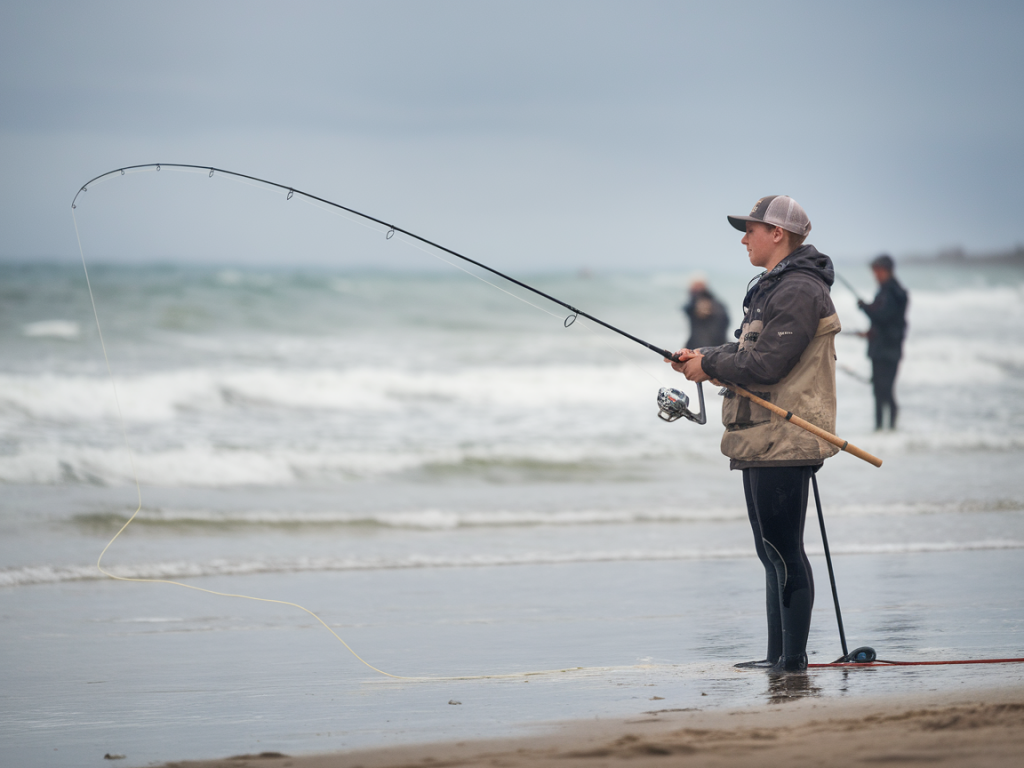
I love long casts. There’s something about watching a rig ride the tide five or six marks out that makes a cold dawn feel worth it. So when my distance drops — sometimes gradually, sometimes overnight — it’s maddening. Over the years I’ve learned that most lost metres aren’t mysterious; they usually come down to a few repeatable issues. In this post I explain the common causes I see on the bank and show three simple adjustments that get your distance back without buying a whole new outfit.
Why distance falls off: the usual suspects
Before we jump into the fixes, it helps to know what’s actually reducing range. When I’m diagnosing a short cast I mentally tick through these factors:
Often it’s a mix — for example old monofilament with high memory and a half-empty spool combined with poor timing on the cast. The good news is that three simple adjustments solve the vast majority of problems.
Adjustment 1 — Check and optimise your spool/line setup
If your spool looks half-empty, or the line has been on the reel for a couple of seasons, start here. Line choice and how your spool is filled change everything.
What I do:
Small product notes: a halk or spare spool pre-wound with fresh braid is a big time-saver. Shimano, Daiwa and Penn all offer factory spools that perform well. For backing I use a thin mono (10–12lb) underbraid; this smooths the transition between spool and braid.
Adjustment 2 — Tweak your casting technique and timing
Technique often accounts for the biggest single drop in distance, especially if you’ve changed reel/line or are fishing in different wind conditions. I watch lots of anglers who rush the cast or flip the rod tip too early, losing the power stored in the blank.
Simple drills I use to reset my timing:
Rod selection and action matter too. A fast-action rod with a clean tip-to-butt transfer of energy will out-distance a tired parabolic blank when cast well. But a new rod alone won’t help if your timing is off.
Adjustment 3 — Make your rig and terminal kit more aerodynamic
Rigs can be the hidden culprits. A bulky paternoster, multiple split shots, oversized swivels and long trailing loops add drag and make everything slow down mid-air.
What I simplify on the bank:
Rig examples I favour for distance:
Quick troubleshooting checklist to use on the bank
| Symptom | Likely cause | Action |
| Sudden drop overnight | Line wear or memory | Change line, top up spool |
| Long casts but poor accuracy | Technique/release timing | Film casts, pause drill |
| Bait flapping and short cast | Bulky rig | Simplify rig, use micro components |
| Wind kills distance | Headwind or poor lead shape | Use heavier aerodynamic lead, lower angle cast |
I rarely fix a distance problem with only one change — but these three adjustments (spool/line, technique, rig streamlining) will get you 75–90% of the way back. On good days you’ll reclaim metres quickly; on stubborn days you’ll at least know where the issue lives and how to iterate until it’s solved.
If you want, tell me your outfit (rod, reel, line, rig) and the exact symptom and I’ll walk through a tailored swap list. Tight lines — there are more fish out there waiting for that extra twenty metres.