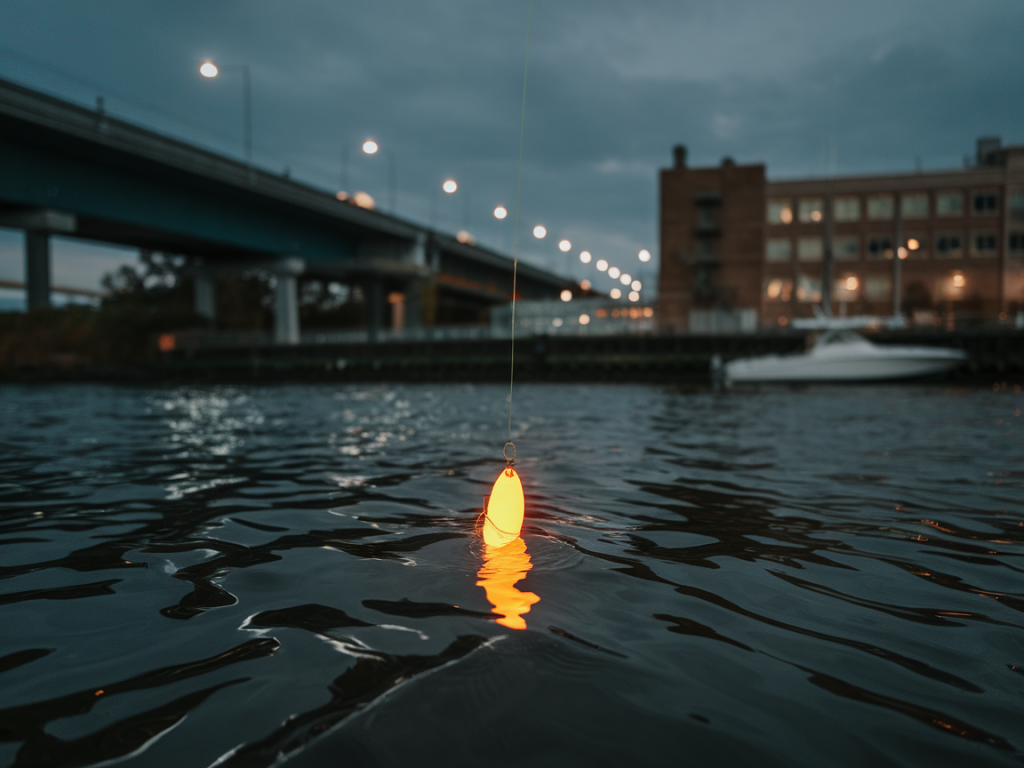
One of my favourite night sessions in an estuary involves watching a bank of streetlights smear across the water and waiting for the telltale slashes of pollack cruising the lit edges. Over the years I’ve learned that the right glow-stick placement and lure profile can turn a slow tide into a string of bites. In this guide I’ll walk you through exactly where I place my glow-sticks, how I rig for the most common estuary strikes, and which lure shapes and actions consistently trigger pollack under lights.
Why lights matter for nighttime pollack
Lights act as a magnet for baitfish. Small fry and shrimps get pushed into the illuminated columns, and that creates predictable hunting lanes for predators like pollack. What I look for is the edge of the light — where shadow meets glare — because predators stalk that boundary where bait is squeezed into higher densities. Placing glow-sticks intelligently recreates those edges around your bait, or enhances the natural contrast, and that’s often what triggers the strike.
Glow-stick placement: the exact spots I use
I always carry a variety of glow-stick rigs (standard 10–12mm sticks, strobe-style, and shorter micro sticks). Here’s my go-to placement checklist when fishing from a tidal bank or slipway:
In practice, that means I’ll often run a visible glow 60–100cm above the lure in deeper water and about 30–50cm in shallow, so the light sits within the strike zone when pollack cruise at mid-depth.
Why distance matters (and how far to place glow-sticks)
Pollack are attraction predators. Too close and you create a glare that spooks; too far and the light loses relatability to the bait. My rule of thumb:
For casts parallel to the bank, I’ll often use a glow-stick on the mainline 1–2m from the rod tip so the light sits between the rod and the lure during the retrieve — this creates a moving halo that cut through the columns and triggers chasing fish.
Lure profiles that work best under lights
Not all lures respond the same to artificial light. Pollack under lights tend to feed on small, reflective prey, so I favour lures that flash and have a lively action:
Brands I trust for these uses include Williamson for metal jigs, Savage Gear for micro jigs and realistic softs, and Daiwa/Smith for high-quality soft plastics and jigheads. But the profile and action matter more than the brand — aim for flash + erratic action.
Rigs I use and exactly how I tie them
Under estuary lights I prefer a balance between sensitivity and stealth. Here are three rigs I rotate between depending on depth and current:
| Rig | When I use it | Key knots/components |
| Running ledger | Moderate current, deeper water | Uni knot to swivel, 9–15lb fluorocarbon leader, 40–80g breakaway lead, glow-stick on mainline 1–2m above swivel |
| Pennel/Dropper with single lure | Shallow water, broken ground | Dropper loop 30–60cm above hook, 6–12lb leader, light jighead, glow-stick 30–50cm above hook |
| Direct cast with micro jig | Still water under piers, smooth tide | Direct tie to braid with FG knot, shockleader 10–20lb, 0.5–1m fluorocarbon, glow-stick close to lure to create silhouette |
Fluorocarbon leader helps reduce visibility and adds abrasion resistance around structure. I generally fish 6–15lb leader for pollack in estuaries — lighter for spooky, shallow situations; heavier for ripping currents and big hooks.
Retrieve styles that trigger bites
Pollack respond to different retrieve styles depending on mood and how bait behaves under the lights:
When you’re under lights, pay attention to the silhouette created by the glow-stick relative to the lure. If the glow sits above and you use lift-and-fall, the lure will appear to burst into the light — that sudden contrast is often the cue for a bite.
Common mistakes and how I avoid them
Notes on safety, local rules and ethics
I always check local bylaws for night fishing and ensure I’m visible on the bank (high-vis jacket, headtorch). Respect private property and avoid fishing where signs prohibit access. Handle pollack carefully — they’re tough but their spines and gills benefit from gentle handling and quick returns if they’re undersized or if you practice catch-and-release.
If you try this approach, start by experimenting with glow-stick height and lure action for the first 20 minutes to dial in what the fish want that night. Tides and moon phase change behaviour quickly under lights, and once you find the right combo it feels like a cheat — the glow draws them in and the right lure finishes the job.