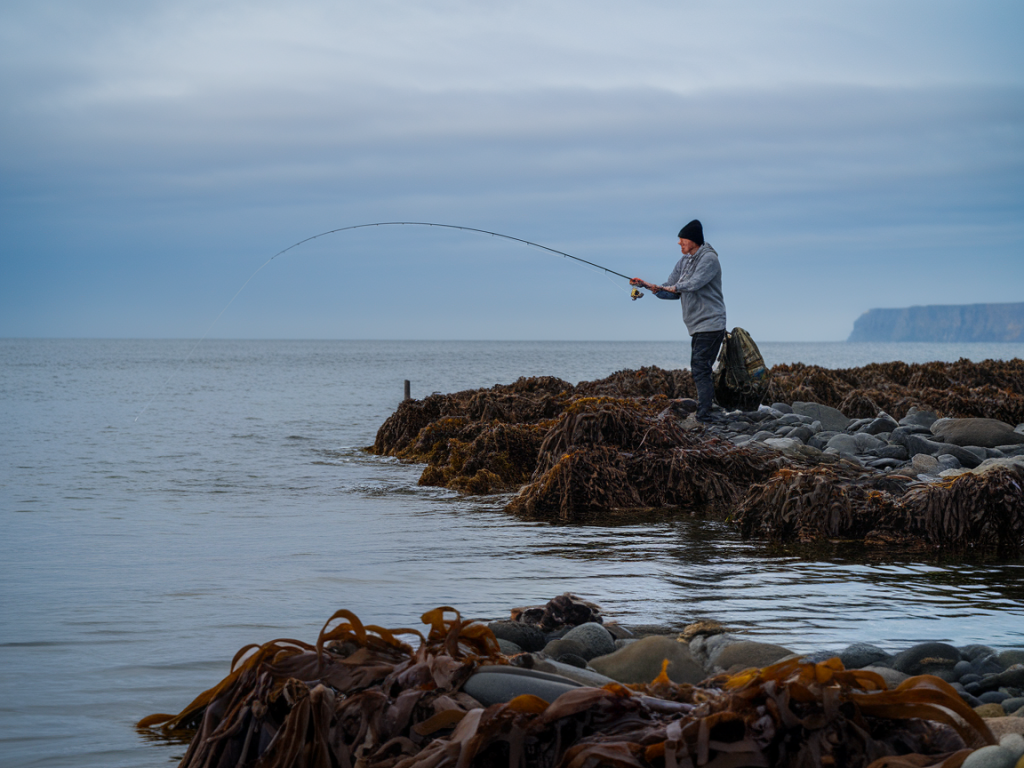
I like winter cod in shallow kelp bays because everything about the session feels deliberate: timing, bait, and a careful read of the water. Over the years I’ve learned that you don’t just “turn up and hope” on these spots — you pick a precise tide window, prepare baits that hold scent and shape in the kelp, and use rigs that get through the weeds intact. In this guide I’ll walk you through the tide timing I trust, the baits I prepare (and how), and the tackle and rigs that keep you fishing when others are catching kelp.
Reading the kelp bay — why tide matters more than you think
Shallow kelp bays change quickly. In winter the difference between a bay that holds resident cod and one where fish have moved offshore can be a matter of a few hours. The key point I use is that cod tend to concentrate on predictable feeding edges in shallow water — gullies, rock margins and the seam where kelp gives way to sand. You need to be fishing when those seams are active.
My preferred tide window for winter cod in shallow kelp bays is centred around the high water period. Practically that looks like: begin fishing 90–150 minutes before high water and continue through the first 45–60 minutes after high. That gives you the incoming push that drives prey into the margins, plus the high-water slack where cod move into the shallowest lies to feed.
Why this window?
That said, local quirks matter. On some bays I know the best bite comes on the last hour of the incoming, while other spots are clearly better on the early ebb. I always watch the water carefully on arrival: look for movement in the kelp, birds working edges, or signs of smaller fish. If the kelp edge is alive and the current is pushing towards the margins, you’re in the right window.
Bait selection and preparation for winter cod in kelp
In winter I prioritise baits that hold scent, resist being stripped by kelp, and present naturally on a heavy leader. Here are the go-to choices and how I prepare them.
Whole and chunked oily fish (mackerel, herring)
Mackerel and herring are my top two for cod in winter. The oil content means a strong scent trail even in cold water, and chunks hold on the hook well if prepared properly.
Squid and cuttlefish
Squid is a winter staple. It’s durable, slightly gummy so it stays on the hook, and has a different scent profile that can trigger cautious cod.
Ragworms and lugworms
When available, fresh lugworm or rag is brilliant — especially for smaller cod or winter pollack that often share the kelp edges. Use these on smaller single hooks or as a teaser behind a baitfish chunk.
Peeler crabs and natural crustaceans
Where crabs are present, a peeler crab or soft crab can be lethal. They’re especially good on bays where crabs are a primary prey for local cod.
Simple bait hacks that make a difference
Rigs and terminal tackle for kelp-heavy bays
Kelp is the enemy of finesse rigs. You want a setup that gets the bait into the seam, stays there and lets you get free quickly when you snag. Here are the rigs I use most.
Weedless paternoster / sliding dropper
My go-to for kelp: a short paternoster with the dropper loop positioned low and a tidy weed-guarded hook. Keep the overall leader length short — 20–30cm — so the hook doesn’t dangle into heavy kelp. Use a heavy swivel to prevent twist.
Heavy single-hook flapper (for chunks)
For chunk baits I use a single strong flapper or flapper-style hooklink with a short trace of 30–50cm to the swivel and an inline lead (3–6oz depending on conditions). A double-presentation (two hooks on the same bait) can be practical when the hooks are arranged to keep the bait compact and closer to the seabed.
Breakaway/leverage end tackle
Weights and casting in kelp
Weight depends on swell and the depth of the kelp. Typical winter jobs use 3–6oz (80–170g) inline leads in sheltered bays; if you’ve got heavy swell or long casts you might push to 8–10oz. The trick is enough weight to hold on the bottom but not so much that you’re constantly snagging and dragging the lead through kelp walls.
Technique — how I fish the window
I arrive early, watch the water from the bank, and set up before the tide starts its final push. First casts are deliberate: I aim a few metres beyond visible kelp edges and let the bait settle on the seam. My retrieve pattern in winter is patient — let the bait sit, then twitch slightly every 20–30 seconds to mimic a struggling sandeel or crab. If I feel light taps, I don’t strike immediately — cod often inhale and retreat, so I count to two before striking.
Practical checklist before you go
| Arrival time | At least 60–90 minutes before your chosen high-water window |
| Bait | Frozen-thawed mackerel/herring, squid strips, fresh lugworms, peeler crabs |
| Rigs | Weedless paternoster, single flapper, robust traces (50–80lb) |
| Weights | 3–6oz typical; heavier if surf or long cast needed |
| Window | 90–150 minutes before HW to 45–60 minutes after HW (adjust locally) |
I usually carry spares: extra hooks, swivel snaps, a small bottle of mackerel oil, and a pair of long-nose pliers for hook removals in heavy kelp. Respect local regs (size and bag limits) and handle fish with care; in winter cod are slower to recover, so minimise air exposure.
Finally, the thing I enjoy most is that success in these bays rewards observation — noticing where the kelp is moving, where the birds are picking, which seams are cleaner. The tide window gives you the stage, but the details you pick up on the bank often turn a good session into a great one. Tight lines and keep an eye on the high-water clock.