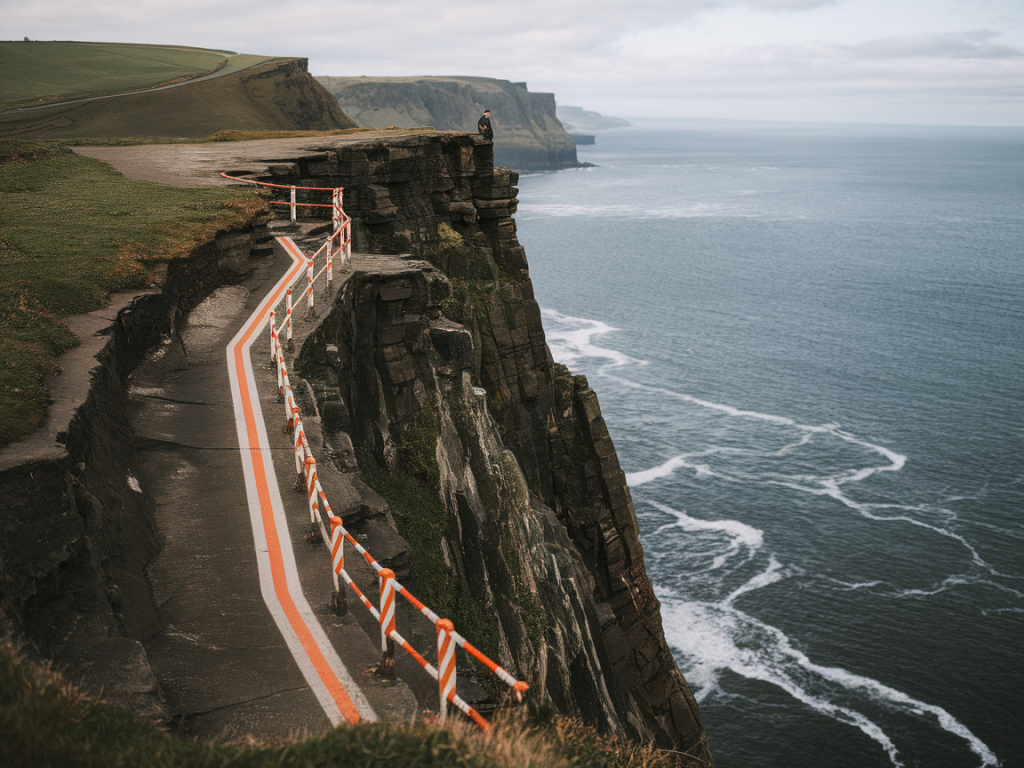
Cliffs and high banks are some of the best places to fish on the Welsh coast — they give you height for longer casts, often hold productive currents and can put you above productive ledges. But those benefits come with responsibility. Before I even unpack my rod, I always spend time picking my exit route. That simple exercise has kept me out of trouble more times than I can count, and it’s the one habit I’d encourage every shore angler to adopt.
Why an exit route matters
When you’re committed to a spot on a steep cliff, the tide or weather can change faster than you expect. A planned exit route ensures you don’t get trapped by rising water, deteriorating light or a slip on loose scree. I’ve watched anglers try to scramble back up a slope in the dark, soaked and exhausted — it’s avoidable. Knowing your way off the cliff calmly and safely is as important as knowing where to place your bait.
First impressions: the pre-walk
Before I step off the car park, I do a slow reconnaissance walk from the nearest access point to the fishing ledge. This is not about rushing to the water; it’s about mapping the terrain with my eyes and feet. I look for:
- Visible paths or worn tracks that lead up from the ledge.
- Obvious hazards — loose shale, crumbling cliff edges, overhanging vegetation.
- Potential low points that could be cut off at high tide.
- Alternative escape routes: a set of steps, a nearby cove, or a continuation of the ridge that’s less steep.
On several occasions, a route that looked straightforward from below vanished when I reached the top — hedgerows, barbed wire or private land can block exits. If that happens, I mark an alternative on my phone or mental map.
Read the tide and the timetable
Tide is king on the Welsh coast. I check the tide times on the UK Hydrographic Office tables or my reliable app before leaving home. I plan to be off the ledge at least an hour before the predicted high tide on spots with narrow beaches or steeply shelving approaches. On places with complex tidal streams or submerged ledges, I add extra time.
Remember that tidal behaviour differs by bay — some headlands create fast flows that eat into the foreshore quickly. When in doubt, I speak to local tackle shops or other anglers; they often know the quirks of a spot.
Identify and test your exit route visually
Once I find a candidate exit route, I walk it. Visual inspection from the ledge isn’t enough. I test footing, note any steep steps, and time how long it takes to reach the top. I do the route twice — once carrying just my essentials (phone, headlamp) and once with my full kit. It’s surprising how much slower you are with a loaded bag, especially on narrow tracks or loose rock.
If the route involves scrambling up a slope or using a rope, I only trust it if I can clearly see secure handholds and stable ground. I never rely on bushes or thin grass tussocks for support.
Gear that makes exits safer
I keep a small kit specifically for safe exits. It lives in the top pocket of my rucksack and comes with me even on short trips:
- Headtorch (I use a Petzl Actik Core) with spare batteries — hands-free light is vital for scrambling.
- Sturdy gloves for gripping rough rock and protecting hands from wire or thorny vegetation.
- A lightweight sling or 5m of accessory cord — not a full climbing system, but useful for short handlines or emergency anchors.
- Waterproof map or downloaded map tiles on my phone; battery pack to keep the phone lit.
- First-aid kit and a space blanket.
Footwear is often overlooked. I fish steep cliffs in boots with a grippy Vibram sole; trainers may be comfortable but they slip when the shale is wet.
Using two-route logic
Adopt what I call the two-route logic: always identify a primary exit and at least one backup. The primary route is the one you’ll use if everything goes according to plan — it’s the quickest and safest. The backup should be different enough to remain usable if the primary is compromised (e.g., cut by the tide or blocked by fallen rock).
On one outing near Milford Haven, my primary path up a vegetated gully was flooded sooner than expected. Because I’d already identified a steeper but dry ridge route as an alternative, I avoided a stressful scramble and stayed safe.
Consider escape under reduced visibility
Dusk and fog are common on the Welsh coast. I plan for reduced visibility by memorising simple landmarks during daylight: a distinctive rock stack, a white house on the ridge, or a cluster of scrub. When I get low on light, those features guide me faster than GPS or maps in cramped situations.
Carry a headtorch and a small whistle. If you’re delayed, sound carries well and a whistle can aid helpers in locating you faster than shouting.
Legal and access considerations
Some cliff paths cross private land or are designated as coastal paths with specific rights of way. I always respect signage and fencing. If a clear exit requires crossing private land, I either choose a different spot or seek permission. A locked gate at the top of a path becomes a serious issue if the tide is rising below.
Local knowledge is invaluable. I make a habit of asking at town tackle shops — they’re an excellent source of practical info about access and safe exits for particular marks.
Checklist to run through before you commit to a ledge
| Check | Action |
| Tide time | Plan to be off at least 60 minutes before high tide (more on complex spots) |
| Footing | Walk your exit route with full kit to test stability |
| Visibility | Identify daylight landmarks and carry headtorch |
| Backup | Confirm an alternate exit route |
| Access | Check for gates, private land or seasonal closures |
| Gear | Gloves, map, phone battery, light, whistle |
Picking a safe exit route is not about being cautious for its own sake — it’s about adding predictability to a changing environment. If you make it routine to scout, test, and pack appropriately, you’ll find that your confidence on the cliffs grows, your trips become more enjoyable and the odds of an emergency shrink dramatically. If you ever want to talk through a specific spot, I’m happy to share what I’ve learned — local info often makes the difference between a great session and a close call.