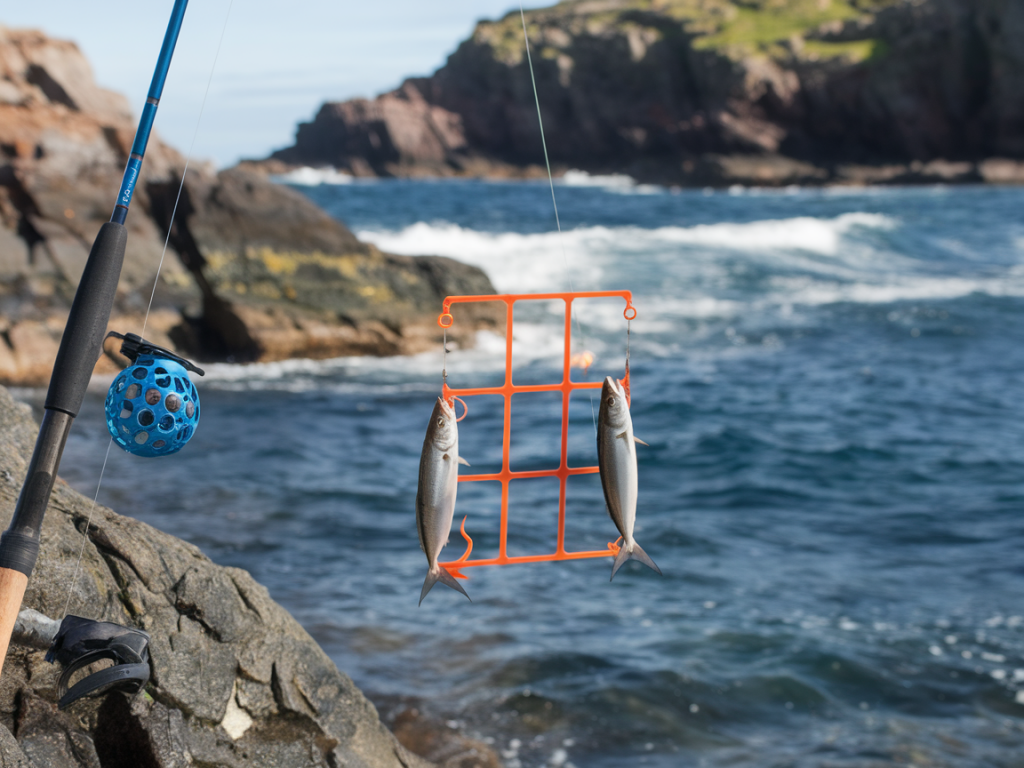
I’ve lost count of the number of times a promising session in a rocky Welsh cove was spoiled by marauding mackerel taking my bait clean off the hook. They’re fast, curious and relentless — and if you don’t set your gear up to deal with them, your baits for cod, pollack or bass won’t stand a chance. One of the simplest, most effective rigs I’ve come back to is a nylon windowpane rig. It’s tough, adaptable and, when tied correctly, deters mackerel thefts while still presenting natural baits to the target species.
Why a nylon windowpane rig?
Windowpane rigs (sometimes called “side-door” rigs) let bait sit a little off the seabed and move naturally in the surge — great for pollack and cod in rocky areas. Using nylon for the traces and hinges adds a little stiffness and abrasion resistance compared to fluorocarbon-only setups, and that stiffness is key when you need to prevent mackerel from making a clean grab and swimming away with half your rig.
I favour nylon because it gives the hooks a bit of backbone. A skinny, limp trace lets mackerel get better purchase on bait; a slightly stiffer nylon trace resists their sideways jerks so you either hook them or they can’t steal the bait cleanly. Nylon also tends to hold knots well and is kinder to the swivels/plates where abrasion in rocky coves is a concern.
What you’ll need
| Item | Recommendation / Tip |
| Mainline | Mono or braid 15–30lb depending on rod; I often use 20–30lb braid with a mono shock leader |
| Leader / Shock | 50–80lb nylon mono, 1–1.5m for shore sessions around rocky coves |
| Windowpane plate / spreader | Stainless steel plate with two swivel attachment points; size medium |
| Traces | Nylon monofilament 20–30lb, length 25–40cm per hook |
| Hooks | Strong wide-gape hooks, size 1/0–3/0 depending on bait and target species |
| Beads & tubing | Protect knots and act as attractors; use small beads and short lengths of silicone tubing |
| Optional | Breakaway clip / micro swivel to present the rig naturally; small anti-tangle sleeves |
Rig design and why it works against mackerel
There are two things I alter to reduce mackerel thefts: trace stiffness and hook presentation.
Trace stiffness — Using 20–30lb nylon for the traces adds stiffness that makes it harder for a mackerel to throw the bait sideways without the hook turning into position. If a mackerel does grasp the bait, the stiffer trace often transfers enough resistance that it either gets hooked immediately or drops the bait rather than slicing it free.
Hook presentation — I like a slightly offset hook with a short hooklink. Mackerel are snappy — long, slack hooklinks give them room to grab and escape. Shorter links hold bait better and increase hook-up rates on nuisance fish. For target species like pollack and cod, the bait is still presented naturally because the windowpane plate keeps it close to the seabed and allows natural pendulum movement.
Step-by-step build (in my own words)
Here’s how I tie mine when I’m heading to a rocky cove where mackerel are likely to be aggressive.
Step 1: Attach the windowpane plate to your leader. I use a 50–80lb nylon shock leader tied to the mainline via a uni-to-uni or a loop-to-loop if I’ve used braided mainline. The windowpane plate clips to the leader with a heavy-duty swivel or breakaway clip so the plate can release if it snags.
Step 2: Prepare the traces. Cut two traces of 20–30lb nylon, 25–40cm long depending on water depth and how high you want the baits off the seabed. Shorter traces reduce mackerel theft but keep them long enough to let the bait move with the surge.
Step 3: Tie the hooks. I use an improved clinch knot or a uni knot for reliability. Add a small bead followed by a 1–2cm section of silicone tubing over the knot to act as a buffer and prevent the swivel from damaging the knot. For hooks I favour Gamakatsu or Mustad wide-gape patterns in strong forged models — reliability in rocky ground is non-negotiable.
Step 4: Add a shock-absorbing element. Put a small rubber bead or a short length of shrink tubing behind the bead to act as a mini shock absorber. This prevents your rigs from being ripped off immediately when a big pollack or bass hits.
Step 5: Rig placement on the plate. Attach the traces to the two outer holes of the plate so the baits sit spread out — this keeps them out of each other’s way and reduces tangles. If you expect heavy mackerel pressure, attach them slightly closer to the central axis, which tightens the spread and makes it harder for mackerel to grab multiple baits.
Step 6: Add anti-tangle measures. Slide a short anti-tangle sleeve over the traces pointing towards the hooks — this reduces wrap on the cast. I’ll also add a short dropper loop or tiny swivel close to the plate if I know the swell is messy.
Choosing baits and hook size
Choice of bait matters more than people think. Mackerel will happily nick at softer baits like squid or strips of oily fish. If you want to keep them at bay while still attracting pollack or cod, I recommend:
Hook size varies with bait: use 1/0 to 3/0 wide-gapes. Bigger hooks reduce mackerel steals because they take up more of the bait and present a larger gap for the hook point to catch.
Casting and fishing technique
Once the rig is assembled, how you fish it makes a big difference. In rocky coves with mackerel you want to fish fairly close to structure — just out of the worst surges where bass and pollack feed. Let the rig settle and twitch it gently with your rod tip. Quick lifts can trigger predatory fish but also make it easier for mackerel to snatch. I prefer slow, measured lifts every 20–30 seconds to let the bait resume a natural drift.
Keep the rod low on the cast and controlled. If you feel small pulls, resist striking straight away — mackerel often show light, fast tugs. A firm, steady strike catches the fish that commit and helps to dislodge mackerel that might have held onto the bait.
Troubleshooting common problems
If mackerel still steal your bait:
If you keep tangling on the cast, try a single longer anti-tangle sleeve and make sure the traces run slightly behind the plate during the cast rather than over it.
Quick notes on safety and local regs
Rocky coves in Wales are beautiful but unforgiving. I always wear a lifejacket when fishing slippery rocks, keep a headtorch to manage baits at dusk, and use a long-handled landing net to avoid getting too close to the water. Respect local size and bag limits — mackerel may be a pest but they’re also a valued species in our bays. If you’re unsure, check local bylaws or ask at your nearest tackle shop.
When I fish this rig, I’m usually aiming to outsmart the nuisance fish without harming the broader ecosystem. Keep hooks barbless if you regularly encounter small fish you plan to release — it speeds up safe handling and reduces mortality.
If you want, I can share printable diagrams of this rig or a shop-list of my preferred components (specific brands and part codes) to save you time the next time you’re tying rigs before an evening tide. Tight lines — see you on the rocks.