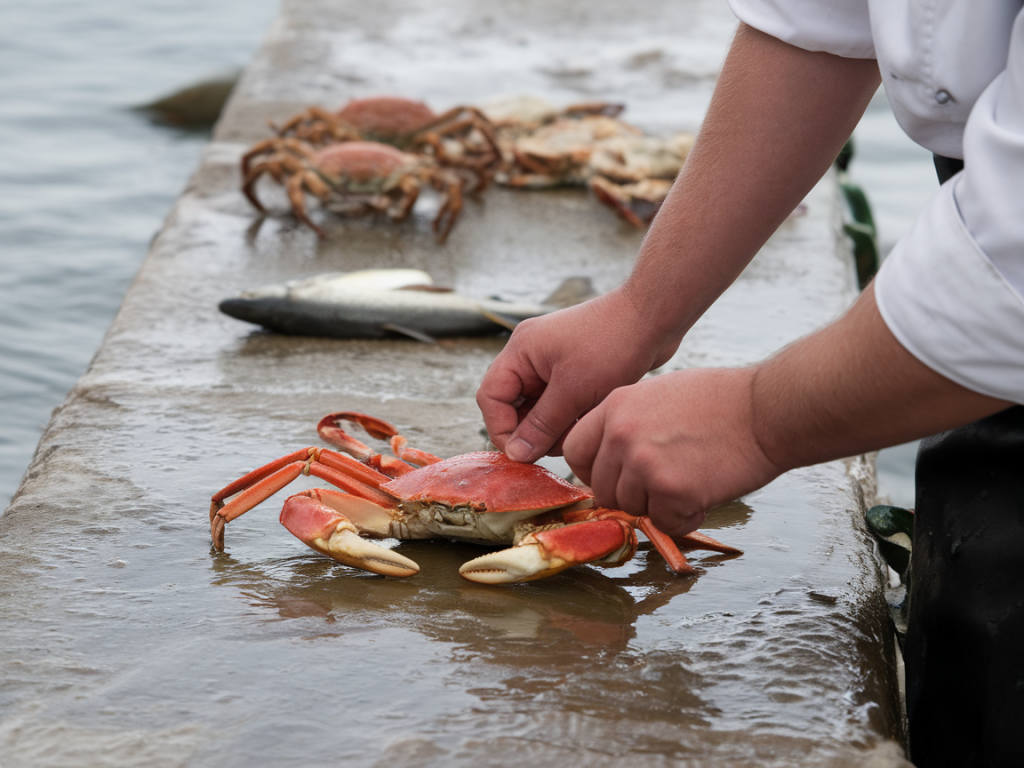
There’s a particular hush that falls over a tidal ledge just before first light — wind down to a whisper, water tucking around the rocks, and the promise that a double-figure ray could be cruising somewhere in the incoming. Over the years I’ve learned that peeler crabs are one of the most reliable baits for these fish when presented correctly on slippery ledges. Below I’ll walk you through my step-by-step peeler crab presentation that’s brought me rays in the 10–20 lb range time and again, with practical tips on tackle, rigs, bait prep and shorecraft.
Why peeler crabs work for rays
Peeler crabs (freshly moulted) are soft, scent-rich and sit naturally on the seabed. Rays feed primarily by sensing scent and picking items off the bottom, so a peeler that looks and feels right is a winning ticket. Compared to peeled or cut bait, a whole or halved peeler offers realistic texture and resistance, encouraging rays to take and hold on — which is crucial if you want to get that confident hookset without popping the bait off the hook.
Essential tackle and kit
I don’t fuss with exotic gear for rays on ledges — reliability and abrasion resistance matter more than lightness. Here’s what I usually pack:
- Rod: 11–13ft beach/ledge rod with a fast but forgiving tip (30–60g casting weight). I’ve had consistent results with a St Croix or a mid-range Penn shore rod.
- Reel: 6000–8000 size spinning reel with a smooth drag — Shimano Ultegra or Penn Slammer IV are both solid choices.
- Mainline: 20–30 lb braid (I favour 30 lb for ledges because abrasion from rocks is a constant risk).
- Shock leader: 40–80 lb mono or fluorocarbon shock leader depending on cast distance and ledge roughness.
- Trace: 60–100 lb fluorocarbon or mono short trace (30–45 cm) to resist abrasion and hide the hook link.
- Hooks: 2/0–4/0 circle or strong worm-style hooks; for big rays I usually step up to 3/0–4/0
- Sinkers: Bank or block sinker that sits flush — 3–6 oz (80–170g) depending on cast and tide.
- Landing gear: Long-handled net with deep mesh and non-slip cuff, a big unhooking mat and gloves. Rays can slip off ledges easily so secure handling is key.
Preparing the peeler crab
Freshness is everything. I either buy peeler crabs the same day or collect them locally. Here’s my approach to prepping so the bait presents naturally and lasts through a long tide.
- Keep them chilled: Store peelers in a cool container with seawater if possible; don’t freeze unless you have to (frozen peelers can lose flesh integrity).
- Subtle rigging: For whole presentation I pass the hook through the back of the crab just behind the carapace so the legs dangle and the body sits horizontal. This gives a natural profile on the bottom.
- Halved option: On particularly rough ledges I’ll cut the crab in half through the centreline and hook through the thicker section so it sits flush on the seabed and is less likely to be ripped off on the drop.
- Mesh or bait bands: If I need the bait to survive long baited periods I use a small mesh bait sleeve or biodegradable bait band to keep the crab on the hook without affecting presentation.
Building the rig
On slippery tidal ledges you need a rig that holds bottom, keeps the bait visible to the ray’s scent plume, and resists abrasion from rocks. My go-to rig is a simple but effective running large sinker with a short, strong trace:
- Mainline (braid) to a strong swivel.
- From the swivel a short 30–45 cm 60–100 lb fluorocarbon trace with a 3/0–4/0 hook.
- Use a heavy bank sinker 3–6 oz on a running setup so the sinker can slide on impact allowing the trace and bait to settle more naturally.
Why running sinker? On ledges the bottom can be uneven; a running sinker helps the bait find its natural lie instead of bouncing around where rays might ignore it. For added abrasion protection, hardline (80–100 lb) as a short trace is worth considering if the ledge is razor-sharp.
Step-by-step presentation on the ledge
Here’s exactly how I approach a session on slippery tidal ledges from set-up to first cast.
- Scout the spot at low tide: Before fishing, walk the ledge at low water and mark safe access points and the ideal casting locations. Note gullies, gutters and the seams where deeper water meets shallower shelves — rays like to patrol these transition zones.
- Check the tide and wind: Aim for the last hour of the incoming into the first couple of hours of the ebb. On many Welsh ledges this is when rays move up to feed. Wind into the shore helps pack scent towards the rocks.
- Soulful cast: Cast firm but controlled. I don’t sling the whole rig as far as I can; placing it where the deeper patch meets the shelf — often 30–60m — is more effective than blind distance.
- Let settle and reel down: When the sinker lands, allow the trace to sit for a few seconds and then take up about a metre of slack so the rig is in contact with the bottom but still free to move slightly if a ray picks it up.
- Silent strike posture: Keep rods in rests angled at 30–45 degrees with the reel free to run. Rays often inhale gently and then turn — a solid, smooth sweep (not an aggressive yank) usually sets the hook without ripping the bait out.
- Watch the rod tip: For peeler presentations bites can be subtle — a slow roll or slight dip rather than a hard run. Feel is everything; avoid overreacting to every tap and wait for a confident take.
Playing and landing the fish on a slippery ledge
Once you’ve got a ray on, the priority is keeping control while preventing the animal from sliding back into dangerous rocks. My approach:
- Keep the rod low but steady: High lifts invite headshakes and risking the hook. A low, steady pressure encourages the fish to tire without jerking free.
- Use the reel drag smartly: Let the ray run where it wants but keep it away from sharp rocks; apply steady pressure and pump when it slows.
- Secure the landing zone: Ask any bank partner to prepare a clear patch on the ledge for the net, or position yourself where you can slide the net under the fish in shallow water. A large, deep net and a soft, damp unhooking mat are essential.
- Handle with care: For the fish and your safety wear gloves and keep fingers away from the mouth and barbs. If you plan to release, minimize air exposure and revive the ray in water until it swims off strongly.
Common issues and fixes
| Problem | Fix |
|---|---|
| Bait keeps getting ripped off | Use bait bands, larger hook point through thicker meat or halve the crab so it sits flush. |
| Slack from strong currents | Drop to a slightly heavier sinker and reduce trace length to keep bait on bottom. |
| Sharp rocks fraying traces | Use short hardline traces or thicker fluorocarbon and keep the trace length minimal. |
Presenting a peeler crab properly on slippery ledges is as much about tide reading and patience as it is about the hook and sinker. Over the seasons I’ve learned to favour subtlety — a natural sitting bait, the right trace strength and a calm hands-on fight. If you get those elements right, the double-figure rays will follow. Tight lines and respect the sea — ledges give, but they can be unforgiving if you rush them.