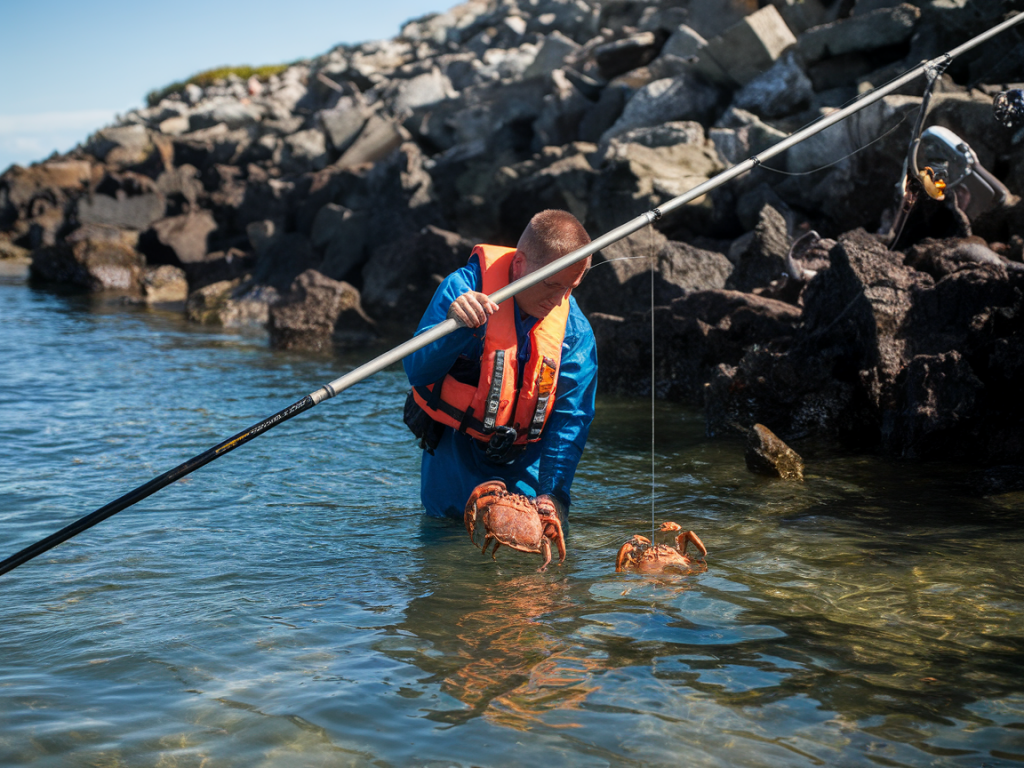
I fish a lot of tidal ledges for cod around the Welsh coast, and fresh crab is one of my go-to baits when I want to put a reliable, natural scent in front of bigger, wary fish. Over the years I've settled on a simple, sturdy rig that presents crab well, copes with snaggy ledges and gives me decent hookups without constantly finding my traces shredded by sharp rocks. Below I walk you through the rig I use step-by-step, why each component matters, and a few practical tips for baiting, casting and fishing the tides.
Why fresh crab for cod on ledges?
Crab is a high-value natural bait: it smells and looks like what cod eat and it stays on the hook well when prepared correctly. On tidal ledges, cod often patrol close to structure and take short, deliberate bites — a bulky crab strip or whole crab claw gives a good target and holds together when fish try to spit the bait. I prefer fresh crab when I can get it; frozen can work but lacks the same scent trail.
What I carry in my rig kit
These are the components I reach for most days. I’ve tried many brands; I mention a few that have proved reliable:
Rig design: running ledger with heavy trace
For tidal ledges I favour a running ledger rig with a fairly heavy, short trace. The running ledger allows the fish to take the bait and run without feeling the full weight of the sinker — that reduces dropped baits and improves hookups. The short, strong trace resists abrasion from rocks and gives a solid connection to a good hookset.
My standard dimensions:
| Mainline | 15–20lb braid |
| Shockleader | 30–40lb mono/flouro, 1.5–2.5m |
| Running trace length | 35–60cm of 40–60lb flouro/mono |
| Hook size | 3/0–5/0 wide-gape sea hook |
| Sinker weight | 3–6oz depending on wind/tide |
Step-by-step build
Follow these steps on the bank. I tie everything before I head down to the edge so I can change quickly between spots.
Baiting the hook with fresh crab
How you present the crab matters. I like two approaches depending on the size of cod I’m targeting:
Tip: If the crab is particularly soft, quick-freeze it slightly for 20–30 minutes to firm it up. That makes casting and hooking easier without killing the scent.
Casting and fishing tactics on a tidal ledge
Ledge fishing is about reading the water. I target edges where the flat runs into deeper gutters or where the tide pushes bait along the rockwork. I cast just beyond the line where I expect cod to be sitting and let the rig settle — you want the sinker to anchor in the rough and the bait to be presented in the water column above.
Handling and fish care
I always handle cod with care — wet hands or a wet glove, support the fish horizontally and remove the hook quickly with pliers. If you plan to release, aim for quick, shallow hook extraction. Large cod can be heavy on ledges, so have a landing net or a large unhooking mat ready if you expect a big fish.
Common problems and fixes
Fishing crab on tidal ledges rewards patience and a bit of local knowledge — knowing where the current creates ambush points is as important as the rig itself. My running ledger with a short, heavy trace and a well-secured crab bait has put me on some of my best cod from Welsh ledges. If you want, I can post photos of my knotwork and baiting steps next time I’m out so you can see exactly how I set things up.