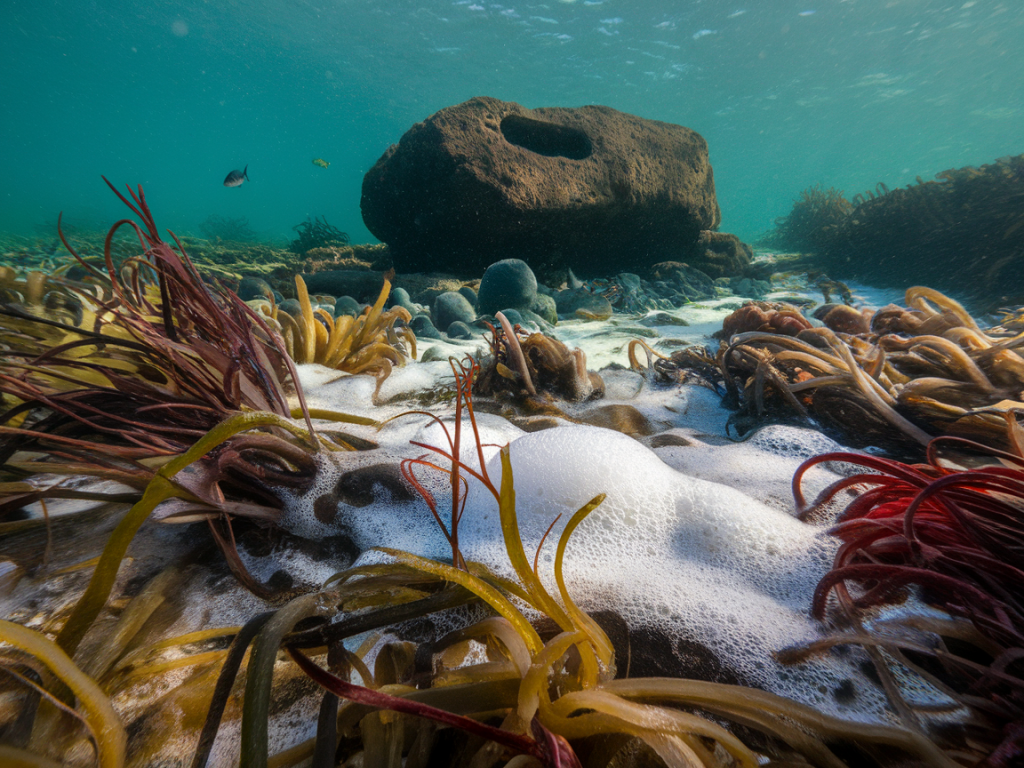
I can tell you a lot about a mark before I even put a lure in the water — sometimes just by the colour of the weed and the foam sitting on the tide. Pollack aren’t random predators; they follow food and structure, and the visual cues left on the surface often betray what’s happening underneath. Over years of Shore sessions around Pembrokeshire and the north Wales coast, I’ve learnt to read those colours like a map. Below I share what different weed and foam hues usually mean, how they relate to pollack behaviour, and what I fish with when each colour shows up.
Why colour matters
Colours on the surface are shorthand for water temperature, current strength, microscopic life and the type of seaweed present — and all of those influence where bait and predators concentrate. A handful of cues I look for every time I arrive are:
Once you start linking these surface signs with what you catch, you’ll begin to pick marks that consistently produce pollack.
Bright green weed — fresh growth and active bait
When I see bright, almost neon-green weed washed up or floating across a beat, I think of fresh growth and recent warmth at the surface. That’s common in late spring and early summer as water warms slightly and algae/sea lettuce growth increases. Bright green signs usually mean:
How I fish it: I go lighter and more finesse. Small soft plastics (3–4 inch shads from Savage Gear or Berkley), light pencil plugs or a subtle jigs head (6–18g depending on swell) are perfect. I use a slow, twitchy retrieve to imitate wounded sandeel or prawn. On clear days I’ll match the colour — olive, silver or translucent baits — and favour single-hook rigs to improve hookup rates on wary fish.
Olive-brown or dark weed — kelp, structure and ambush zones
Dark olive or brown weed almost always signals more exposed water and larger seaweeds like bladderwrack or kelp. This type of weed tends to accumulate around headlands, rockpools and submerged reefs where currents are stronger. For me, that equals structure and ambush points:
How I fish it: Cast beyond the weed and fish the drop back through the edge. Heavier lures (20–60g) like Shimano or Daiwa metal jigs, heavier soft-baits on 28–60g heads, or surface popping lures on a windy day do well. I use a straight retrieve with pauses to allow the lure to sink into the strike zone around kelp holdfasts where pollack ambush prey.
Black, slimy weed — deep, rough ground and big pollack
Black, slimy weed usually means hard, exposed ground and frequent scouring by waves. It’s tough for delicate algae to survive, so what remains is coarse, long-lasting kelp and sometimes maerl beds underneath. I associate this with:
How I fish it: Heavy metals and big plugs are my go-to. I’ll fish the edges of gullies and deeper holes, concentrating long casts and retrieving hard to get down into the blue where the bigger fish sit. Strong hooks and abrasion-resistant leaders are essential — I use 30–40lb braid with a 30–40lb fluorocarbon trace when I expect heavy fish and rough kelp.
White foam — breaking waves and concentrated seams
Pure white foam is the clearest sign of strong surface turbulence: breaking waves, wind-over-water foam and areas where currents meet. While it can look messy, it’s often brilliant for pollack fishing because:
How I fish it: In foam I’ll use bolder presentations — bright-coloured soft plastics, poppers and bibbed plugs. The idea is to provoke a reactive strike. I often reel fast through a strip of foam, then pause; that sudden change triggers strikes. Lure weights depend on the swell, but keep casts long enough to let the lure sink through the foam band into the clearer water beyond.
Yellow-brown or tannin foam — estuarine influence and juvenile prey
Brownish foam or a tannin tint in the water usually means river or estuary influence — lots of detritus, leaves and plankton feeding close to shore. This water is rich in juvenile fish and crustaceans, which can be excellent for pollack, especially in summer and autumn when rivers flush nutrients.
How I fish it: Choose baits with strong silhouettes — black, chartreuse, or orange soft plastics and brightly marked metal lures. I use a medium retrieve, often with lifts to imitate fleeing fry. Strong trebles or stinger hooks help secure fish that come at the surface presentation.
Green, slick sheen — plankton blooms and sandeel gatherings
A greenish sheen or slight oiling on the water often means a phytoplankton or algal bloom. While it can look uninviting, it usually signals a food-rich patch attracting small fish and sandeels — and pollack follow. I treat these patches as mobile reefs:
How I fish it: Fish the edges. Small jigs and sandeel imitations are my preference; I slow-roll through the greener water then crank faster into cleaner bands. If fish are visible crashing on the surface, throw a slim-profile lure and fish it fast — pollack will often charge through the bloom to nail prey near the surface.
Patterns and detail I always note
I keep a mental checklist on every mark:
I also photograph unusual colour combinations and keep a log of what I caught from each pattern. Over time, those notes turn into reliable seasonal intel.
Gear and rigging notes
Some quick practical choices I make depending on colour cues:
Always check your knot strength and have a pair of long-nosed pliers for hook removal when fishing around weed and kelp.
Quick field checklist before you cast
| Visual cue | Likely meaning | Action |
| Bright green weed | Fresh growth, clear water, small prey | Finesse lures, light heads, slow twitch |
| Olive/brown kelp | Structure, currents, ambush edges | Cast beyond edge, heavier metals, fish dropbacks |
| Black slimy weed | Deep, rough ground; bigger fish | Heavy lures, strong leaders, long casts |
| White foam | Turbulence and seams | Reactive retrieves, bright lures, work through seams |
| Tannin foam | Estuarine influence; juvenile prey | High-contrast baits, medium retrieves, surface work |
Reading weed and foam isn’t an exact science, but it’s one of the most dependable tools I have. When I pair these visual clues with tide tables and a little local knowledge, I put the odds in my favour. Next time you’re on the bank, give the surface a few minutes of thoughtful watching — the colours will tell you where the pollack are likely to be waiting.