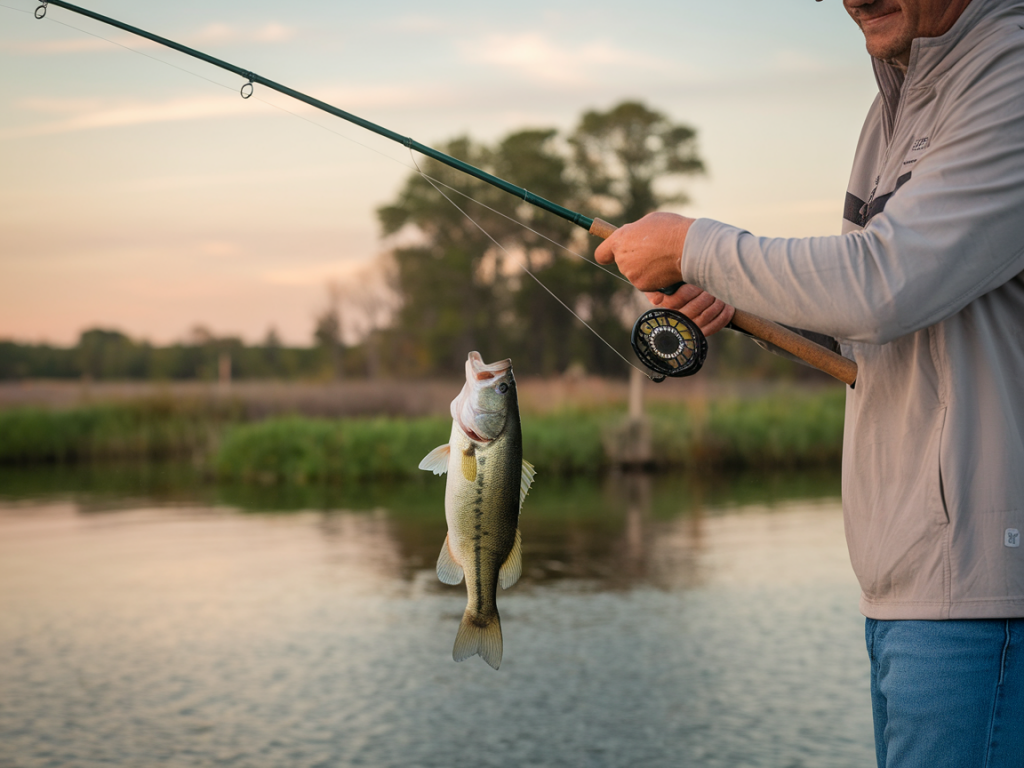
Late summer in Wales is a magical time for bass in estuary mouths — warm water pushes bait in, tides concentrate fish, and the right soft plastics on a light rod can turn a slow session into a string of smiles. I fish these edges a lot, and over the years I’ve dialled-in a simple, effective approach that favours stealth, subtlety and being in tune with the tide. Below I share what I use, how I rig it, where I cast, and the retrieves that usually get me bites. These are real, practical notes from the bank — the kind of stuff I wish someone had told me on my first late-summer evening chasing bass.
Why soft plastics on light rods work in estuary mouths
Soft plastics give you a lifelike profile and subtle action that bass in relatively shallow, clear water find hard to resist. In estuary mouths the water is often coloured but not filthy, and bass can be wary — heavy gear and crashing lures spook more fish than they attract. A light rod (6’6”–8’0”, 6–14lb rating) lets you cast small soft plastics a respectable distance while keeping the hookup zone forgiving for smaller hooks and lighter lines. The result: more bites, and a lot more connection to what’s happening on the end of the line.
My go-to soft plastics and when I use them
I match plastics to baitfish and crustaceans that are present. Late summer in Welsh estuaries usually means small sandeels, juvenile mullet, and shore crabs — so I keep a small, flexible arsenal:
- Small paddle tails (2.5”–3.5”) — great for imitating sandeels and small fry. I like the Savage Gear Sandeel or Keitech Easy Shiner in natural hues like sand, silver or olive.
- Mini shads (2”–3”) — versatile, fishable on light jigheads. Use in pearl, chartreuse-silver blends, or darker tones on low-light sessions.
- Soft crab imitations (2”–3”) — perfect for rocky mouths where crabs abound. Keitech Eco Gear or Berkley PowerBait crabs work well.
- Finesse worms/tube-like plastics — for ultra-clear water or when bass are feeding tight on structure. These are handy under floats or on light dropshot-style rigs.
Rods, reels and lines — the setup I use
I favour a light, sensitive rod with enough backbone to set hooks quickly and fend off a bass around structure. Here’s the typical setup I take:
| Rod | 6’10” fast-action, 6–14lb test (e.g. Shimano Expride 2702F or similar) |
| Reel | 2500–3000 size spinning reel with smooth drag (e.g. Daiwa BG, Shimano Stradic) |
| Main line | 6–10lb braid (I run 8lb braid most days for sensitivity and casting distance) |
| Leader | 12–20lb fluorocarbon leader, 1–2m long depending on water clarity |
| Jigheads | 1/16oz to 1/8oz for 2.5” plastics; 1/8oz to 1/4oz for 3–4” plastics. Must be weedless for boulder &weed zones. |
Rigging options I rely on
Rigging is where you can tailor the presentation precisely. My three go-to rigs:
- Light jighead (weedless where needed) — Thread the plastic onto a small jighead. The weight keeps the lure in the strike zone and helps cast further. Use a slightly offset weedless head in snaggy estuary mouths where you’ll be fishing around rocks and weed.
- Wacky style (for soft paddle tails) — Hook the plastic through the middle for a twitchy mid-water action. Great when fish are suspending or when you want a lot of tail flutter on the drop.
- Light drop-shot — I’ll use this when bass are tight to the bottom or around ledges; it’s an excellent way to present a small shad in a very natural posture with minimal disturbance.
Where I cast in an estuary mouth
Knowing where bass hold is half the battle. In estuary mouths I target edges and ambush points:
- Points where current pushes bait into shallow water
- Drop-offs and channels where fish sit out of the main flow and wait for food
- Rocky outcrops and boulder fields that provide cover
- Under tidal rips and over sandbanks near flowing water — subtle changes in flow attract prey
Timing is key: I often hit these spots an hour before and after high water, as the moving tide produces the best feeding windows. Late summer evenings can be particularly good when sand eels move in and bass feed aggressively.
Retrieve styles that trigger bites
Soft plastics are all about varying tempo and action. I cycle through retrieves until I find what works:
- Slow steady retrieve — Good when fish are following but not committing. Keep the rod tip low and steady.
- Lift-and-fall — Lift the rod to impart a rising motion, then let the lure fall on slack line. The fall often triggers the bite.
- Twitch-pause — Short twitches followed by a pause. Bass often inhale a paused bait.
- Short powered strips — For paddle tails, short aggressive strips can mimic a fleeing sandeel and provoke reaction strikes in low-light.
How I approach hooks and leader knots
Hook choice matters as much as the plastic. I use strong, thin-wire hooks with a rounded bend that penetrate quickly — Gamakatsu finesse worm hooks are a favourite. For leaders I prefer a simple FG knot if I’m connecting braid to fluorocarbon, or a double uni for ease on the bank. Keep the leader length long enough to avoid spooking fish but short enough to feel the bite; 1–1.5m is my sweet spot in most estuary conditions.
Practical tips from the bank
- Watch the birds and bait — Gannets, terns and feeding gulls will show you where the bait is packed. Cast slightly ahead of diving birds and let the lure fall into the action.
- Adjust for tide speed — Heavier heads in strong tides; lighter in slack water.
- Be stealthy — Quiet approaches and long casts keep you from spooking fish in shallow clear water.
- Handle fish carefully — Lip-grip and support the belly; release quickly if you’re practicing catch-and-release.
- Light up your headlamp for evening sessions — Helps with rigs and unhooking when you can’t afford to fumble in the dark.
My favourite late-summer memories with this setup
One evening last August I fished an estuary mouth at dusk: small paddle tail on a 1/8oz head, 8lb braid, 14lb fluoro leader. The tide was incoming, birds were working, and I was ten casts in before a thumping take that pulled me across a sandbank and into a 4lb bass that smoked me in shallow water. The light rod kept the fight fun and the soft plastic presented as every bit as natural as the real sandeels around us.
That’s the magic of light rods and soft plastics in late summer — they give you the confidence to fish close, feel every bite, and enjoy the fight without overcomplicating things. Tweak the presentations, read the tide, and let the estuary tell you what it wants that evening.