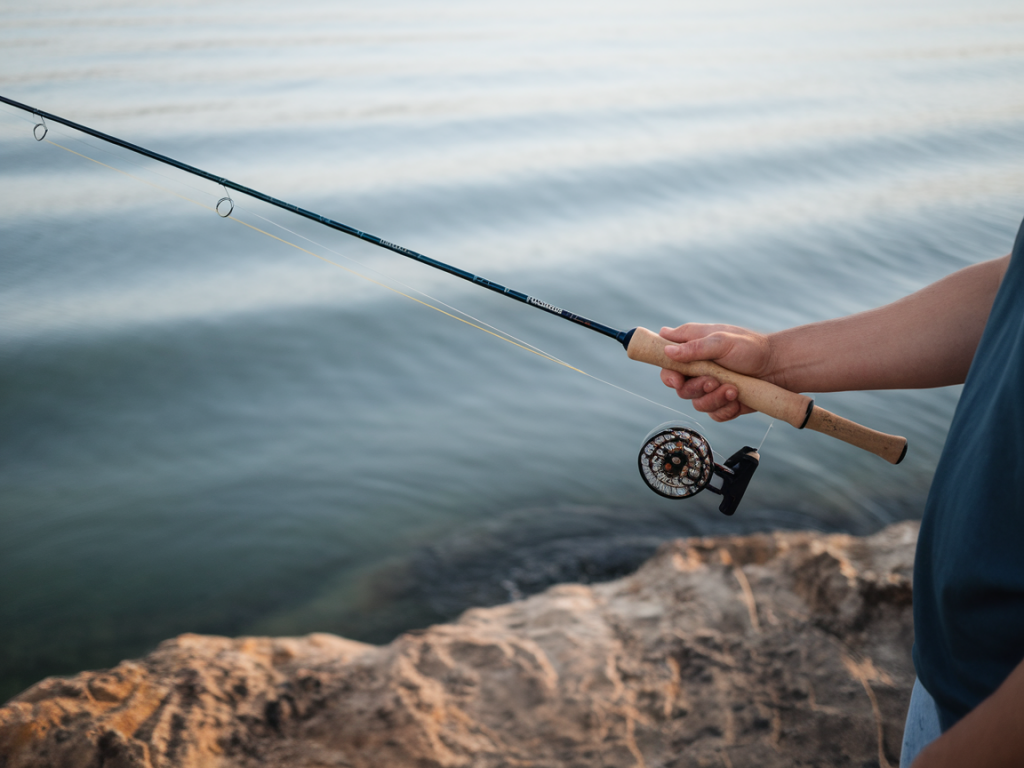
When I'm standing on a windswept Welsh beach at dawn, the difference between a frustrating day of short casts and a session where the rod tip hums with every long-distance drift often comes down to one invisible choice: the braided line on my reel. Over the years I've tested a lot of braids — in surf, in onshore gusts, over slippery weed beds and under the glare of midday sun — and I want to share what I've learned about choosing the right braided line for long-distance beach casting.
Why braid for beachcasting?
Braid has become the default for long-distance beach casting for good reasons. Its near-zero stretch gives you precise rod loading and faster hook sets on long runs. The thin diameter for a given breaking strain packs more line on the spool, letting you hold more metres of line for those big tides. And it's more sensitive: you feel every tick as the lead runs along the sand. But not all braids are created equal for the task of getting a rig 80–120+ metres out past the breakers.
Key factors I test on the beach
When I head out to test braided lines, I look at a handful of practical things that actually affect distance and usability:
What I actually use on a surf reel
My go-to setup for beachcasting heavier leads (3–6 oz) is 15–20 lb class braid on a 4500–6500 size reel when I'm targeting bass, cod or pollack at distance. For lighter rigging and lures I drop to 10–12 lb braid. Over the seasons I've rotated through PowerPro, Daiwa J-Braid, Sunline Super PE and Sufix 832. Each has strengths.
| Brand / Model | Why I like it | Where it falls short |
|---|---|---|
| PowerPro Super8 | Thin for strength, consistent spool feed, good value | Can fray on sharp rocks; colour fades over time |
| Daiwa J-Braid X8 | Excellent casting, low memory, good abrasion resistance | Pricier than generic brands |
| Sunline Super PE | Very smooth and round; great for long casts in wind | Less widely available in smaller shops |
| Sufix 832 | Durable braid, good for rocky marks; high abrasion resistance | Slightly thicker for the pound-test vs competitors |
Knots and connections that keep long casts reliable
Zero-stretch braid changes the knot game. I use different knots depending on whether I'm tying to a shock leader or a swivel.
Note: always wet and dress knots before cinching — braid can heat and cut fibres when tightened dry.
Shock leaders: how long and what breaking strain?
Wind, big leads and the sudden stop when a cast hits the water all mean a shock leader is essential for long-distance beachcasting. I use a fluorocarbon or coated mono shock leader, typically:
Coated mono leaders (e.g., PowerPro shock leader) sit neatly on the braid knot and give a nice, tapered transition—helping with both abrasion and cast shock absorption. Fluorocarbon is less visible and a bit tougher against abrasion but can be stiffer; I rotate between them depending on the shore.
Wind, spool capacity and the small tweaks that add metres
Onshore wind eats distance. The trick is to reduce sail and friction while keeping line control:
Care and maintenance that prolong performance
I’m pretty hands-on about line care. Rinse braid with fresh water after salty sessions, and inspect the first 6–10 metres for fraying before every trip. If the braid looks fuzzy or shows loops of broken fibres, cut it back or respool — my longest casts are worth that five minutes of maintenance.
Practical test notes from the Welsh coast
On a blustery autumn morning on a northeast-facing beach, I compared a full spool of Daiwa J-Braid X8 (15 lb) against PowerPro Super8 (15 lb) using identical 3 oz leads. With identical casts my average distances over a session were:
On a more sheltered sandy bay the difference narrowed. Where abrasion was a concern on a stony spit I swapped in Sufix 832 — slightly thicker but I saved a bunch of frays and lost rigs.
Quick checklist before you head out
I keep experimenting. New weaves and treatments come out every season, and small changes in knot dressings or leader length can gain you a handful of metres — sometimes that's the difference between getting your rig over the breaking line or not. If you want, tell me the reel size and the typical marks you fish and I’ll recommend a braid, breaking strain and leader setup tailored to your spots.