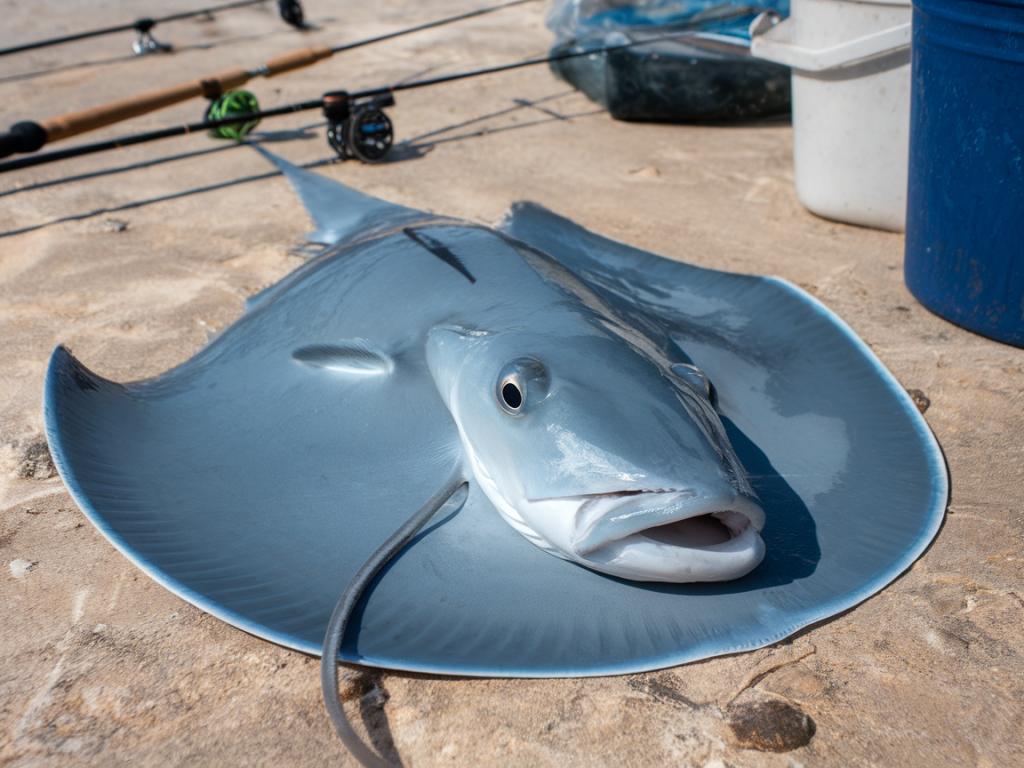
Rays are some of the most rewarding targets from the shore — deceptively powerful, graceful and excellent sport on light tackle. Over the years along Wales’ varied coastline I’ve learned a few reliable methods for turning a screaming run into a landed specimen without sacrificing tackle or patience. Below I share the practical setup, approach and fighting techniques I use when I’m chasing thornback, undulate or large common rays on light shore gear.
Why chase rays on light tackle?
There’s something special about seeing a ray cartwheel the surface or feel it sprint on a relatively light outfit. Light gear forces better angling: calmer rod work, faster decision-making and an appreciation for line and drag settings. It’s also more fun. But it requires respect for fish welfare and clear planning — a hard-fighting ray can easily snap light rigs or wrap you around rocks if you’re not careful.
My go-to tackle and why it works
Over the years I’ve settled on a balance between sensitivity and power. Here’s what I typically use and the reasoning behind each choice.
| Item | Typical setup | Why |
|---|---|---|
| Rod | 10–12ft shore rod, 3–6oz casting | Long enough for decent range and good leverage but with enough backbone to lift rays off the bottom. |
| Reel | 4000–5000 size spinning reel (e.g., Shimano Stradic, Daiwa BG) | Enough spool capacity for long runs and a smooth drag at moderate pressures. |
| Mainline | 10–15lb braid + 20–30lb flouro leader | Braid for sensitivity and casting distance, high-breaking strength leader to resist abrasions and the ray’s rough skin. |
| Hooks | 3/0–6/0 strong, wide-gape hooks (e.g., Mustad 7691) | Sharp and stout to hold in thick ray jaws and allow for secure penetration. |
| Weight | 3–6oz inline or grip sinker (depending on surf) | Enough to keep bait in the strike zone in strong tides or surf. |
Rigs I trust
I use two main rigs depending on conditions: a running ledger for softer tides and a heavy-duty trace when I expect big fish or snags.
Running ledger — simple, sensitive and good for detecting subtle takes:
Braided shock trace / fixed trace — for snaggy ground or larger rays:
Bait selection and presentation
Rays aren’t fussy, but certain baits produce more consistent strikes. My favourites are:
I present the bait heavy and neat: fold the head of mackerel over the hook shank or thread a chunk of squid so it doesn’t fly off on the cast. For crabs I use a bead and hook presentation through the back or under the carapace for a secure hold. Keep baits fresh and, if the water is warm, change them regularly — soft baits won’t survive long on the seabed and that translates to missed opportunities.
Reading the water and picking a spot
Rays like transitional ground — edges between sand and gravel, drop-offs, weed beds and areas with scattered pebbles. I’ll look for:
If the tide is forming predictable rips or channels, fish the edge of that moving water. Rays often sit on the quieter side waiting for prey to wash by.
Hooking and the first seconds
Rays can be curious nibblers or explosive takers. If you get a slow pull, don’t strike like you would for bass — allow a second or two for the ray to turn and take the bait fully. However, if there’s an immediate hard run, put the rod round and apply steady pressure. My rule of thumb:
Rays are built to power through the water and then hug the bottom; that’s when most anglers lose fish. The aim is to prevent the fish from getting under rocks or into tangles by steering it out into open water quickly but efficiently — not by overpowering it.
Fighting a ray on light tackle — tactics that work
The fight often comes in phases and you should adapt:
Landing, handling and safety
Rays have thorn spines and sometimes barbs on their tails — treat every fish as potentially dangerous. My landing method depends on size:
Always wear gloves when handling, support the fish across its disk and keep it wet and shaded if you plan to release. If you’re photographing, have everything prepped: camera, measuring tape, unhooking mat, and a helper if possible. Unhook quickly with pliers and avoid pulling the hook through sensitive tissue; if deeply hooked, cut the trace near the hook and release with minimal handling.
Common mistakes I see and how to avoid them
Learning from others’ errors saved me time on the shore. The common slip-ups are:
Fishing for rays on light shore tackle is a balance between finesse and respect for raw power. When everything clicks — clean cast, patient strike, a smooth long-distance battle and a careful landing — you get one of the most satisfying captures the shore can offer. If you want, I can share my favoured knot choices and a step-by-step photo guide for rig tying next time.