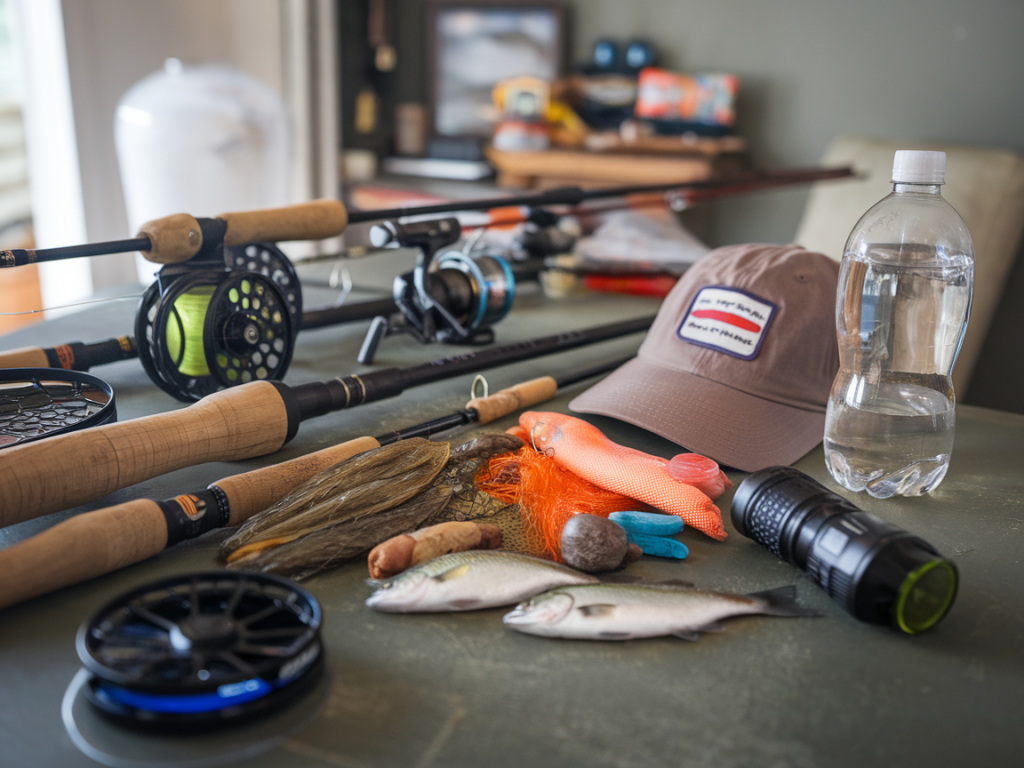
I head out for overnight sessions because that sweet window between dusk and dawn often produces the best action on exposed coves — but twelve hours on the bank in open conditions means you need to be organised. Over the years I’ve learned to strip my kit back to essentials while carrying items that make the difference between a productive night and a long, cold one. Below is the checklist and the thinking behind each item that I always pack for a 12-hour overnight shore session in an exposed cove.
Packing checklist (quick view)
Take this as a rapid pre-departure run-through. I tick each item before I lock the car and set off.
Tackle — rods, reels and lines
I take two rods: one rod that gives me distance — usually a 10–12ft 3–4oz class for casting bait and getting past the breaking water — and a shorter 9–10ft rod for faster strikes and playing fish inshore. I prefer a rod blank with a bit of backbone; exposed coves can see a lot of tide and you need to be able to wrestle fish off the rocks.
Reels should be sturdy and sealed where possible — saltwater will kill an unprotected reel overnight. I run 15–20lb braid on the main spool for its sensitivity and casting distance, with a 20–40lb fluorocarbon or nylon leader depending on target species and abrasion risk. For surf or mixed-shore work, a 30–40lb leader gives me peace of mind when working around weed and rocks.
Terminal tackle & rigs
Terminal tackle is where I mix pre-made convenience with hand-tied precision. I always carry a rig box with:
Bring a selection of leads: pyramids for sand, block leads for kelpy patches, and a lighter lead for delicate presentations. I also include a sighter lead (~10–20g) that helps show line movement when fish are finicky.
| Rig | Use | Typical Specs |
|---|---|---|
| Running ledger | General bait fishing, long-cast | 40–60lb braid, 30–40lb flouro leader, 2–4oz lead |
| Flapper paternoster | When fish are feeding on the bottom in a concentrated area | 2-hook, 1–2ft dropper length, size 1–2 hooks |
| Trace for lures | Pike, pollack or bass near structure | 30–50lb steel trace for toothy species |
Baits and bait care
I mix fresh and frozen baits. For exposed coves I like lugworm for soles and bass during calmer tides, ragworm for general attraction, and chunks of mackerel or sandeel for cod/pollack early or late in the night. I pre-cut bait into portions at home, label them, and store them in a small cool box with ice packs — frozen baits like mackerel and sandeel thaw slowly and stay firmer this way.
Bring an aerated bucket if you’re keeping live bait or mullet. Don’t forget a bait knife, forceps and a small cutting board to prepare baits on the bank without a mess.
Clothing, lighting and safety
Exposed coves mean wind, spray and cold. My layering goes: thermal base, fleece mid-layer and a breathable waterproof jacket with taped seams. I always pack a lightweight down jacket for a lull in the tide when temperatures can plummet.
Lighting is critical. I use a bright headtorch (warm white LED) for casting and knot work plus a small red light for reading maps and conserving night vision. Pack spare batteries and a USB power bank for charging lights/phones.
Safety items I won’t leave without: a charged phone in a dry bag, a whistle on a lanyard, a basic first aid kit and a marine VHF if I’m in a very exposed spot. If tides work fast in your cove, bring a high-vis vest and know your escape route — I always walk the area in daylight beforehand to note high water marks and safe exits.
Comfort and practical extras
For a twelve-hour stint, small comforts add up. A compact folding seat keeps me out of the damp; a thermos of hot drink and calorie-dense snacks keep energy up. I also bring a small tarpaulin to sit on and a lightweight windbreak if the weather looks savage.
Tools: multitool, needle-nose pliers for de-hooking, split ring pliers, hook file, and a line cutter. Bring a spare spool or two pre-loaded with different line strengths so you can adapt quickly if you get cut off or the conditions change.
Night fishing strategies I use
Once the sun goes down I change my approach: quieter movements, longer pauses between recasts and more attention to sighter movement. I’ll fish one rod on a steady long-cast running ledger and keep the second rod for searching different depths or switching to a flapper if I see signs of feeding activity.
If the wind is pushing onshore I move my casting angle to land baits in the feeding lane instead of brute distance. If the water clears, a lighter presentation with smaller hooks often outperforms bigger bait offerings. I also check my knots and leader connections after every big take or every couple of hours — abrasion is the biggest night-time killer in exposed coves.
Responsible angling and boat-free rules
I always follow local regulations, carry a tidy-up kit (rubbish bags, zip-ties for cut lines), and handle any fish with wet hands or a wet cloth. If possible, I measure and photo fish on the beach without lifting them too far out of the water, then return them quickly. I label any baits/bottles I discard on the bank and take all my traces and hooks home to dispose of safely.
If you’ve got questions on specific rigs, gear brands (I’ve been testing rods from the likes of Greys, Daiwa and Colmic for exposed shore work), or want a checklist tailored to your local cove, ask and I’ll build one for you.