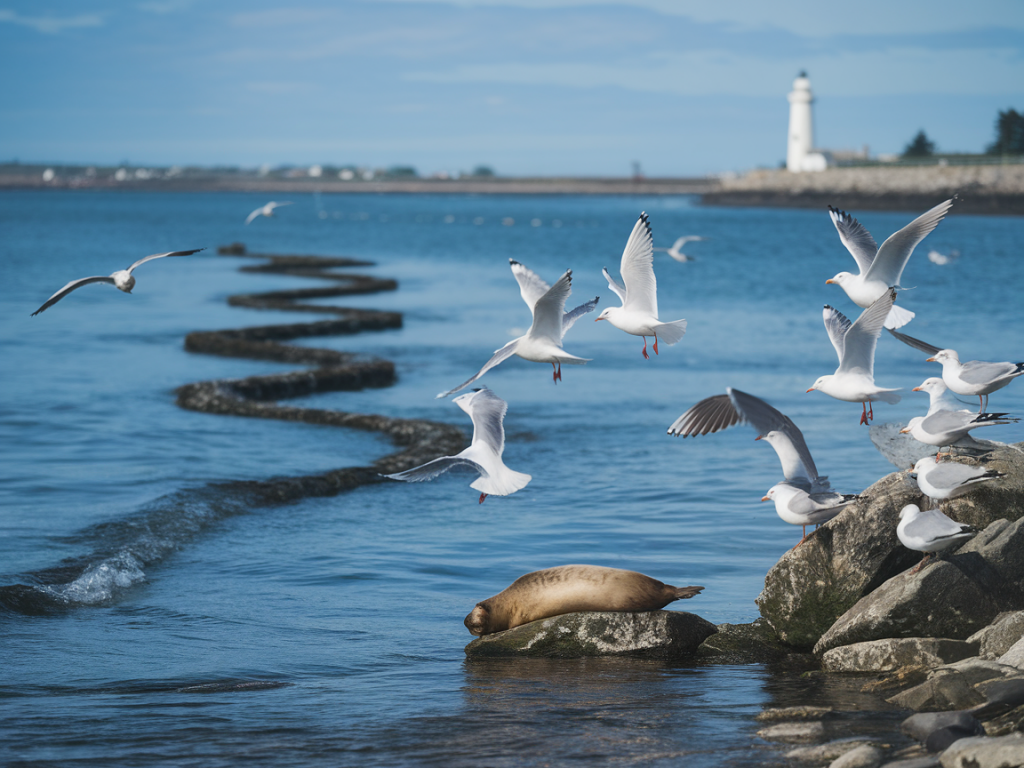
I’ve spent more mornings than I can count standing on rocky points and pebbled coves, watching the water and the birds and waiting for a clue. Learning to identify feeding lanes from shore is one of those skills that transforms aimless casting into focused fishing. If you can read the signs—gulls whipping at the surface, seals working a line, a ribbon of foam rolling in—you’ll not only save time, you’ll put your bait where the fish actually are.
Why surface signs and wildlife matter
From the bank, the water is a book written in movement. Birds and marine mammals are often the first to spot baitfish and shoals, and their behaviour gives away what’s happening below. I rely on gulls, terns, kittiwakes, cormorants and local seals as line-of-sight assistants: they’re mobile, they react quickly, and they show up where the action is.
Reading these signs helps in three ways:
It narrows where you cast so your bait is in the strike zone.It tells you what species might be feeding (surface breakers often mean bass or pollack on the feed).It helps you choose tactics—topwater lures, float rigs, or heavier leads for deeper lanes.Common signs and what they usually mean
Here are the surface signs I watch for and how I interpret them. None are foolproof alone, but together they form a picture.
Gulls and terns diving in groups — Usually baitfish pushed to the surface. This is often a fast-moving, patchy bite. Topwater plugs (e.g., a Zara Spook type or a small Savage Gear popper) or light lures can work. In Wales I’ve had great results with soft plastics around these blitzes too.Seals working a lane — Seals hunt concentrated baitfish and will follow shoals along a narrow corridor. If you see a seal popping up repeatedly along a stretch, that’s a prime feeding lane. Use a heavier lead to get your bait down quickly or fish a fast-retrieved lure. Be mindful: seals sometimes spook fish, but they also indicate concentration of prey.Surface foams, slicks and colour changes — A ribbon of foam or a darker line can indicate tidal seams where plankton and bait accumulate. Fish often patrol seams because food collects there. Cast across the seam rather than along it.Boats or dolphins circling — Biodiversity is a tip-off. Dolphins often herd fish; boats trailing lines may be following marks. If you can, note the direction of the activity and position yourself at an intercept angle.Sudden rises or dimples in the water — Individual fish feeding under the surface can create telltale dimpling or small boils. These can be opportunistic shots for light rigs.How I watch: routines and techniques from the shore
I don’t stare at one point and hope. I have a routine that lets me scan effectively and act fast.
Start high and wide — I first take in the entire bay or point, noting any movement or colour breaks. From above a headland you can see more of the tidal flow.Close in — Once I mark movement, I narrow my view to follow flocks and seals. I’ll pick a reference point on the shore (a rock, a stack) so I know where the activity is relative to where I can realistically cast.Estimate distance — I use landmarks and familiar casts (the length of my 12–14 ft surf rod, or 50–60m as a mental marker). If the action is beyond my usual range, I consider lighter lures for distance or move to a better vantage point. Familiarity with your kit—rod, reel, braid and leader—helps you judge what you can reach consistently.Decide lure/rig based on sign — If gulls are bombing the surface, I’ll reach for a topwater or a shallow-running minnow. For sealed-off seams or slicks, I’ll fish a jig or a bait on a running ledger to get down into the corridor quickly.What different birds tell you
Birds each have their own feeding styles and the difference is instructive.
Gulls — Opportunistic and noisy. A flock working the surface usually means a shallow, aggressive feeding. Good for topwater and fast retrievals.Terns — Small, precise; they’ll hover and plunge-dive onto smaller baitfish. Where terns work, expect quick-striking species and neat, localized action. Think light lines, sensitive rigs.Cormorants and shags — These dive and chase under the surface. They often indicate deeper or more persistent schools. Fishing with a jig or heavier bait can be productive beneath their activity.Gannets and larger predators — Big plunges and splashes mean concentrated, larger shoals. Don’t be afraid to fish slightly larger lures or heavier leaders here—you might be targeting bigger bass or pollack.Table: Surface sign — Likely target — Suggested tactics
| Surface sign | Likely target | Tactic |
| Gulls diving in patches | Bass, garfish, small pollack | Topwater plugs, soft plastics, fast retrieve |
| Seals working a lane | Bass, mullet, shoaling species | Running ledger, jig, heavier leads, intercept casts |
| Slicks/foam seams | Various predators patrolling seams | Cross-seam casts, slow retrieves, braid for feel |
| Cormorants diving | Deeper-swimming pollack, coalfish | Heavier jigs, deeper-running lures |
Practical tips for acting on what you see
Here are some practical habits I use to convert signs into fish:
Change quickly — Fish on the move won’t wait. Be ready to switch lures or rigs within a few casts.Cast ahead — When birds or a seal are moving through, cast slightly ahead of them to intercept the baitfish lane.Vary retrieve speed — If birds are frantic, speed up. If the surface is calm but there’s a slick, slow and steady can tempt wary fish.Keep a birds-and-seals kit — I have a small bucket in the car with an easy topwater, a couple of soft plastics, a jig, and spare leaders. Shimano and Daiwa reels with braided mainline make quick changes less stressful in cold hands.Stay aware of tides — Some feeding lanes only form at certain tides. Pair your observation with tide charts (and local knowledge from fishing-in-wales.co.uk spot guides) to predict where seams and gutters will appear.Respect, safety and avoiding mistakes
Reading wildlife can get you on fish, but remember: seals and diving birds are working for food, and spooking them can shut down a session. Don’t crowd a feeding group—give them space and let them indicate where to cast. Also be cautious when moving to intercept; slippery rocks and incoming tides are hazardous. I always check the tide and have a high-water exit planned before I approach a point.
Finally, log what you see. I dog-ear a page in my tide notebook for “bird activity + tide + catch.” Over seasons that record turns into patterns, and patterns turn into reliable lanes of fish.