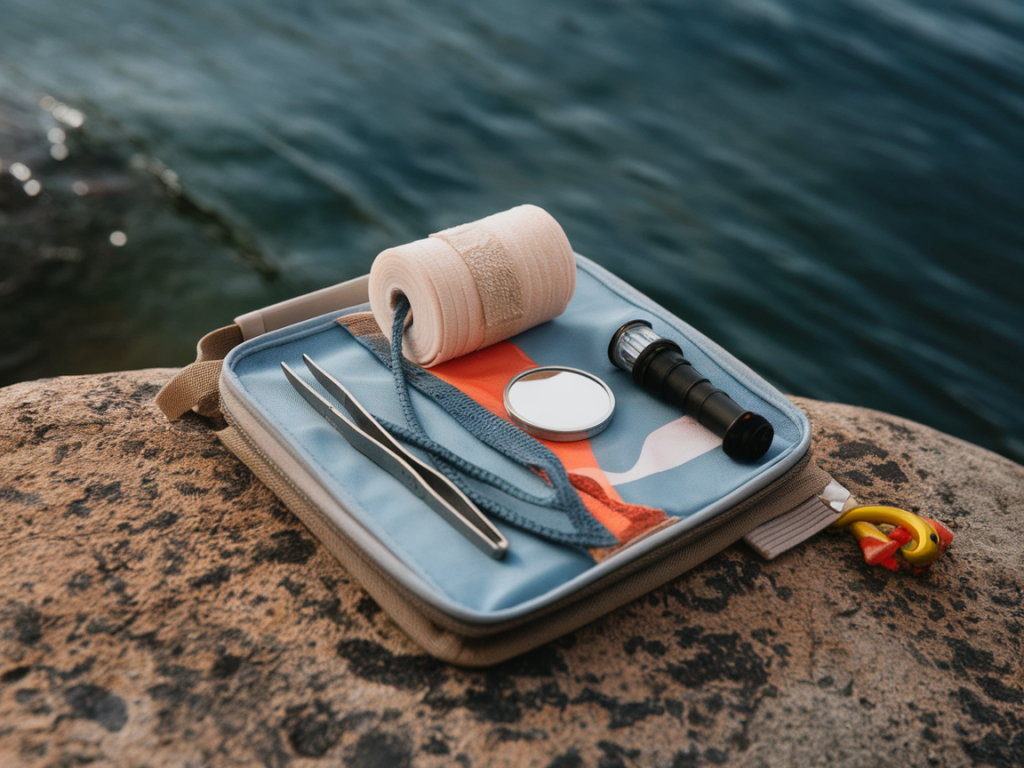
I’ve had enough scrapes, cold shocks and singed seaweed moments to know a compact, well-thought-out first-aid kit is worth its weight in rigs. On the shore, help can be a long time coming and conditions change fast: a small cut can turn nasty in saltwater, and hypothermia can start before you’ve realised you’re in trouble. Below I’ll share the minimal kit I carry on every session, why each item matters, and the practical steps I use to treat common coastal injuries — from cuts and hook punctures to hypothermia and jellyfish stings.
Why “minimal” matters
Space and weight are always at a premium when I’m chasing bass around rocky headlands or walking miles of shingle. Minimal doesn’t mean skimpy — it means deliberate. Each item has a clear purpose, and the kit fits in a small dry bag or waterproof case I can clip to my belt or backpack. I prioritise items that are multi-purpose, easy to use in cold hands, and robust enough to work in saltwater environments.
Core contents of my minimal coastal first-aid kit
Here’s what I never go out without. You could fit most of this into a small 1–2 litre dry bag or a compact waterproof box like an Aquapac or Ortlieb accessory case.
Quick-reference table: item and primary use
| Item | Primary use |
|---|---|
| Sterile dressings | Cover and protect cuts |
| Trauma dressing / hemostatic gauze | Control heavy bleeding |
| Antiseptic wipes | Reduce infection risk |
| Thermal blanket | Hypothermia prevention/management |
| Tweezers & scissors | Remove hooks/thorns, cut tape |
| Saline | Rinse eyes, wounds, jellyfish stings |
Treating cuts and puncture wounds
Saltwater and rocks are a toxic mix for a wound. My steps are simple and practical:
If the wound is deep, gaping, caused by an animal bite, or from a rusty object — get medical attention promptly. Tetanus boosters and antibiotics are sometimes required with saltwater punctures.
Hook injuries and barbed hooks
I always carry pliers and a pair of wire cutters. If a hook is embedded in soft tissue and you can see the barb, you can sometimes push the hook through until the barb clears the skin and then snip the barb off with wire cutters and pull the shank back out. That technique is only for small, straightforward cases. For hooks in the mouth, eyes, or deep tissue, or if there’s significant bleeding, go to A&E. Keep the area immobilised and clean while you arrange transport.
Hypothermia: recognising and treating it quickly
Cold shock and hypothermia are the most urgent threats I face on the shore. Early signs include uncontrollable shivering, poor coordination, slurred speech, and confusion. Severe hypothermia can lead to decreased consciousness.
If the person is unconscious or not breathing, call emergency services without delay. Shivering may stop as hypothermia worsens — that’s a red flag, not a good sign.
Jellyfish stings, sea urchin punctures and marine life
Jellyfish: rinse with saltwater (not fresh water — that can trigger more nematocysts). If you have vinegar (acetic acid) it helps with many species, followed by gentle removal of tentacles with tweezers and a saline rinse. Pain can be eased with immersion in hot water (as hot as you can tolerate, around 40–45°C) for 20–45 minutes. Antihistamines and painkillers help for systemic symptoms.
Sea urchin spines: remove shallow spines with tweezers. For deeply embedded spines, soak the foot or hand in hot water and seek professional care if you can’t extract them — they can break and cause ongoing inflammation.
When to seek professional help
Knowing the nearest A&E, coastguard numbers and having a charged phone are as important as bandages. I keep emergency numbers in a laminated card inside my kit and tell someone where I’m going if I’m fishing alone.
Practical extras I recommend
Keeping your kit simple, checking it before each trip, and practising basic procedures will make you calmer and more effective when something goes wrong. On the coast, preparedness is part of respect for the sea — for me, a small, sensible first-aid kit is as essential as a rod and good boots.