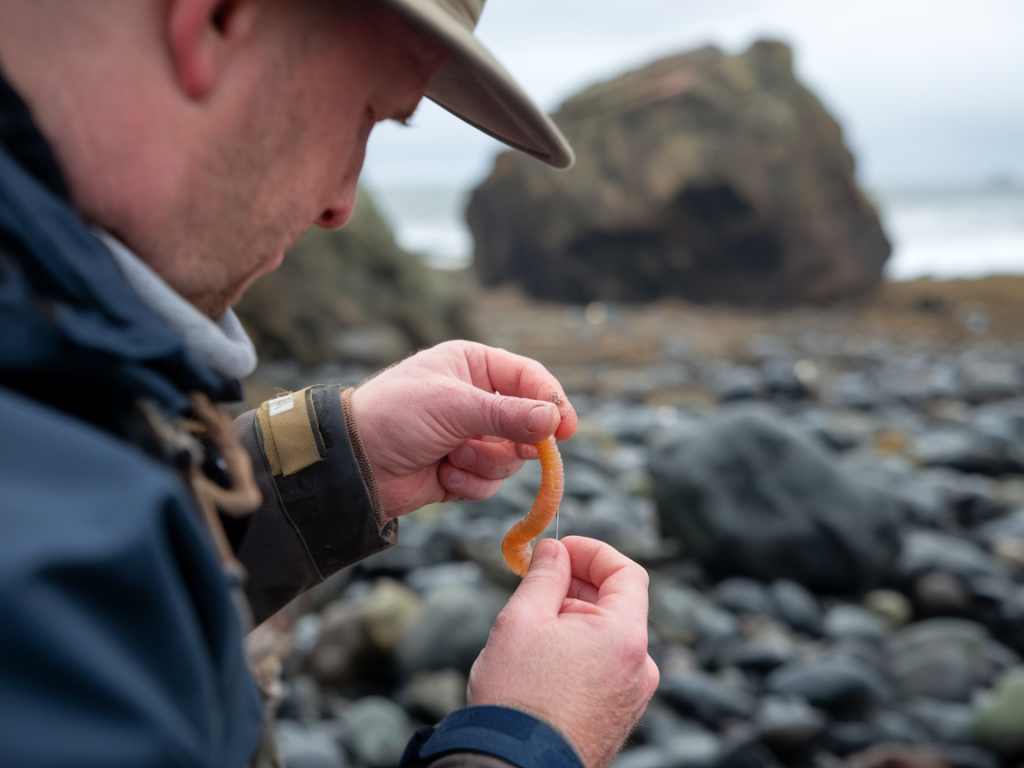
I love fishing bouldered beaches for a reason: the structure concentrates fish, tides push feed into the cracks, and the light can be spectacular at dawn. But lugworm on these spots is a different beast. The combination of heavy surge, jagged rocks and cheeky crabs (and sometimes wrasse) means your lug often disappears between cast and fall, or is shredded on impact. Over the years I’ve learned a few practical rigs and presentation tricks that keep lugworm on the hook and in front of feeding fish — not turned into strip bait by the first bump on the seabed.
Why lugworms strip so easily on bouldered beaches
Before I explain how I rig them, it helps to understand the problems:
My go-to approach: protect, fix, and present
I break the solution into three steps: protect the worm from abrasion, fix it to a solid point on the hook, and present it so it’s doing the work, not the current.
Rigs that work for boulders
These are rigs I use repeatedly on bouldered beaches. I’ll give you the set-up, why it works and when I choose it.
Running leger with bait clip and boom
Set-up:
Why it works: the bait clip secures the lug against the shock of the cast and keeps it away from the hook point during the fall. Once a fish takes the bait and swims off, the clip releases or the fish will pull the lump free; but by then the worm is positioned and the hook point can catch. The running leger lets the fish pick up the bait without feeling the full weight of the lead at first.
Hair rig with elastic loop (for long lug tails)
Set-up:
Why it works: the hair separates the hook from the bulk of the worm so when the lug hits stones it’s less likely to be sheared straight off the point. Elastic in the loop gives a little stretch so the fish can take a mouthful without instantly dislodging the hook. I use this rig when the surf is moderate and the worm tail is long and thick.
Threaded lug on a swivel or bead
Set-up:
Why it works: threading reduces exposed surface area and gives the bait a cleaner profile. The bead acts as a mechanical stopper and adds a little visual attraction. Threading also keeps the lug streamlined so it lands more cleanly and is less likely to snag and strip on arrival.
Practical bait-proofing tips
These are small techniques that make everything above work better:
Choosing the right hooks and trace strength
On bouldered beaches I err on the side of stronger traces — not heavy for the sake of fighting fish, but heavy enough to pull out of a cave or rock patch if needed. For most shore lug setups I use 20–40lb mono traces depending on target species and surf. Hooks: thin wire Aberdeen styles are great for getting good penetration, but if you expect heavy rats or wrasse, go for stronger wide-gape patterns.
Where to present the bait and how to fish it
Bouldered ground fishes best in troughs, behind small boulders or on the edges where current funnels. I aim to land my cast slightly upstream of the target zone so the tide carries the worm into the fish’s path rather than beating it into the rocks. Use tidal knowledge: on a falling tide fish will hold in lee of boulders; on a flood they will sit with their heads into the current waiting for feed.
Chucking and winding slowly or holding the rod to feel the bait’s fall are both valid — the key is to avoid letting the bait grind in the same patch of stones for too long. Shorten the shot if you’re snagging repeatedly and work the bait across cleaner runs between rocks.
When to change tactic
If the lug keeps stripping despite everything, switch to harder baits (crab strips, ragworm cut into thicker pieces, or artificial baits) or move to a slightly different spot where the seabed is sandier. Sometimes the right answer is simply to fish the edges of the boulder field rather than the heart of it.
In practice, a combination of a bait clip or hair rig, a protected tie-off point, and a careful presentation will keep your lugworm where it needs to be: in front of the fish. I test new tweaks whenever I can — swapping beads, trying different hook styles, and experimenting with elastic types — but the fundamentals above are what repeatedly turn frustrating strip-bait sessions into reasonable days on the bank.