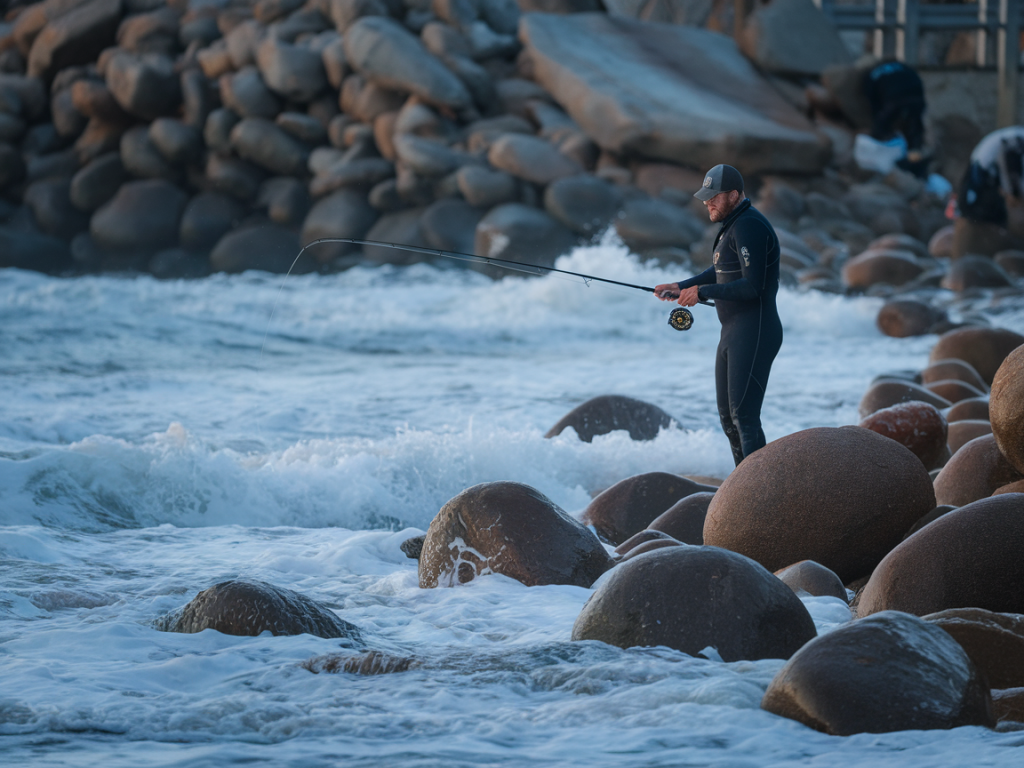
I’ve had a soft spot for rays since my first double-figure thornback took my peeler crab off a rough, kelpy ledge at dusk. Getting a big ray from a rocky cove on a light surf setup is all about matching subtlety with brute respect for their size and power. Over the years I’ve learned how to tweak rods, rigs and technique so a light outfit can reliably land 10lb-plus rays without turning the session into a fight I can’t win from slippery rock. Below I share the practical tweaks I use on peeler crab baits in Welsh coves — the what, why and how that make the difference.
Why a light surf setup can work (and what “light” means)
When I say “light surf”, I mean rods in the 7–9ft range rated to around 2–4oz with reels spooled with 10–20lb braid (or 12–25lb monofilament for those who prefer stretch). These outfits are nimble enough to fish tight coves and cast around rocky features, yet powerful enough if rigged correctly. The keys are line strength, drag setup and a trace that both absorbs shock and resists abrasion. A light but well-tuned setup lets you present a smallish peeler crab naturally — exactly what can trigger big rays that cruise close to shore feeding on crustaceans.
Rod, reel and line — the backbone of success
I favour a 7’6” to 8’6” rod with a progressive tip action. Too stiff and you’ll pull the hooks; too soft and you lose casting control. For reels, a 4000–5000 size is sweet — big enough to hold 200–250m of 10–20lb braided line and with a reliable drag. I set the drag a touch lower than I would for cod, around 6–8lb on short runs, to let the ray take some line without snapping thin leaders. That gives the rod time to load and the angler time to get to anchor points on rock or give ground.
Line choice matters: low-diameter braid like 10–15lb PowerPro or Sunline is excellent for casting and abrasion resistance, but you must pair it with a shock-absorbing leader. I often use 25–40lb coated or uncoated mono or a short section of flourocarbon between braid and trace to reduce visibility and add stretch.
Rigs that catch rays and survive rocky snags
Rays are clever feeders but not picky. Peeler crab is a top bait. The trick is a trace that resists abrasion (rocks, kelp) and a hooklink/rig that allows the crab to sit naturally while keeping the hook point exposed.
My go-to setups:
- Running ledger with short buffer: A 4–6ft mainline-to-leader connection with a bead and swivel, 2–4oz grip or flat pear lead, and a 12–18” fluorocarbon buffer (25–30lb) tied to the trace (30–40lb). The short buffer reduces rubbing on the bottom and protects the knot.
- Breakaway bridle for peeler crabs: Two short bridle legs (3–4” each) attached to a bungee or small swivel so the crab sits natural; hooklink 8–10” of 40lb fluorocarbon with a 2/0–3/0 long-shank lightwire hook. If a fish runs into rocks, the bridle can release the lead more cleanly and reduce lost rigs.
- Frugal quick-change trace: A short (12–16”) trace loop using a small clip swivel. If I’m snagging leads constantly, I’ll sacrifice the lead and keep the trace intact.
Hook choice and hooklink details
For peeler crab on rays I prefer a long-shank light/medium wire hook in sizes 2/0–4/0 depending on bait size. Brands I trust include Mustad and Gamakatsu for their consistent points. The long shank helps with leverage in hard mouths and keeps the hook from being lost in the crab’s shell.
The hooklink itself is a compromise between invisibility and toughness. I typically use 40–60lb fluorocarbon for the trace when fishing from rock — it’s stiffer and resists abrasion. In calmer sandy bays I’ll drop to 30lb fluoro for better presentation. Keep traces short enough to avoid tangles but long enough for the ray to mouth the crab — 8–18” is my usual range.
Preparing peeler crab baits for rays
Peeler crab must be presented convincingly. I bait whole, but I often:
- Make a small incision into the underside where the crab will sit on the seabed so it doesn’t flip when cast.
- Use a short hair or a bridle — if the crab is whole I go bridle, if it’s a cut piece I hair it to a small bead to keep it secure.
- Keep the crab chilled until the cast — fresher crabs hold their shape and scent better.
For bigger rays sometimes a chunk of peeler on a short hooklink will work better than a whole crab — easier for the ray to mouth and reduces surface drag that scares wary fish.
Casting and presentation from rocky coves
Rays often patrol parallel to the shoreline and hug contours. My favourite approach is to cast across and slightly up-current of the kelp edge or rocky gutter, aiming for a natural drift over the feeding lane. If the tide is flowing out, cast slightly into the flow so your bait drifts down naturally rather than skidding. If you can’t get to a high ledge to cast beyond the kelp, concentrate on accurate medium-distance casts (40–80m) into gaps and gutters.
Use a roll cast or overhead cast depending on room. I keep my rod tip low on the retrieve and let the bait sit, checking occasionally for telling taps or a slow pull — rays can pick up and cruise away, so don’t strike at the first tingle. Instead, let a solid steady pull develop before setting the hook to avoid pulling out the bait.
Hooking technique and playing a big ray on light gear
I use a measured strike: when the line loads, I wind quickly and lift the rod into its mid-cushion. Aim to sweep, not yank — give the hook a chance to embed while the rod absorbs the initial run. Once hooked, keep the rod low and apply steady pressure. Rays are heavy-bodied and love to bury into kelp or rocks. The shallow rod angle helps keep the fish outward away from the seabed.
If a ray heads for the kelp, I back off the drag slightly and follow the fish along the shoreline rather than standing my ground and getting into a tangle. If you can move to a better vantage point or scramble to a higher rock safely, do so, but never put yourself at risk for a fish. Use your net or gaff wisely — I carry a heavy-duty folding net (large hoop, strong mesh) and a pair of heavy gloves for landing and handling.
Safety and fish care
On rocks, one slip can be worse than losing a fish. I always wear non-slip boots, a harness if the cove is steep, and a life jacket when waves are pushing. Have a buddy when possible. For the ray itself, handle minimally: use a rubber mat or net sling, support the belly, and avoid the tail spine zone on thornbacks. If you plan to release, keep the fish in the water until it swims off strongly.
Quick reference tackle table
| Rod | 7’6”–8’6” progressive tip, 2–4oz |
| Reel | 4000–5000, drag reliable to 10–12lb |
| Mainline | 10–20lb braid (PowerPro, Sunline) |
| Leader / buffer | 25–40lb mono / fluoro (12–18” buffer) |
| Trace | 30–60lb fluorocarbon, 8–18” |
| Hooks | Long-shank 2/0–4/0 (Mustad/Gamakatsu) |
| Weight | 2–4oz grip / flat pear |
Getting double-figure rays on a light setup is immensely satisfying. It’s a mix of finesse and practical toughness: a natural bait, the right trace, careful presentation and respect for the fish and the shoreline. Tweak these elements to your local coves and tides, and you’ll find those big rays more often than you might expect. Tight lines — and mind the kelp!