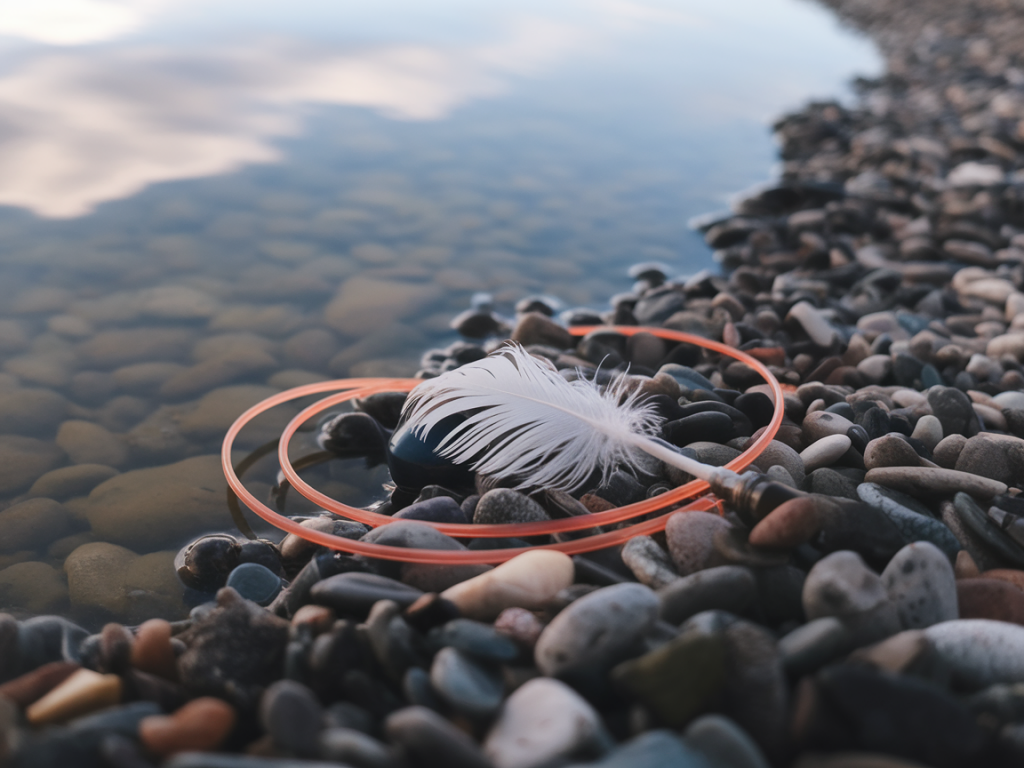
I used to curse pebble spits. Nothing fills you with more quiet frustration than watching your bait or lure skitter across tumbling cobbles, the tip of your rod twitching with meaningless knocks while real takes go missed in the muddle. For months I battled what shore anglers call “tide-roll” on a couple of my local spits: that shallow, choppy water between the bar and the beach where wave energy constantly tumbles pebbles and the current changes direction across a short tide window. Switching to a 20g feather sinker paired with a 3ft fluorocarbon leader changed everything — and not just by a little. It cured my tide-roll problems on those spits, turning evenings of frustration into steady sessions of hookups and usable feedback from the rod tip.
What I was fighting
Tide-roll on pebble spits is a combination of turbulent water, bouncing pebbles and inconsistent contact between rig and seabed. My old setup — 30–40g bulkier sinkers with a 6–8ft nylon leader — might have kept me in contact with the bottom in deeper ground, but on spits the weight profile made the rig bob and skip. The sinker would roll off pebbles, the leader coiled and caught on rocks, and my line was more likely to drag lures away from the strike zone or mask subtle bites entirely.
There are a few core problems at work:
Why a 20g feather sinker helps
At first glance a 20g weight sounds light — and it is — but what it does for pebble spits is about how it interacts with the seabed and the current. Feather sinkers (I use a tapered design from Korum and a couple of Drennan feather sinkers across trials) have a slim, aerodynamic profile with a feathered or knotted outer that changes how energy is absorbed when they hit stones. Here's what I noticed:
Why a 3ft fluorocarbon leader matters
Fluorocarbon changed this setup more than anything. I settled on roughly 3ft (about 90cm) of 20lb Seaguar or Sunline FC depending on what I had in the vest. There are a few reasons that specific length and material work well:
Rig build and knots I use
My go-to setup when fishing pebble spits now is straightforward and quick to tie:
Knots: I mostly use the FG knot to join braid to fluoro for strength and slim profile. For terminal connections the loop-to-loop or a surgeon’s loop gives a little extra action—though on spitty pebble ground I often prefer a small, neat knot to avoid catching.
How I fish the rig
The technique matters as much as the gear. On the spit I cast slightly down-current and allow the sinker to settle. Rather than dragging aggressively, I adopt short, slow hops and then hold the rod at about 20–30 degrees of lift to feel every twitch. Because the sinker settles into gaps, the lure or bait tracks closer to the substrate and stays in the strike zone longer.
When tide-roll is strongest I shorten my retrieves and concentrate on small pulses — gentle lifts of the rod tip and letting the rig fall back. The 20g feathersinker keeps the fall smooth rather than abrupt, which the fish prefer in shallow, choppy water. If I need more reach or the current pushes harder, I'll up to a 25g feather, but I try to avoid bulky leads unless depth requires them.
Comparative results
| Old setup | New setup (20g feather + 3ft fluoro) |
|---|---|
| 30–40g bulky sinker; 6–8ft nylon leader | 20g feather sinker; 3ft 20lb fluorocarbon leader |
| High bounce, frequent misses, poor bite detection | Reduced bounce, consistent contact, faster hook-ups |
| More snags and cut-offs | Lower snag rate, better abrasion resistance |
Brands and products that worked for me
I’ve tested a few combinations—Drennan feather sinkers were my first try and they performed well; Korum’s tapered lead has been very reliable too. For fluorocarbon I’ve had consistent results with Seaguar InvizX and Sunline Siglon; both balance sink rate and knot strength. For braid I use Sufix 832 and Shimano’s PowerPro depending on availability.
One last practical note: always check the peg or eye where your sinker sits. Feather sinkers can snag if rough edges are present on terminal tackle. A quick rub with sandpaper around crimps or swivels keeps everything running clean and reduces tangles that can mimic tide-roll.
Switching to a lighter, feathered weight and a short fluoro leader won’t magically make every pebble spit a fish factory, but it does remove one of the biggest mechanical hurdles — the constant, energy-sapping bounce and the long, slack leader that kills feel. On my local spits those changes have replaced nights of empty frustration with sessions where I can actually read the water, react faster, and enjoy the kind of tight-line fishing that keeps me getting up for the early tides.