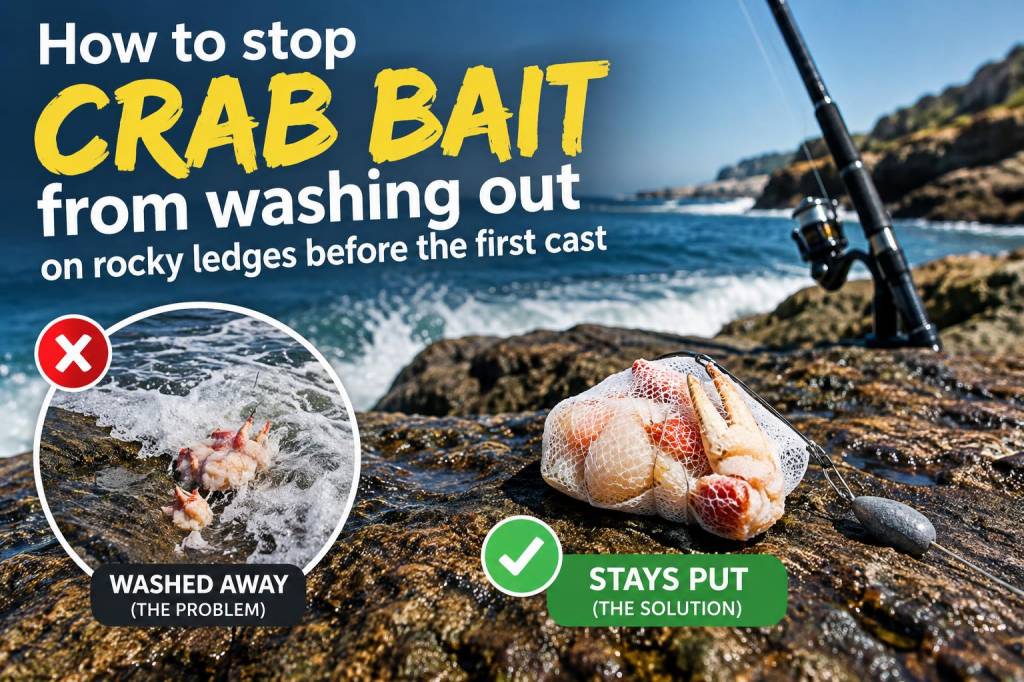
I have learned the hard way that crab bait can turn into a soggy mess long before a cast ever leaves a rod. On rocky ledges, spray, wash, weed, and constant drip-off all work against fresh bait, and crab can be one of the worst baits for holding shape if I do not prepare it properly. When I fish rough ground, I want bait that stays on the hook, keeps enough scent in the water, and does not unravel every time a wave slaps the rocks. That means I spend as much attention on bait prep as I do on rig choice or tide timing.
My first mistake, years ago, was assuming fresh crab alone would stay on a hook if I was careful. It rarely did. Soft shell, broken legs, loose meat, and the wash from a rising tide all made a mess of it. I would reach for the rod, look down, and find half my bait gone before I had even made a cast. After enough failed sessions, I started treating crab bait like a small project rather than a quick job. Once I changed my approach, my hook bait lasted longer, looked cleaner in the water, and put more fish in front of me for longer periods.
Why crab bait fails so fast on rocky ground
Rocky ledges are brutal on bait. Water movement never really stops, even when a sea looks calm from a distance. Spray gets into trays, splash drips off the rock face, and bait gets knocked around while I am setting up rods, rigs, and bags. Crab meat is rich, soft, and full of moisture, which makes it attractive to fish but weak against repeated impact. If I use it in a hurry, small chunks shear off and the rest can slide down the shank or fall away at the first bump.
I also find that crab bait often fails because I treat it like a single material instead of a system. The crab itself is only part of the job. I need a binder, a wrapping method, and a hook presentation that suits the amount of wash on the ledge. If I ignore any one of those parts, the bait usually gives up faster than I want.
What I do before I even touch a hook
I always start by deciding what kind of crab bait I want to fish. There is a big difference between a whole peeler crab, a section of shell with flesh exposed, and a small, neat bait made from crab meat and fish oils. Each behaves differently once it hits water. On a rough ledge, I usually want a bait that is firm enough to survive handling but soft enough to leak scent.
My usual preparation is simple:
That small amount of discipline makes a real difference. I have learned that a neat bait often out-fishes a bigger but sloppier one because it stays usable for longer. On rock marks, time is often more valuable than size.
How I bind crab bait so it stays put
My main answer is always bait elastic. I use it a lot, and I do not treat it like a fancy extra. It is one of the simplest ways to keep crab bait intact before a cast. I stretch the elastic evenly around the bait with enough tension to hold everything together, but not so much that I squeeze all the juice out of it. The goal is to create a compact shape that still releases scent once in the water.
If I am using soft crab, I often wrap the bait twice in different directions. First I secure the body and main meat sections, then I cross-wrap to lock down any edges that want to lift. If I am fishing into heavy wash, I may finish with a neat outer layer of elastic over the hook point area so the bait can survive the walk to the edge and the first splash against the water.
I have also found that a little patience with the wrapping matters more than speed. A rushed wrap leaves gaps. Gaps let water in, and once water gets between shell and meat, the bait starts to unravel. A tighter, smoother finish gives me far more confidence when I swing out into rough water.
Materials that help me beat wash and impact
Not every bit of gear matters equally, but a few items have become regulars in my bait kit. I do not overcomplicate it, yet I like having tools that make crab bait more durable without killing its attraction.
| Item | What it does for me | When I use it |
|---|---|---|
| Bait elastic | Holds soft crab together and reduces bait loss | Almost every session with crab bait |
| PVA mesh | Adds a protective outer skin and helps with compact baiting | When I need a more controlled presentation |
| Baiting needle | Helps thread or position delicate bait neatly | When bait is soft or partly broken |
| Small scissors | Lets me trim loose pieces cleanly | Before wrapping and before rigging |
| Cool box or bait box | Keeps bait firm and easier to handle | On warm days or long sessions |
I sometimes use PVA mesh around smaller crab presentations when I want an extra layer of security. It helps hold soft sections in place and can be especially useful if the bait is destined for a long cast or a rough landing zone. I am careful not to overpack it, though. If I wrap everything too tightly, I lose some of the natural leak that makes crab so effective in the first place.
My hook placement matters more than many anglers think
Where I place the hook within the bait affects how long it survives. If I bury the hook too deep, the bait can split under strain. If I leave it too exposed, the crab may tear off during the cast or as the rod loads up. I try to bury the hook point enough to keep the bait secure, then I leave just enough exposure for a solid strike opportunity.
For crab sections, I like to align the hook so the bait sits in a balanced shape rather than hanging awkwardly from one side. For peeler crab, I often use the shell and body structure to support the hook, then wrap around the natural contours instead of fighting them. The bait should feel like one neat object, not a loose bundle of parts tied together in a panic.
On ledges where the water surges in and out, I keep my hook bait slightly smaller than I would on cleaner ground. A smaller bait tends to punch through the air better and resists the violent slap of the first wave wash. I would rather fish a tidy bait that lasts than a bulky bait that falls apart after one drift.
What I change when wash is heavy
When the ledge is taking regular spray, I change my whole approach. I do not just wrap the bait harder and hope for luck. I reduce exposure, keep the bait off wet rock for as little time as possible, and bait up only when I am ready to cast. If I leave a rig lying on a wet ledge while I sort other gear, the bait begins to soften immediately.
I also pay attention to the angle of the cast. If I can place the bait with a clean swing rather than a wild heave, the bait keeps its shape better. That matters more than many people realise. A poor cast can undo careful bait prep in a second. A smoother cast protects the bait and gets me fishing faster.
On very rough marks, I sometimes make the bait slightly more compact than I would on calmer water. That means less exposed surface area and fewer edges for the sea to catch. The trade-off is a little less scent release at first, but I often find that the bait lasts longer and ends up fishing better overall because it is still on the hook when fish arrive.
Common mistakes I try not to repeat
I have made enough mistakes with crab bait to know which ones cost me the most fish. These are the ones I still watch for every time:
That last one is probably the easiest mistake to make. I still catch myself doing it when I am distracted by tide movement or fish signs in the water. Once bait starts to absorb extra moisture, its structure weakens fast. I now prep, bait, and cast in a more deliberate rhythm, especially when conditions are harsh.
My quick checks before I put a rig out
Before I cast, I always ask myself a few simple questions. Is the bait firm enough to survive the swing? Is the hook point sitting where I want it? Is any loose crab meat hanging where it can peel away? Does the bait look neat enough to make the journey across rough water?
If I answer no to any of those, I rework it. That might mean one more wrap of elastic, a cleaner trim, or a smaller bait profile. Those extra thirty seconds often save me a wasted cast and a wasted bait. On rocky ledges, that discipline adds up over a session.
When I get it right, crab bait stays on long enough to do its job, and I can focus on reading the tide, watching for signs, and waiting for the kind of bite that makes a rough session worthwhile.